Physical Address
304 North Cardinal St.
Dorchester Center, MA 02124
Physical Address
304 North Cardinal St.
Dorchester Center, MA 02124

We’ve all been there. You open the fridge, spot last night’s leftovers, and wonder if they’re still good to eat. Reheating food is one of the easiest ways to cut down on waste and save money. But here’s the catch: if you don’t do it right, you could end up with a nasty case of food poisoning.
Reheating food isn’t just about warming up a plate until it feels warm to the touch. It’s about heating it thoroughly enough to kill any harmful bacteria that may have grown since the food was first cooked. Get it right, and you’ll enjoy a safe, tasty second meal. Get it wrong, and you risk stomach cramps, nausea, or worse.
In this guide, you’ll learn everything you need to know about reheating food safely. We’ll cover what reheating actually means, the best reheating methods, how to check your food is properly reheated, and how many times you can safely reheat a dish. Plus, we’ll walk through some tricky favorites like crab legs, pies, chicken pot pie, and ribs that need a little extra care.
Let’s dig in.
Reheating food means heating previously cooked food until it is hot enough to eat safely. To reheat food safely, it should reach a core temperature of at least 75°C (167°F) to destroy harmful bacteria and reduce the risk of food poisoning.
Reheating simply means cooking food again. It sounds basic, but the goal is bigger than getting your meal warm. The real aim is to heat the food right through until it’s steaming hot, so any bacteria that may have appeared during storage are destroyed.
Food should reach a core temperature of at least 75°C for 30 seconds (or 82°C in Scotland). The “core” is the center or thickest part of the food, which is the slowest part to heat up. If the middle is cold while the edges are hot, your food isn’t safely reheated.
Warm is not the same as safe. A lukewarm plate might taste fine, but it can still hold enough bacteria to make you sick. That’s the difference between properly reheating food and simply heating it.
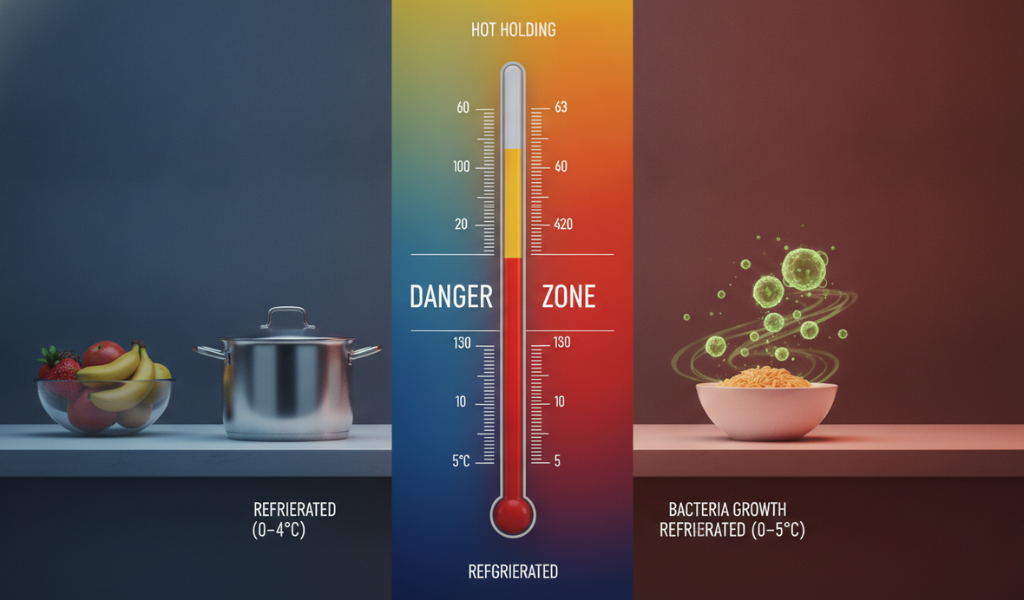
Bacteria love a warm, comfortable environment. When food sits between 5°C and 63°C, bacteria can multiply quickly. This range is known as the “danger zone.”
Every time food passes through this danger zone, the risk of bacteria reaching unsafe levels goes up. Cooling food slowly, leaving it out on the counter for hours, or reheating it without getting it hot enough all give bacteria a chance to thrive.
If those bacteria aren’t killed during reheating, you may end up with food poisoning. Symptoms include:
In severe cases, food poisoning can be far more serious. The good news is that reheating food safely is straightforward once you know the rules. It all comes down to heating thoroughly and keeping food out of the danger zone as much as possible.
The best reheating methods depend on what you’re reheating. Some foods do well in the microwave, while others need an oven to keep their texture. Whichever method you choose, always follow the manufacturer’s instructions on the packaging.
Here are the three most common ways to reheat food.
Microwaves are the most popular choice because they’re fast. But there’s a downside: microwaves don’t heat food evenly. They often leave cool pockets where bacteria can survive.
To get around this, choose foods you can stir, like soups, stews, and pasta. Stirring spreads the heat around so every part reaches a safe temperature. After heating, let the food stand for a minute or two. This standing time lets the heat even out across the dish.
The microwave isn’t ideal for foods that need a crispy finish, such as pizza or pastry. For those, reach for the oven or grill instead.
Ovens and grills are great for foods that need to stay crisp or hold their shape. Preheat the oven to the temperature listed in the original cooking instructions or on the product packaging.
Place the food on a baking sheet or grill pan, then heat until it’s steaming hot all the way through and has reached the right core temperature. This method takes longer than the microwave, but it keeps textures intact, which matters for things like pies and roasted meats.
The hob works best for liquid foods like soups and sauces. Pour the food into a pan and heat over medium heat. Stir now and then to spread the heat, and keep going until the food is steaming hot throughout.
This gentle, controlled method makes it easy to watch your food and avoid burning, while still getting it hot enough to be safe.
There are two simple ways to check if food is properly reheated: a visual check and a temperature check.
The visual check: Look for steam. Food that’s steaming or piping hot all the way through is usually a good sign. Cut into the thickest part to make sure the center is hot too, not just the outside.
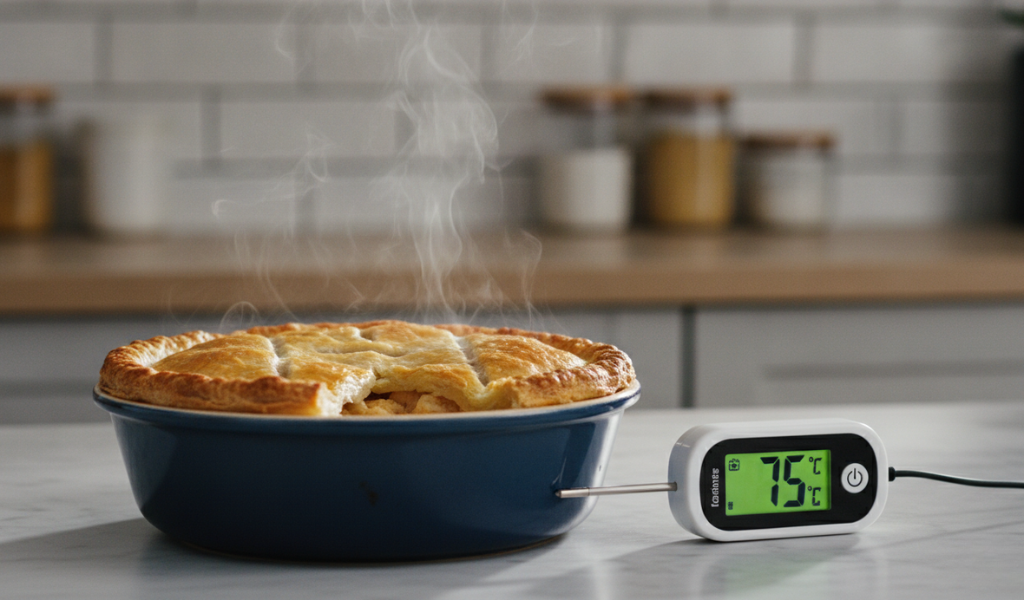
The temperature check: For accuracy, use a clean digital probe or cooking thermometer. Insert the tip into the center or thickest part of the food. You’re aiming for a core temperature of at least 75°C for 30 seconds (or 82°C in Scotland).
A temperature probe takes the guesswork out of reheating. But it only works if you use it correctly.
Keep your probe clean: Clean and disinfect the probe before and after use. If you don’t, you risk transferring bacteria straight into your food. Food-safe probe wipes are an easy option, or you can use a food-safe disinfectant left on for the correct contact time.
Check your probe is accurate: A probe is only useful if it gives correct readings. This is called calibration. You can test a digital probe at home using iced water and boiling water. The readings should fall between:
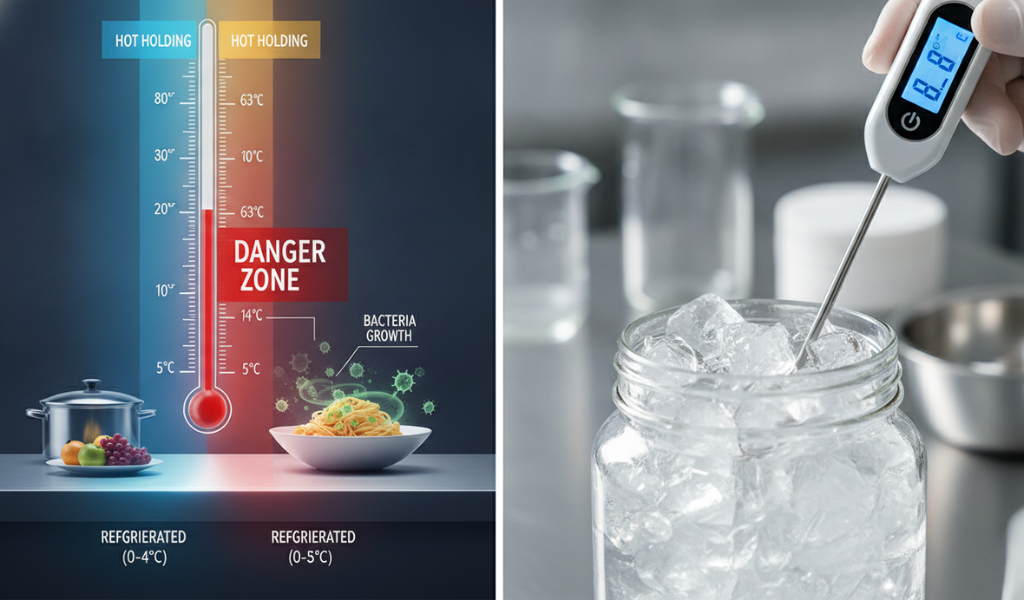
If your probe reads outside these ranges, replace it or send it back to the manufacturer for calibration. It’s good practice to keep a record of when you last checked it.
Here’s a rule worth remembering: cooked food should only be reheated once.
Why just once? Every time food is heated and cooled, it passes through the danger zone again. Each trip gives bacteria another chance to grow to unsafe levels. The more times you repeat the cycle, the higher the risk.
The Food Standards Agency advises reheating food only once for this reason. So if you’ve cooked a big batch, divide it into portions before storing. That way you only reheat what you plan to eat, and the rest stays safely chilled until you need it.
Some foods need a little more care than a quick zap in the microwave. Here’s how to handle a few popular favorites without losing flavor or texture.
Crab legs can dry out fast if you’re not careful. The trick is to add moisture and heat gently.
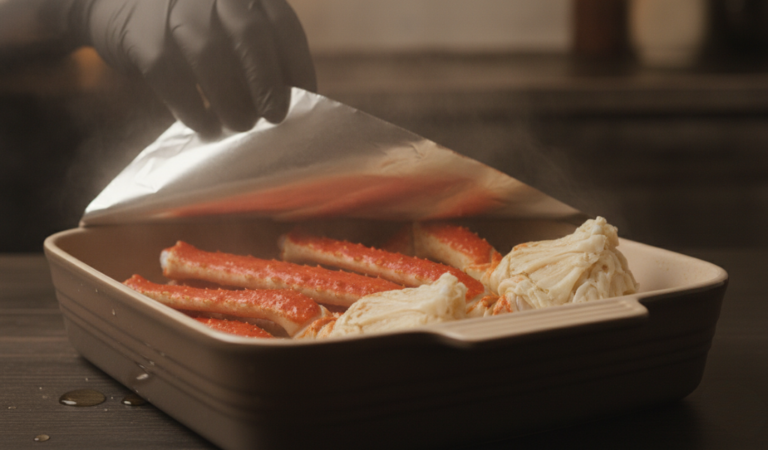
For steaming, bring a pot of water to a boil, place the crab legs in a steamer basket above the water, cover, and steam for about five to seven minutes until hot throughout. You can also reheat crab legs in the oven by wrapping them in foil with a splash of water, then baking at around 180°C until steaming hot. Whatever method you choose, make sure the meat is hot all the way through before serving.
A pie lives and dies by its crust, so skip the microwave if you want to keep it crisp. The oven is your friend here.
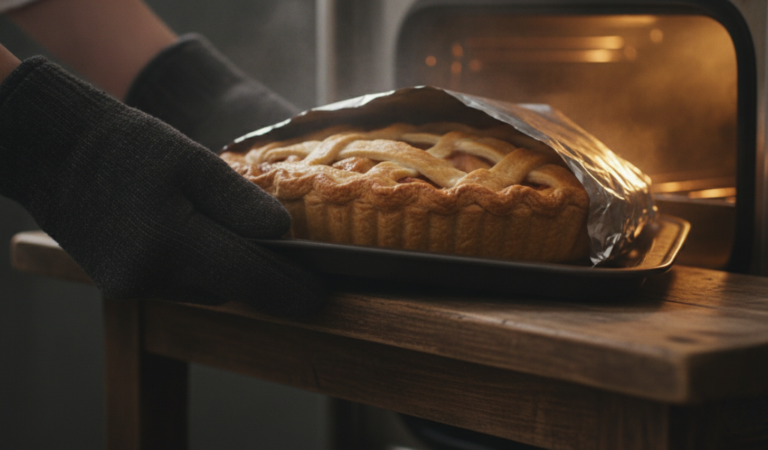
Preheat the oven to around 180°C. Place the pie on a baking tray and heat it until the filling is steaming hot in the center and the pastry is crisp. This usually takes 15 to 25 minutes, depending on the size of the pie. Covering the edges loosely with foil stops the crust from browning too much before the middle is hot.
Chicken pot pie holds a creamy, meaty filling, which means the center needs to get properly hot to be safe. As with any pie, the oven gives the best results.
Preheat the oven to about 180°C. Cover the pie loosely with foil to protect the pastry, then heat for 20 to 30 minutes. Check that the filling is steaming hot in the middle before serving. Because chicken is involved, it’s especially important to confirm the core reaches at least 75°C. A quick check with a temperature probe gives you peace of mind.
Ribs are all about keeping the meat tender and moist. Low and slow is the way to go.
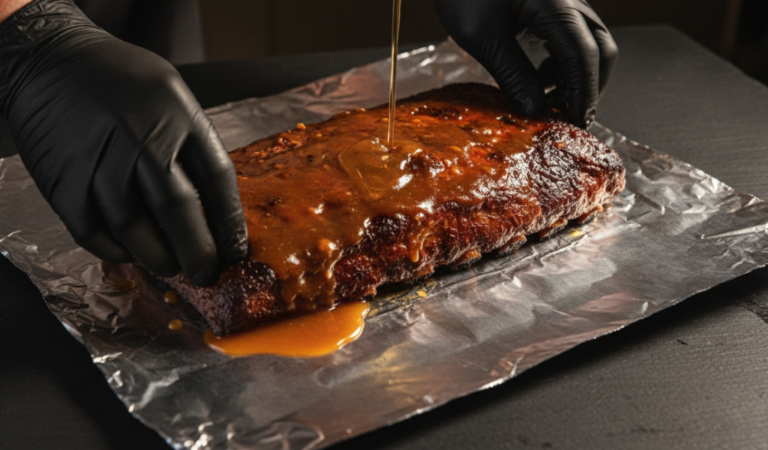
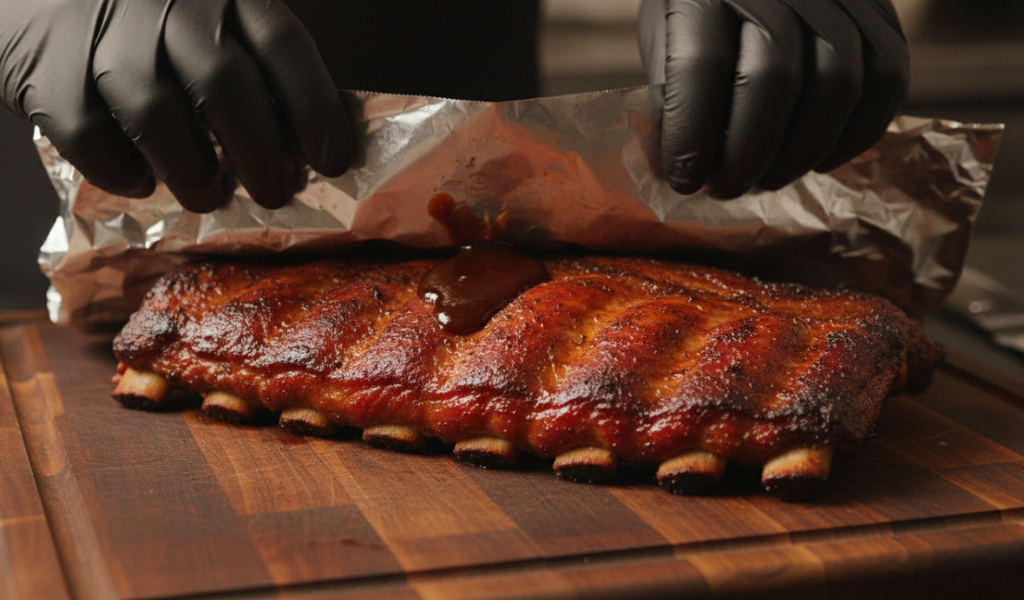
Preheat the oven to around 150°C. Wrap the ribs in foil with a little sauce or a splash of liquid to keep them from drying out. Heat for 20 to 30 minutes until the meat is hot all the way through. If you want a sticky finish, unwrap the ribs for the last few minutes and brush on extra sauce. As always, make sure they’re steaming hot at the center before you tuck in.
A couple of foods deserve a special mention because they carry a higher risk than most.
Takeaway and restaurant leftovers: Many restaurants prepare food in advance, which means parts of your meal may have already been reheated once. Rice is a common example, since it’s often cooked in batches. Because you can’t always know how takeaway food was made, reheating it carries extra risk. Where possible, it’s best to avoid reheating takeaway leftovers.
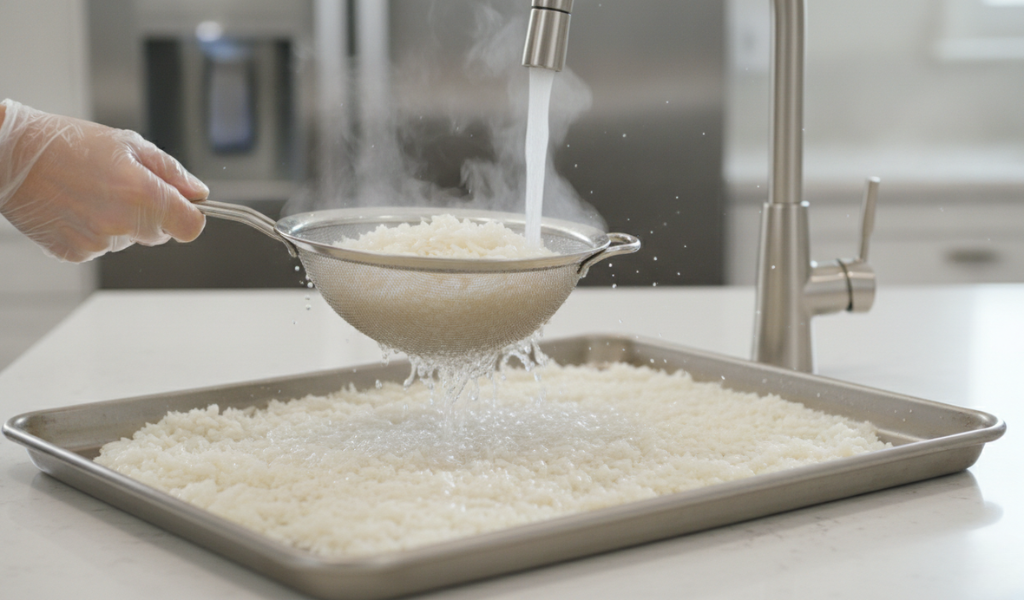
Rice: Rice gets its own warning thanks to a bacterium called Bacillus cereus. This bacteria is found in uncooked rice and can form spores, which are tough protective coatings that survive cooking. If cooked rice sits in the danger zone too long, those spores can form and later cause food poisoning.
To stay safe with rice:
Keep these simple rules in mind and you’ll reheat food safely every time:
Reheating food safely comes down to a few clear habits. Heat your food until it’s steaming hot in the middle, aim for a core temperature of at least 75°C, and reheat each dish only once. Cool your leftovers quickly, store them properly, and pay extra attention to higher-risk foods like rice and takeaway meals.
The best reheating method depends on what’s on your plate. Soups and sauces shine on the hob, crispy pies and ribs do best in the oven, and stirrable dishes are perfect for the microwave. Whichever you choose, a quick check with a clean temperature probe gives you real peace of mind.
Now that you know how to check food is properly reheated and which methods work best, you can enjoy your leftovers without a second thought. Why not put these tips to work the next time you’ve got a meal to warm up? Your wallet, your taste buds, and your stomach will thank you.
What temperature should reheated food reach?
Reheated food should reach a core temperature of at least 75°C for 30 seconds, or 82°C in Scotland. The core is the center or thickest part of the food, which is the last to heat up. A clean temperature probe is the most reliable way to check.
Can you reheat food more than once?
No. Cooked food should only be reheated once. Each time food is heated and cooled, it passes through the danger zone, giving bacteria another chance to grow. To avoid this, store leftovers in portions and only reheat what you plan to eat.
What is the danger zone for food?
The danger zone is the temperature range between 5°C and 63°C. Bacteria multiply quickly within this range, so it’s important to keep food out of it as much as possible. Cool food fast and reheat it thoroughly to stay on the safe side.
Is it safe to reheat rice?
Yes, but with care. Rice can contain Bacillus cereus, a bacteria that forms heat-resistant spores. Cool cooked rice within 60 minutes, store it in the fridge, use it within 24 hours, and reheat it only once until steaming hot throughout.
Why shouldn’t you reheat takeaway food?
Many restaurants prepare and reheat food in advance, so parts of your takeaway may have already been reheated once. Since reheating again would push the risk higher, and you can’t always know how the food was made, it’s best to avoid reheating takeaway leftovers.
What’s the best way to reheat food and keep it crispy?
Use the oven or grill rather than the microwave. Microwaves add moisture and leave food soft, while an oven keeps pastry and crusts crisp. Preheat the oven, heat the food until steaming hot in the center, and check the texture before serving.
How do I know if my temperature probe is accurate?
Test it in iced water and boiling water. The reading should fall between -1°C and 1°C in iced water, and between 99°C and 101°C in boiling water. If it reads outside these ranges, replace the probe or have it recalibrated.