Physical Address
304 North Cardinal St.
Dorchester Center, MA 02124
Physical Address
304 North Cardinal St.
Dorchester Center, MA 02124

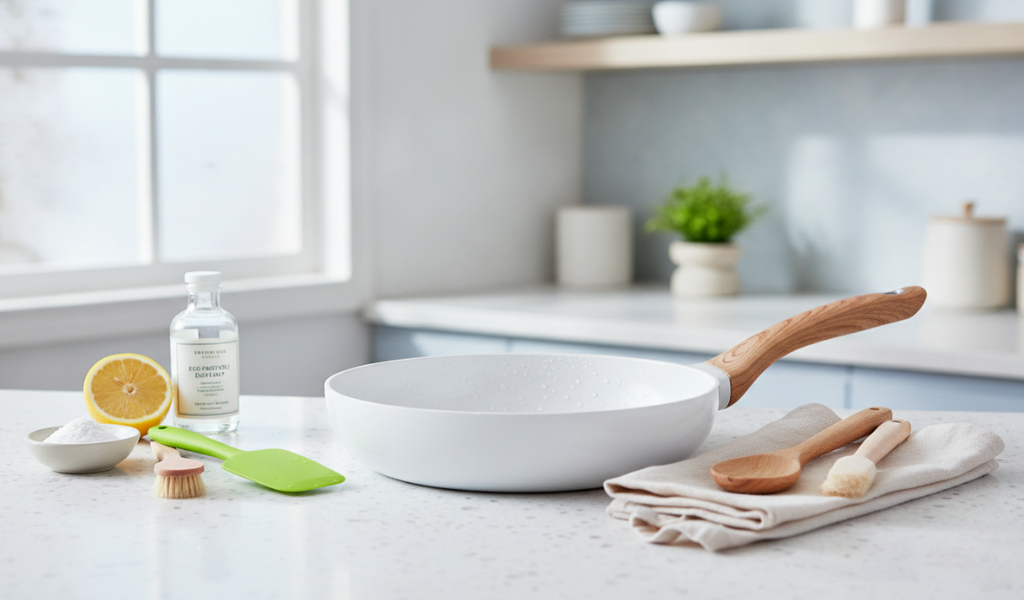
Ceramic pans are a favorite in many kitchens—and for good reason. They’re nonstick, nontoxic, easy to cook with, and honestly, they look gorgeous on any stovetop. But here’s the thing: they require a little more care than your average stainless steel or cast iron cookware.
If you’ve ever scrubbed a ceramic pan too hard and watched its nonstick coating start to fade, you know exactly what we’re talking about. The good news? Cleaning a ceramic pan properly isn’t complicated. You just need to know the right techniques—and, more importantly, what to avoid.
This guide covers everything you need to keep your ceramic cookware clean, stain-free, and looking new for years. From everyday maintenance to tackling burnt-on food and stubborn stains, we’ve got you covered.
Unlike stainless steel or cast iron, ceramic cookware has a delicate nonstick coating that can wear down if you’re not careful. That coating is what makes cooking and cleaning so effortless—but it’s also what makes ceramic pans vulnerable to scratches, chips, and dulling.
The good news is that maintaining ceramic cookware doesn’t take a lot of time or effort. A few simple habits go a long way. Think of it less like a chore and more like a small investment to protect something you actually love cooking with.
For everyday cleaning, the process is quick and straightforward. Here’s what works best:
Step 1: Let the pan cool down first.
Never rinse a hot ceramic pan under cold water. The sudden temperature change can cause tiny cracks in the ceramic surface—damage you won’t always see right away, but that adds up over time.
Step 2: Rinse with warm water.
Once the pan has cooled to room temperature, run it under warm water to loosen any leftover food.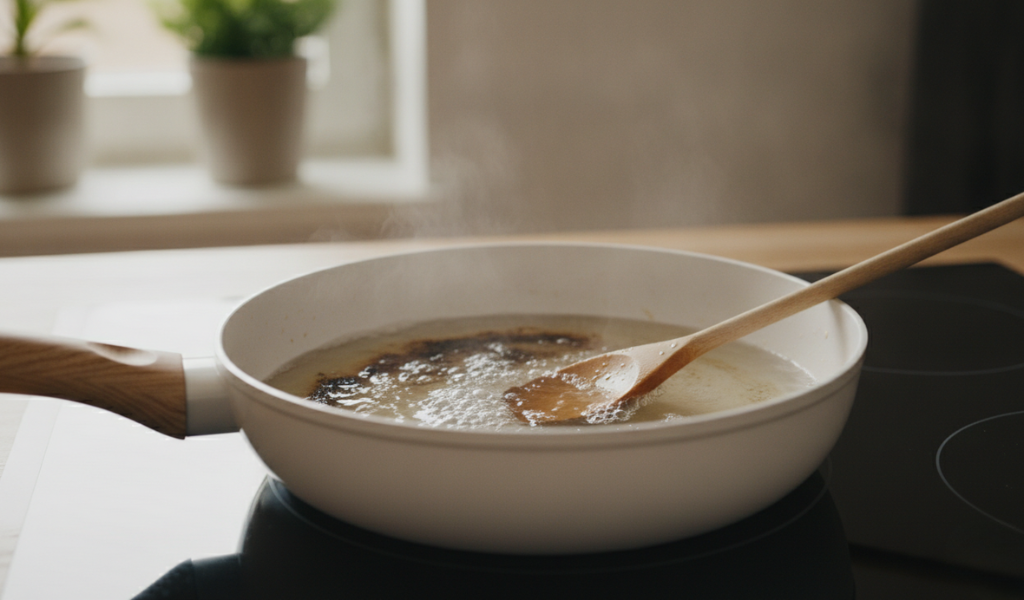
Step 3: Use a soft sponge and a small amount of dish soap.
A few drops of gentle dish soap is all you need. Eco-friendly, mild formulas work especially well since they’re free from harsh chemicals that could gradually break down the ceramic coating.
Step 4: Clean using gentle, circular motions.
This is important. Don’t scrub aggressively or press down hard. Light, circular movements are enough to lift food residue without stressing the nonstick surface.
Step 5: Rinse thoroughly and dry.
Rinse off all the soap, then dry the pan with a soft towel or let it air-dry. Avoid abrasive dish towels that could scratch the surface.
That’s it. Most of the time, that’s genuinely all it takes to clean a ceramic pan properly.
Even with a reliable nonstick surface, burnt food happens—especially if the heat got a little too high. The key here is patience, not force.
What to do:
Fill the pan with warm water and add a small squirt of dish soap. Let it soak for 10 to 20 minutes. For really stubborn burnt residue, leave it longer—even overnight if needed. After soaking, use a soft nylon brush or a silicone spatula to gently lift the softened residue.
Repeat the process if some residue remains.
For especially tough spots, place the pan back on the stovetop over low heat with water and a drop of soap inside. Let it simmer gently for 5 to 10 minutes. The warmth helps loosen whatever’s stuck without you having to scrub at all.
The temptation to grab a rough scrubbing pad is real—but resist it. Abrasive scrubbers are one of the fastest ways to damage a ceramic coating permanently.
Ceramic pans can develop discoloration over time, especially if you cook with oils at high heat. These stains don’t affect how the pan performs, but they’re not exactly pretty. The good news is that a simple baking soda paste can take care of most of them.
Here’s the method: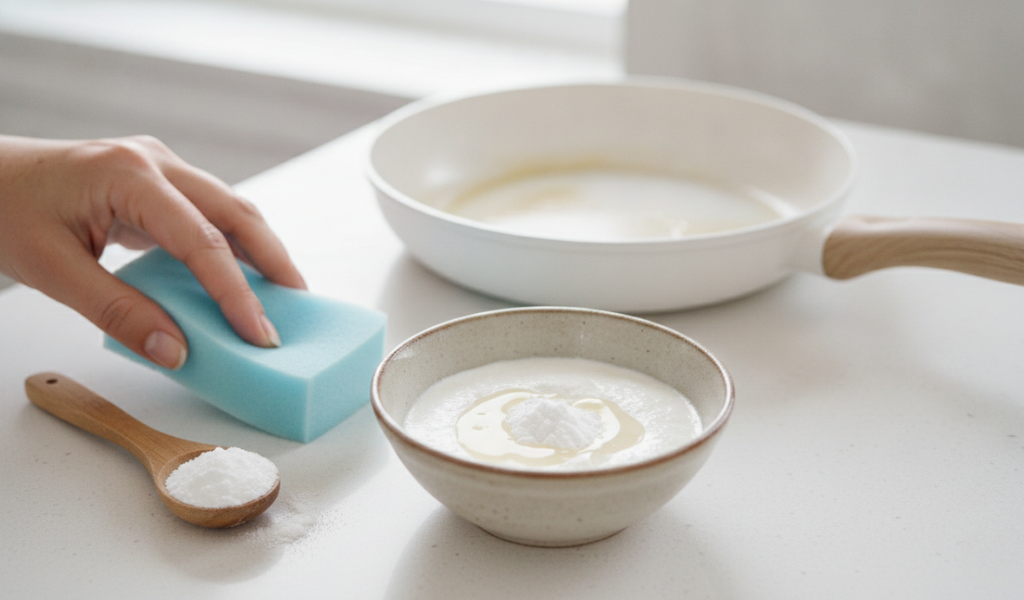
Mix 2 to 3 tablespoons of baking soda with about 12 drops of dish soap. Add just enough water to form a spreadable paste—think of the consistency of toothpaste. Apply the paste directly to the stained area and let it sit for 10 to 20 minutes. Use a soft sponge to gently wipe away the paste with light pressure. Rinse the pan clean and dry it as usual.
Baking soda is mildly abrasive in a good way—gentle enough not to scratch the ceramic surface, but effective enough to break down discoloration. The dish soap helps cut through any grease that’s contributing to the stain. Used together, they’re a safe and surprisingly powerful combination for ceramic cookware.
One thing to remember: always use a soft sponge during this process, not a rough pad. The goal is to lift the stain, not scratch the pan trying to remove it.
Knowing how to clean a ceramic pan correctly is only half the battle. Knowing what to avoid is just as important—maybe more so. Certain cleaning tools and products can ruin a ceramic nonstick coating fast.
Keep these away from your ceramic pans:
A good rule of thumb: if it feels rough against your skin or sounds harsh when you say it out loud, it probably doesn’t belong anywhere near your ceramic cookware.
Proper cleaning habits will take you far, but there are a few extra steps that make a real difference in how long your ceramic cookware lasts.
High heat is one of the biggest threats to ceramic nonstick pans. Ceramic coatings aren’t designed to handle extreme temperatures repeatedly. Cooking on low to medium heat not only protects the coating but also gives you more control over your food.
Running an empty ceramic pan on high heat—even for a minute—can damage the surface. Always add oil, butter, or food before turning on the heat.
This was mentioned earlier, but it bears repeating: running cold water over a hot ceramic pan causes thermal shock. Over time, even microscopic cracks will compromise the nonstick coating and the pan’s overall integrity.
Only silicone, nylon, or wooden utensils should touch your ceramic pan while cooking. Metal utensils leave small scratches that accumulate over time, eventually stripping the coating altogether.
If you stack your pans, place a soft cloth, dishtowel, or pan protector between them. When pans slide against each other without any barrier, the surface of one can scratch the nonstick coating of another. It’s a small habit that extends the life of your whole cookware collection.
Taking care of your ceramic cookware doesn’t require a full cleaning routine or expensive products. It mainly comes down to being gentle and consistent. Warm water, a soft sponge, a little dish soap, and the occasional baking soda paste will handle almost everything.
The biggest mistake most people make is trying to speed up the process with rough scrubbers or harsh chemicals. Ceramic pans respond much better to patience than force—let them soak, use light pressure, and skip anything abrasive.
Do that, and a good ceramic pan will stay nonstick, beautiful, and functional for years to come. And when you’re ready to upgrade your cookware collection or explore new ceramic options, check out our ceramic cookware reviews and buying guides to find the best fits for your kitchen.
Can I put my ceramic pan in the dishwasher?
Technically, some ceramic pans are labeled dishwasher-safe—but it’s not recommended. The high heat and strong detergents used in dishwashers dull the nonstick coating over time and shorten the pan’s overall lifespan. Handwashing is always the better choice.
How do I remove burnt food from a ceramic pan without scratching it?
Soak the pan in warm, soapy water for 10 to 20 minutes (or longer for stubborn residue). Then use a soft nylon brush or silicone spatula to gently lift the softened food. For extra tough spots, simmer the pan on the stovetop with water and soap for 5 to 10 minutes. Avoid abrasive pads entirely.
What is the best way to remove stains from a ceramic pan?
A paste made from baking soda, dish soap, and a little water works well. Apply it to the stain, let it sit for 10 to 20 minutes, then wipe gently with a soft sponge. Baking soda is safe for ceramic surfaces and won’t damage the nonstick coating when used correctly.
What should I never use on ceramic cookware?
Avoid steel wool, abrasive scrubbing powders, bleach-based cleaners, metal utensils, and the dishwasher. All of these can scratch or degrade the ceramic nonstick coating, reducing its performance and lifespan.
Why is my ceramic pan losing its nonstick properties?
This usually happens when the coating has been scratched or damaged—often from using metal utensils, rough scrubbers, or high heat. It can also happen if the pan isn’t kept clean enough between uses. A thin layer of residue can build up over time and make the surface less effective.
Can I use olive oil or cooking spray on a ceramic pan?
Yes, you can use a small amount of oil or butter. However, avoid cooking sprays—they tend to leave a sticky residue that’s hard to remove and can build up over time. A light drizzle of oil or a small pat of butter is a better option for ceramic cookware.
How often should I deep-clean my ceramic pan?
For everyday use, a gentle wash after each use is enough. A deeper clean with baking soda paste is only needed when you notice staining or buildup—typically every few weeks, depending on how often you cook.