Physical Address
304 North Cardinal St.
Dorchester Center, MA 02124
Physical Address
304 North Cardinal St.
Dorchester Center, MA 02124

If you’ve ever slurped a warm bowl of miso soup or tasted a glaze on roasted salmon and wondered what gave it that deep, savory flavor, you’ve already experienced the magic of miso. This fermented paste has been a cornerstone of Japanese cooking for over a thousand years, and it’s only recently begun earning the attention it deserves in kitchens around the world.
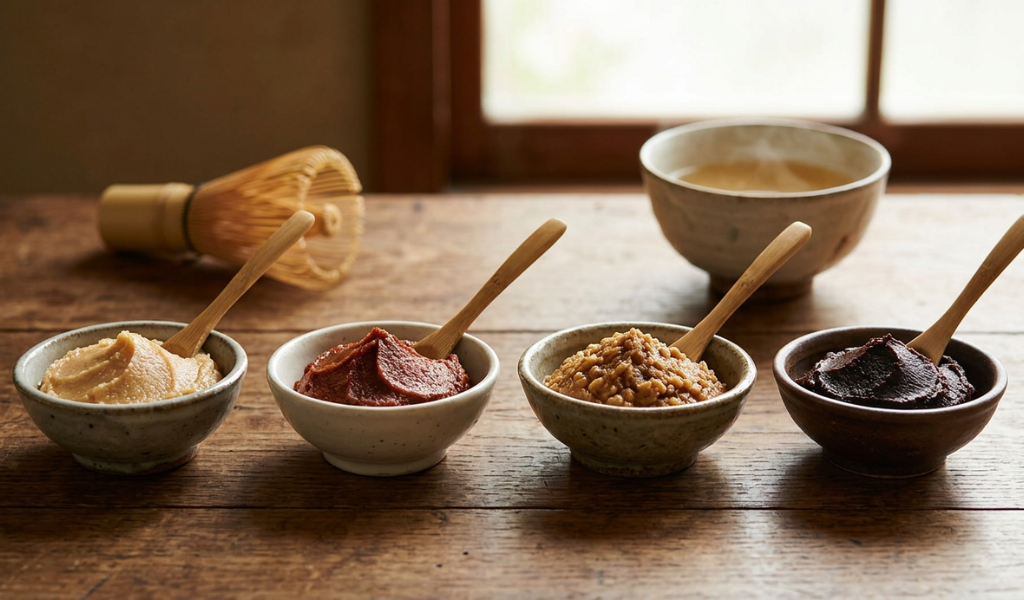
So what is miso, exactly? At its core, miso is a fermented soybean paste made from just a handful of ingredients. But that simple description barely scratches the surface. With over 1,300 varieties produced globally, miso is one of the most complex and versatile ingredients you can keep in your fridge. It can be sweet or earthy, mild or intensely savory, pale yellow or nearly black.
This guide walks you through everything you need to know — from how miso is made and the rich history behind it, to the different types of miso, how to store it properly, and the best ways to cook with it. Whether you’re a first-time buyer standing in the grocery store aisle or someone looking to go deeper into fermented foods, this post has you covered.
Miso is a fermented paste traditionally made from soybeans, salt, and koji. Koji is a mold called Aspergillus oryzae that is cultivated on rice, barley, or other grains. Once these ingredients are combined, the mixture is left to ferment for anywhere from a few weeks to several years.
The result is a thick, deeply flavorful paste packed with umami — that savory, satisfying taste that makes food feel rich and complete. Miso is widely used in Japanese cuisine to add flavor to soups, broths, marinades, glazes, dressings, and even desserts.
What makes miso so interesting is how much variety there is within one ingredient. The type of grain used, the ratio of soybeans to koji, and the length of fermentation all affect the final flavor, color, and texture. That’s how you end up with thousands of different varieties that each taste noticeably different from one another.
Not all miso contains soybeans, either. Some producers make soy-free versions using chickpeas, adzuki beans, farro, or other legumes and grains — a welcome option for people with soy sensitivities.
Miso’s roots go back further than most people realize. Though it has become deeply associated with Japanese food culture, historians believe the paste originated in China or Korea before making its way to Japan. According to the Japan Miso Promotion Board, miso was first introduced to Japan in the 7th century.
In those early days, miso was considered a luxury. Only Japanese nobility and Buddhist monks had access to it, and they often ate the paste on its own as a spread. It wasn’t until the 12th century that miso became more widely eaten, when samurai in the Kamakura period began using small amounts of the paste to flavor dashi, a traditional Japanese broth, creating what we now know as miso soup. That combination of rice and miso soup became a daily staple — one that remains a popular Japanese breakfast to this day.
As miso spread beyond the aristocracy, farmers across Japan began making their own versions at home. Each region developed its own style based on the grains available locally. According to Bonnie Chung, founder of Miso Tasty and author of a cookbook by the same name, “Most sweeter miso and rice-based miso comes from the north of Japan, because that’s where the rice paddies are. Barley miso is really popular in the south of Japan because barley is more commonly grown there.”
By the 17th century, miso was being produced industrially, which brought it to an even wider audience. But class distinctions still shaped who ate what. Wealthier merchants in cities like Kyoto and Edo (now Tokyo) bought premium rice-based miso, while farmers and working-class families made do with more affordable barley or millet versions. As Chung explains, “Traditionally, rice miso is more expensive than barley miso, because the grain is more expensive.”
Today, miso has crossed cultural and geographic borders. You’ll find it in upscale restaurant kitchens, home pantries, and everything from pasta dishes to salad dressings across the globe.
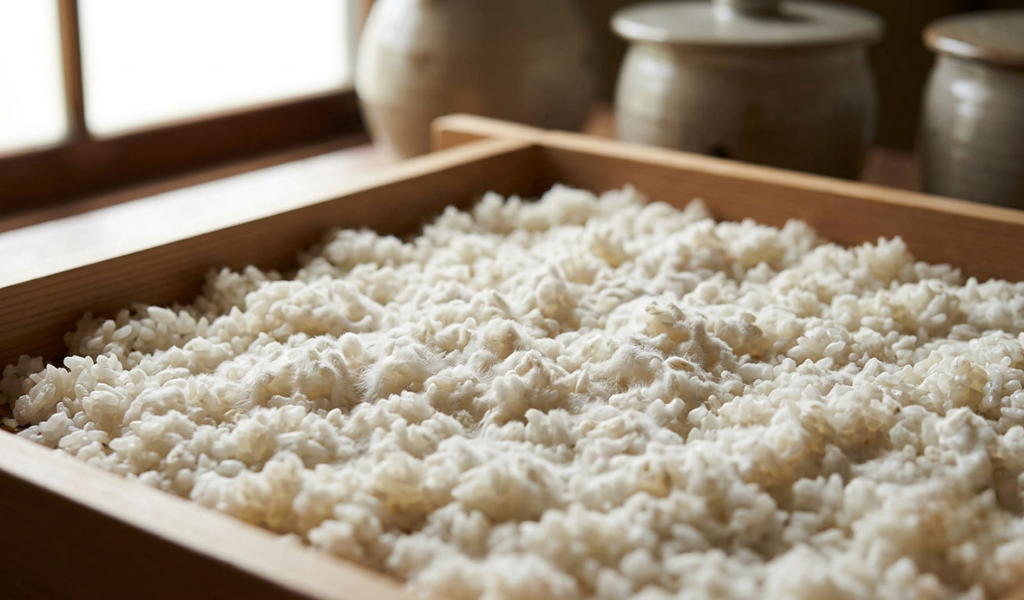
The miso-making process starts with koji — the mold that makes it all possible. Koji (Aspergillus oryzae) is one of the most important microorganisms in East Asian fermentation. It’s used to produce not just miso, but also soy sauce, sake, rice vinegar, and the Japanese spirit shōchū.
To make miso, koji is first grown on a grain — most commonly rice, barley, or soybeans themselves. Once the koji has developed on the grain, it gets mixed with cooked soybeans and salt. This mixture is then packed into containers and left to ferment.
During fermentation, the enzymes produced by koji break down the proteins in the soybeans into amino acids. “Koji’s protein enzymes break down the protein in the soybeans and create amino acids,” explains Mariko Grady, owner of Aedan Fermented Foods in San Francisco. Those amino acids are what give miso its complex, savory depth.
The fermentation timeline varies widely. A light white miso might be ready in as little as three months. A deeply rich red miso can ferment for anywhere from six months to several years. The longer miso ferments, the darker it becomes and the more intense its flavor grows.
The type of grain used to cultivate the koji also plays a major role in the final product. Kome miso is made with rice koji. Mugi miso uses barley koji. Mame miso relies entirely on soybean koji. Each produces a noticeably different flavor profile, texture, and color.
This is where things get really interesting. Walk into a specialty Japanese grocery store and you’ll find miso sold by weight in dozens of varieties. In the United States, most supermarkets carry white and red miso as the standard options. But there’s a much wider world of miso worth exploring.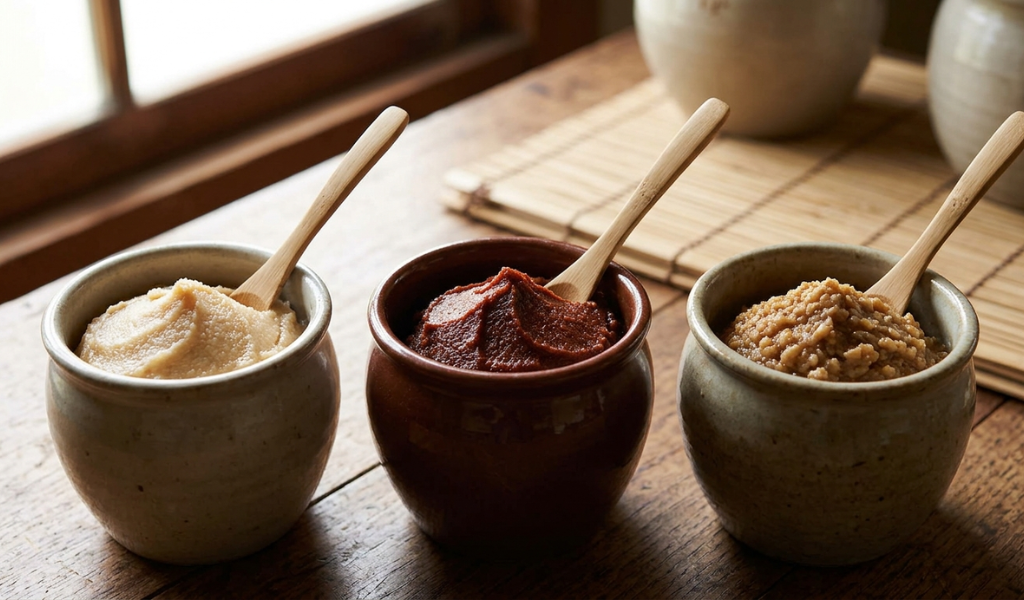
Shiro means “white” in Japanese, and this variety lives up to its name with a pale yellow or cream color. White miso is made with a higher ratio of rice koji to soybeans and ferments for a short period — typically three months to one year. The result is a mild, slightly sweet paste that works beautifully in lighter dishes.
Use white miso in salad dressings, marinades for chicken or white fish, or blended into butter for a quick flavor upgrade. It’s also a great entry point if you’re new to cooking with miso.
Aka means “red,” and this variety is the bolder, more assertive counterpart to white miso. Red miso has a higher proportion of soybeans to rice koji and ferments for a longer period — typically six months to over a year, and sometimes as long as five to ten years. That extended fermentation produces a deep reddish-brown to nearly black color and an intensely savory, complex flavor.
Red miso holds up well next to rich ingredients. Think braised meats, oily fish like mackerel or salmon, hearty mushroom dishes, and thick stews. It’s not the right choice for a light vinaigrette, but it’s perfect when you want something bold.
One thing worth knowing: not all red-colored miso at the grocery store has been aged for a long time. Some commercial producers speed up the process and then expose the miso to oxygen to darken it artificially. Reading ingredient labels carefully can help you identify higher-quality options.
Mugi miso swaps out rice for barley koji, giving it a slightly earthier, more robust flavor. It ranges from a light golden color to a deeper red depending on fermentation time. Because it’s made with barley, mugi miso is not gluten-free — something worth noting for anyone with gluten sensitivities.
Mame miso is made entirely from soybeans with no additional grain. It has a dark brown color, a dense texture, and an intense, almost pungent flavor. This is a miso for people who want bold, concentrated umami without much sweetness.
Hatcho miso is a special type of mame miso produced exclusively in Japan’s Aichi prefecture. According to Chung, “Hatcho miso is completely black, soy-sauce-colored, and it has the consistency of fudge.” It ferments for two to three years and has an extraordinarily deep, bitter-edged flavor that is unlike anything else.
The name “hatcho” refers to eight units of traditional Japanese measurement — specifically, the distance of eight blocks from Okazaki Castle where this miso was historically made. Much like Champagne can only be called Champagne if it comes from a specific region in France, hatcho miso can only bear that name if it comes from its designated area in Aichi.
Often called yellow miso, Shinshu miso falls between white and red in both color and flavor. It ferments slightly longer than white miso but doesn’t reach the intensity of red miso. The golden hue and mild, balanced taste make it a versatile everyday option for cooking.
Genmai miso is made using brown rice rather than white rice for the koji. This gives it an earthier, nuttier flavor profile and a warm golden-brown color. It tends to be sweet enough to use in sauces or dressings without overpowering other flavors.
Awase simply means “mixed,” and that’s exactly what this is — a blend of red and white miso. Mixing the two gives you the sweetness of white miso alongside the depth of red miso. Many Japanese home cooks use awase miso for everyday miso soup because it delivers a well-rounded flavor without leaning too far in either direction.
Inaka miso is a rustic, homemade-style miso traditionally made by farmers in the Japanese countryside. It can be made with rice or barley and is typically fermented longer than commercial varieties, resulting in a robust, full-bodied flavor and a dark color. You’re unlikely to find it outside Japan, but it represents the kind of regional miso-making tradition that has shaped the ingredient’s history.
More recently, a small number of artisan producers have begun experimenting with miso made without soybeans. Companies like Aedan Fermented Foods in San Francisco produce chickpea miso, while White Rose Miso in Maryland offers benne miso and farro miso. South River Miso is reportedly the only known producer of adzuki bean miso. These options are worth seeking out if you want to explore miso flavor without soy.
This is one of the most common questions people have about miso, and the good news is that miso is very shelf stable. Because it’s a fermented food, miso doesn’t technically expire the way fresh produce or dairy does. However, that doesn’t mean you can leave it anywhere and forget about it.
Once opened, miso should always be stored in the refrigerator, recommends refrigerating miso to slow down the fermentation process and prevent mold. When stored properly in an airtight container in the fridge, miso can last for a year or more.
Over time, the surface of the miso may darken due to oxidation. That darkening doesn’t mean the miso has gone bad — it’s a natural reaction. To slow it down and keep your miso tasting fresher for longer, press a sheet of parchment paper or plastic wrap directly onto the surface of the paste before sealing the container.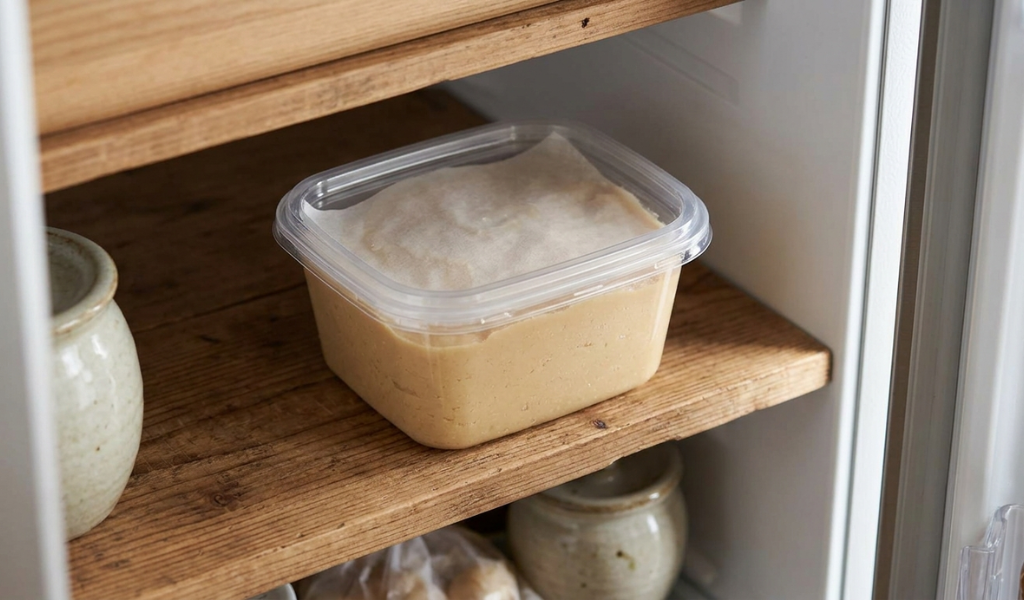
The main risks to watch for are mold growth, which can happen if the container is not sealed properly or if other foods are introduced via a dirty spoon, and a significant change in smell. Trust your senses. Fresh miso has a rich, savory, fermented aroma. If something smells genuinely off, it’s best to discard it.
Shopping for miso can feel a little overwhelming at first, especially if you’re staring at a shelf of unfamiliar packaging. Here’s what to keep in mind.
Check the ingredient list first. Quality miso should contain soybeans, some type of grain (rice, barley, etc.), salt, and water. Some labels will also include koji, which is a good sign. What you don’t want to see is a long list of additives, sweeteners, or alcohol. As Chung explains, some producers use these additives to accelerate fermentation, which can affect both the flavor and the shelf life of the miso.
Pay attention to texture. If you can inspect the miso before buying (or if the brand has a transparent lid), look for a paste with a little texture and slight graininess. Chung notes that cheap, mass-produced miso is often over-milled to the point of being almost sticky and smooth. Natural miso should have more body.
Consider where to shop. Most large supermarkets carry at least one or two varieties of miso in the international foods aisle or the refrigerated section. Asian grocery stores and Japanese specialty markets typically carry a wider selection. You can also order online from specialty retailers for access to artisan and regional varieties.
Start with white or awase miso if you’re new to it. These are the most forgiving to cook with. From there, you can explore bolder varieties as your comfort with the ingredient grows.
Miso is one of those ingredients that makes almost everything it touches taste better. The key is knowing when to add it — because miso doesn’t like high, direct heat. Boiling miso can destroy the beneficial bacteria and dull the flavor. Add it at the end of cooking, stir it into warm (not boiling) liquid, and let it dissolve slowly.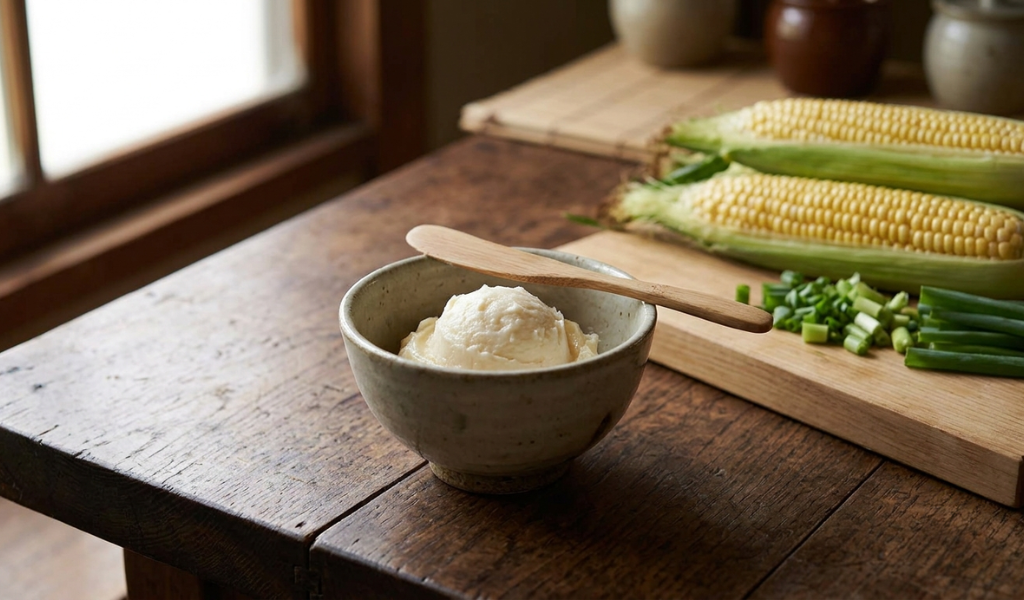
Here are some practical ways to get started:
Miso soup. This is the most traditional starting point. Dissolve a spoonful of miso into warm dashi or vegetable broth, then add tofu, seaweed, or green onions. White miso gives a gentle, sweet soup. Blending white and red miso together, as Chung recommends, creates a more layered flavor.
Marinades and glazes. Miso mixed with mirin, sake, or a touch of honey makes a phenomenal marinade for salmon, chicken thighs, or eggplant. The sugars in the marinade caramelize beautifully in the oven or on the grill.
Miso butter. Blend softened butter with a teaspoon or two of white miso and use it on corn, roasted vegetables, grilled steak, or pasta. It’s a simple way to add complexity to any dish.
Salad dressings. A tablespoon of white miso whisked into a sesame or ginger vinaigrette adds body and depth without making the dressing feel heavy.
Pasta and noodle dishes. Stir a small amount of red or white miso into pasta water or directly into the sauce. It amplifies the savory notes and makes the dish feel richer.
Soups and stews. Stir miso into any broth-based soup near the end of cooking. Even a spoonful of red miso in a vegetable or bean stew makes a noticeable difference.
Desserts. This might sound unusual, but miso works surprisingly well in sweet applications. A small amount of white miso in caramel sauce, chocolate brownies, or banana bread adds a salty, fermented note that makes the sweetness more interesting.
Miso is one of the most rewarding ingredients to explore. It has real history behind it, a fascinating production process, and a flavor that genuinely changes depending on how it’s made. Once you understand the basics — what miso is, how it’s made, and what the different types taste like — cooking with it becomes natural and intuitive.
Start with a tub of white miso if you’re just getting started. Use it in a simple miso soup or a marinade. From there, work your way toward red miso, barley miso, and beyond. The more you cook with it, the more you’ll find yourself reaching for it.
And if you want to go even further, look for local miso-making workshops or artisan producers near you. Some companies, like Aedan Fermented Foods in San Francisco, even sell miso-making kits so you can try the fermentation process at home.
Miso is traditionally made from soybeans, salt, and koji — a mold (Aspergillus oryzae) grown on rice, barley, or other grains. These ingredients are combined and fermented for weeks to years depending on the type of miso. Some soy-free versions use chickpeas, farro, or other legumes instead of soybeans.
Miso has a deep, savory umami flavor. Lighter varieties like white miso taste mild and slightly sweet. Darker varieties like red miso or hatcho miso taste bold, earthy, and sometimes slightly bitter. The flavor depends on the type of grain used, the ratio of ingredients, and how long the miso has fermented.
Miso is a fermented food, which means it contains beneficial bacteria that support gut health. It’s also a source of protein, vitamins, and minerals. However, miso is high in sodium, so people monitoring their salt intake should use it in moderation. As with any food, balance matters more than any single ingredient.
White miso (shiro) ferments for a shorter period — typically three months to one year — and uses a higher ratio of rice koji to soybeans. The result is a light, mild, slightly sweet paste. Red miso (aka) ferments longer, sometimes up to several years, and contains more soybeans relative to koji. It has a darker color and a much more intense, complex flavor.
In most cases, yes, but expect a difference in flavor. White miso is generally the safest substitute if a recipe calls for red miso and you want something milder. Using red miso in place of white miso will make the dish saltier and more intense. Start with less than the recipe calls for and adjust from there.
When stored properly in an airtight container in the refrigerator, miso can last for up to a year or more after opening. Pressing parchment paper or plastic wrap onto the surface of the miso before sealing helps slow down oxidation and keeps the flavor fresher for longer.
Miso is available in most large supermarkets, usually in the international foods aisle or the refrigerated section near tofu and Asian condiments. Asian and Japanese grocery stores typically carry a broader selection. You can also purchase artisan and regional varieties from online specialty retailers.