Physical Address
304 North Cardinal St.
Dorchester Center, MA 02124
Physical Address
304 North Cardinal St.
Dorchester Center, MA 02124

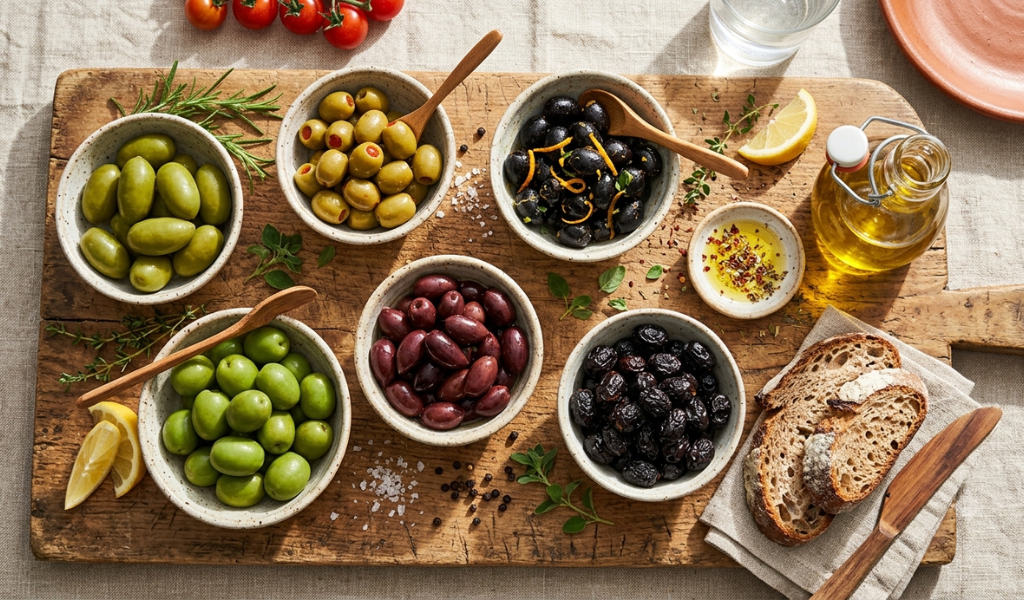
Walk into any well-stocked grocery store, deli counter, or Mediterranean restaurant, and you’ll find yourself face to face with a dazzling array of olives. Some are plump and green, others small and wrinkled. Some taste mild and buttery, while others hit you with an intense, salty punch. If you’ve ever stood at an olive bar wondering what the difference actually is between all those little bowls, this guide is for you.
The world of types of olive is far bigger than most people realize. There are hundreds of varieties grown across the Mediterranean region and beyond, each with its own flavor profile, texture, and best use. Knowing a little about each one can completely change the way you cook, snack, and even mix cocktails.
Humans have been cultivating olive trees for roughly 8,000 years, making the olive one of the oldest cultivated fruits in history. Olive trees are incredibly resilient and long-lived, with some trees remaining productive for more than a thousand years. They flourish in hot, dry climates across countries like Italy, Greece, Spain, France, Morocco, Turkey, and Lebanon.
Beyond their culinary uses, olives are rich in polyphenols and other natural plant compounds that contribute to their complex flavors and aromas. These compounds also give olives their well-documented health benefits, which have made them a staple of the Mediterranean diet for centuries.
This guide covers everything you need to know: the difference between green olives vs. black olives, the most popular varieties, why olives taste so different depending on how they are cured, and how to use each type of olive in your cooking, on your snack boards, and in your drinks.
This is one of the most common questions people have about olives, and the answer is simpler than you might expect. Most olives actually start out green. As they ripen on the tree, they gradually darken, turning shades of purple, brown, or deep black depending on the variety.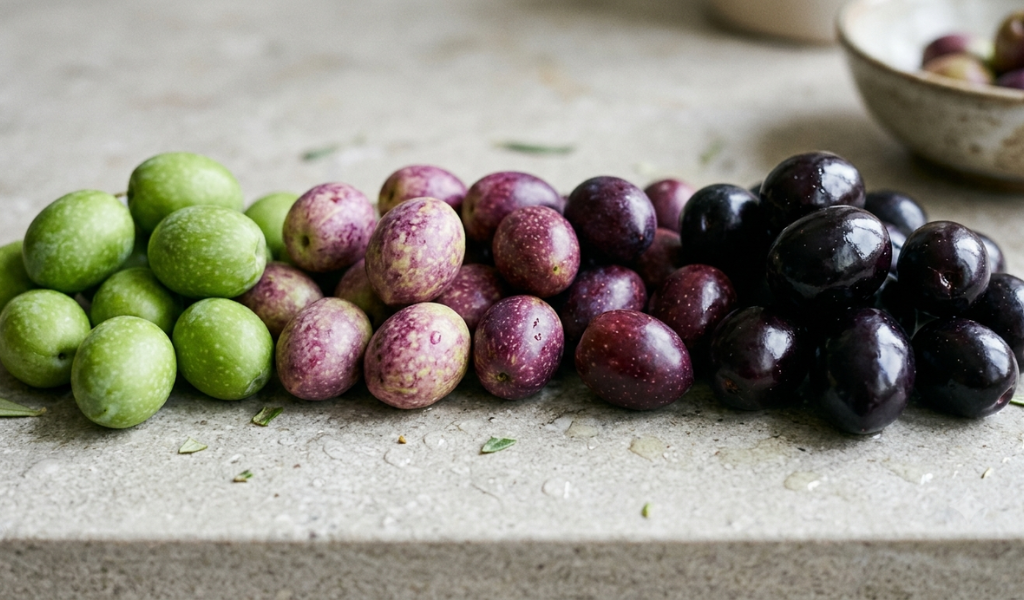
Green olives are harvested earlier in the ripening process. Because they’re picked young, they tend to be firmer and have a more bitter, grassy flavor. Black olives are left on the tree longer, which allows them to develop a richer, fuller flavor and softer texture.
The color difference between green olives vs. black olives also reflects a difference in oil content. As olives ripen, they accumulate more oil. This is part of why fully ripened black olives often have a richer, more mellow taste than their green counterparts.
Some varieties are almost always sold green, including Castelvetrano, Picholine, Lucques, and Gordal. Others, like Kalamata, Niçoise, and Gaeta, are typically sold fully ripened. The variety, the growing region, and the curing method all play a role in shaping the final flavor in your bowl.
Let’s get into the individual varieties. These are the olives you’re most likely to encounter at your local grocery store or specialty food shop.
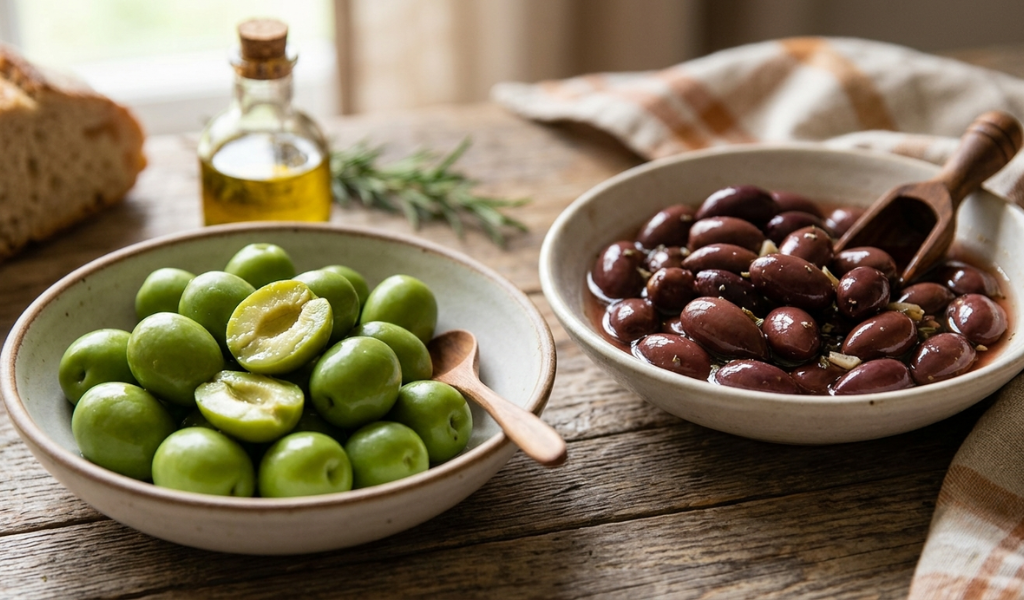
If you’ve ever offered someone their “first olive” and watched their face light up, there’s a good chance it was a Castelvetrano. These large, vivid green olives come from southwestern Sicily and are known for being mild, buttery, and meaty. Because they are harvested young, they keep their bright green color and have a gentle, almost sweet flavor with very little bitterness.
Castelvetranos are widely considered the best gateway olive for people who think they don’t like olives. They’re easy to snack on straight from the jar, wonderfully marinated in garlic and lemon oil, and one of the top choices for a classic dirty martini.
Kalamata olives are probably the most recognizable type of olive in the world, and for good reason. These dark, almond-shaped olives come from the Peloponnese region of Greece and carry a rich, tangy, wine-like flavor. They’re packed in brine or red wine vinegar, which gives them their distinctive sharpness.
You’ll find Kalamatas in Greek salads, tapenades, pasta dishes, and braises. Their bold flavor holds up well to heat, making them a reliable choice whenever a recipe calls for a salty, savory depth.
Small but mighty, Niçoise olives come from the Nice region of France and are brine-cured to produce an intensely salty, savory flavor. They’re relatively small with a firm bite and a pleasant earthiness.
These olives are a natural fit for Provençal cooking. They’re the traditional choice for the classic Niçoise salad and pair beautifully with tuna, hard-boiled eggs, green beans, and potatoes. They also work well in tapenades, where their concentrated flavor can do a lot of heavy lifting.
Round, juicy, and mild, Manzanilla olives are among the most widely sold types of olive in the United States. Originally from Sevilla, Spain, their name translates to “little apple,” and their round shape reflects that. These are the olives you typically see stuffed with pimentos and skewered on cocktail picks.
Manzanillas have a clean, lightly briny taste that makes them incredibly versatile. Use them in sandwiches, cocktails, grain salads, or slow-cooked chicken dishes. They’re not the most complex olive, but they’re crowd-pleasing and easy to work with.
These large, oval olives from the Puglia region of Italy are some of the biggest you’ll find. They come in green, red, or black, with a firm, meaty texture and a fruity flavor that’s notably mild on the brine. Their relatively small pits and roomy flesh make them perfect for stuffing.
Fill Cerignolas with blue cheese, cream cheese, pimentos, or even a sliver of anchovy. They also work well on antipasto boards and can be marinated in gin, vermouth, and citrus for a fun cocktail-inspired appetizer.
Gaeta olives come from the town of the same name in Lazio, Italy. They’re small, dark purple, and deeply savory with earthy, slightly smoky notes and a pleasant bitter backbone. You’ll often find them dry-cured or brine-cured, and both versions carry that characteristic tang.
Gaeta olives are a classic ingredient in southern Italian cooking, often used in pasta dishes, braised meats, and homemade olive mixes. Their boldness makes them a great addition to any recipe that benefits from a briny punch.
Originating in Catalonia, Spain, Arbequina olives are small, round, and greenish-tan in color. Their flavor is notably mild and nutty with a buttery finish, which has made them one of the most popular varieties for producing extra-virgin olive oil.
As a table olive, Arbequinas are approachable and easy to eat. They work well on charcuterie boards, tossed into grain salads, or simply served alongside cheese and crackers. Their mild flavor won’t overpower anything they’re paired with.
For olive lovers who prefer big, bold flavors, Beldi olives from Morocco are worth knowing. These wrinkled, salt-cured black olives are deeply savory, almost intensely salty, with a soft and chewy texture that resembles a dried fruit more than a fresh one.
Beldis aren’t for everyone, but when used correctly, they’re incredible. Toss them into a fennel salad with orange segments and they transform the dish. Serve them alongside sharp cheese and cured meat, and they hold their own with ease.
Most of the olives stocked on grocery store shelves come from a handful of countries or from California, which produces about 95% of domestically grown olives in the United States according to the California Olive Committee. But if you’re willing to explore, there are some wonderful regional varieties worth hunting down.
From France: Nyons olives are small, wrinkly, and black with a rich, almost nutty flavor. Picholine olives are small and green with a crisp bite and slightly tart flavor.
From Greece: Amfissa olives are soft, juicy, and green, with a mild and fruity taste. Halkidiki olives are large, green, and firm, often sold stuffed.
From Italy: Taggiasca olives are small, dark, and buttery, frequently used in Ligurian cooking and for producing premium olive oil. Leccino olives are purple-black and are a cornerstone of Tuscan oil production. Nocellara del Belice olives are firm, green, and snappy with a clean, fruity flavor.
From Spain: Gordal olives are large, plump, and meaty, sometimes called Queen olives, with a mild brine and satisfying chew. Hojiblanca olives are slightly grassy and sweet, widely used for producing olive oil.
From Tunisia: Chetoui olives have a peppery, fruity character. Chemlali olives are bright and grassy. Meski olives are plump, green, and crowd-pleasing.
Here’s something that surprises many people: you cannot eat an olive straight off the tree. Fresh, uncured olives are extremely bitter because they contain a naturally occurring compound called oleuropein. Before olives can be enjoyed, they need to be cured, a process that removes or neutralizes that bitterness and transforms the fruit into something delicious.
This is a big part of why olives taste so different from one another. The variety matters, but so does the curing method. Here are the four most common approaches.
In brine curing, ripe olives are submerged in a saltwater solution and left to ferment for several weeks or up to a year. The salt draws moisture from the fruit and triggers a fermentation process that develops complex, salty, tangy flavors. Brine-cured olives tend to hold their color well and have a firm, snappy texture.
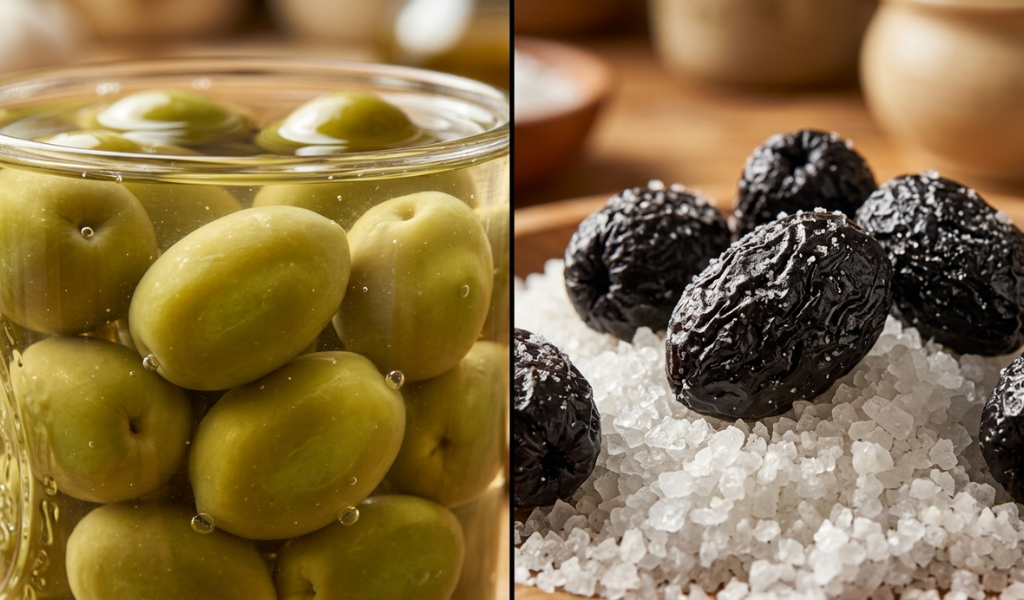
Dry-cured olives are packed in layers of salt for a month or more. The salt pulls out their moisture and bitterness, concentrating their flavor and leaving the skin slightly shriveled. If you’ve ever been handed a wrinkly olive that looked like a large, dark raisin, it was almost certainly dry-cured. Beldi olives are a classic example of this style.
After an initial dry-cure in salt, some olives are transferred to oil for several months. The oil works its way into the flesh, creating a softer texture and a richer, fuller flavor. Oil-cured olives tend to have a luxurious mouthfeel and a depth that plain brine-cured olives don’t always achieve.
Lye curing is a fast, industrial method used by large commercial producers. Raw olives are treated with an alkaline lye solution that quickly neutralizes the bitterness. The process is efficient but it strips out much of the flavor and can leave the olives with a soft, almost mushy texture. Most food enthusiasts and specialty producers avoid this method. If you’re buying quality olives, you’re unlikely to encounter lye-cured ones.
Most types of olive pair naturally with citrus, fennel, tomatoes, bitter greens, aged cheeses, and hardy herbs like rosemary and thyme. But knowing which variety to reach for in a given situation makes a real difference.
For Greek salads, Kalamata olives are the traditional and best choice. Their tangy, wine-forward flavor plays well with feta, cucumber, tomatoes, and red onion.
For focaccia and bread baking, go with olives that have a meaty texture and enough flavor to stand out after baking. Castelvetrano and Kalamata both work well here.
For tapenades and olive spreads, you have flexibility. The classic French tapenade calls for black olives, but Gordals, Cerignolas, and Niçoise olives all produce excellent results.
For tagines and braises, choose something with assertive flavor, like Picholine or Kalamata. They hold their shape during long cooking and contribute a savory depth to the dish.
For pasta dishes, Gaeta and Kalamata olives are both solid picks. Their bold flavors cut through rich tomato sauces and complement capers, anchovies, and garlic.
You can’t really go wrong with olives on a snack board, but a good mix usually includes at least one mild green option and one bolder black variety. Castelvetranos and Arbequinas cover the mild end, while Kalamatas and Gaeta olives bring more punch. Cerignolas add visual interest with their impressive size. Drizzle them in good olive oil with a little lemon zest and fresh herbs before serving.
The best olives for stuffing are large, firm, and easy to work with once the pit is removed. Cerignolas are the top pick here. Manzanillas and Gordals (also called Queen olives) are also excellent choices. Fill them with blue cheese, cream cheese and herbs, roasted garlic, pimentos, or even small pieces of marinated anchovy.
The best olives for martinis are mild and brine-cured, with a firm enough texture to hold up in the drink. Castelvetrano and Gordal olives are consistently popular choices. For visual appeal and flavor preservation, choose olives that still have their pits intact. The pit helps the olive hold its shape and keeps the flesh juicier inside the glass.
When shopping for olives, the most useful advice is to buy from a store that has an olive bar where you can taste before committing. If that’s not possible, read labels carefully. A quality brine-cured olive should have a short, clean ingredient list: olives, water, salt, and possibly a small amount of vinegar. Oil-cured olives may include garlic, herbs, or wine. Avoid any product with artificial dyes or ingredients you don’t recognize.
Once you get your olives home, store them in the refrigerator in an airtight container. Keep them in their brine to preserve their saltiness and texture. If you want to add a little richness, pour a small splash of extra-virgin olive oil over the top before sealing the container. Stored this way, most olives will keep well for several weeks.
There’s a whole world of flavor waiting inside a bowl of olives. From the buttery mildness of a Castelvetrano to the intense saltiness of a Niçoise, every variety has its own character and its own perfect moment. Understanding the different types of olive, how they are cured, and how to use them in the kitchen helps you shop smarter, cook better, and enjoy them more.
Start with the varieties that sound most appealing to you and work outward from there. Pick up a few different kinds next time you’re at the store, set them out on a board with some cheese and good bread, and taste them side by side. That kind of direct comparison is the fastest way to develop a real feel for the differences between green olives vs. black olives, between brined and dry-cured, between mild and bold.
Once you find a few favorites, experiment with how to use each type of olive in your cooking. Toss them into pasta, fold them into a marinade, drop one into a cold martini, or simply eat them out of hand over the kitchen sink. No judgment. That’s often where the best olive moments happen.
Olives are technically a fruit. More specifically, they are a type of drupe, which is a stone fruit with a fleshy outer layer surrounding a hard pit. They belong to the same botanical family as mangoes, peaches, and cherries. The confusion arises because we most often eat olives in savory contexts, which makes them feel more like a vegetable.
No, you cannot. Fresh, uncured olives contain oleuropein, a naturally bitter compound that makes them essentially inedible right off the branch. All the olives you buy in stores have been cured through one method or another to remove that bitterness and develop their characteristic flavors.
Castelvetrano olives are widely considered the mildest and most approachable variety. They have a buttery, slightly sweet flavor with very little bitterness or brine. Arbequina olives are also very mild, with a nutty, gentle taste. Both are good starting points for people who are new to eating olives.
Green olives are harvested earlier in the ripening cycle and tend to be firmer with a more bitter, grassy, or tangy flavor. Black olives are left on the tree longer, resulting in a richer, softer, more mellow taste. That said, variety and curing method play just as big a role in final flavor as color does.
It depends on the dish. Kalamata olives are excellent in Greek salads, pasta, and braises. Castelvetrano olives hold up well in baked dishes like focaccia. Picholine and Gaeta olives add depth to stews and slow-cooked meals. As a general rule, choose olives with bold enough flavor to survive the cooking process without getting lost.
Store opened olives in the refrigerator in an airtight container, ideally kept in their original brine. The brine helps preserve their texture and flavor. You can also drizzle a little olive oil over the top to add richness. Most olives will keep well for three to four weeks when stored this way.
Mild, brine-cured olives work best in martinis because their flavor complements rather than overpowers the drink. Castelvetrano and Gordal olives are both popular choices. If possible, opt for olives that still have their pits, as the pit helps the olive retain its shape and stay juicy in the glass.