Physical Address
304 North Cardinal St.
Dorchester Center, MA 02124
Physical Address
304 North Cardinal St.
Dorchester Center, MA 02124

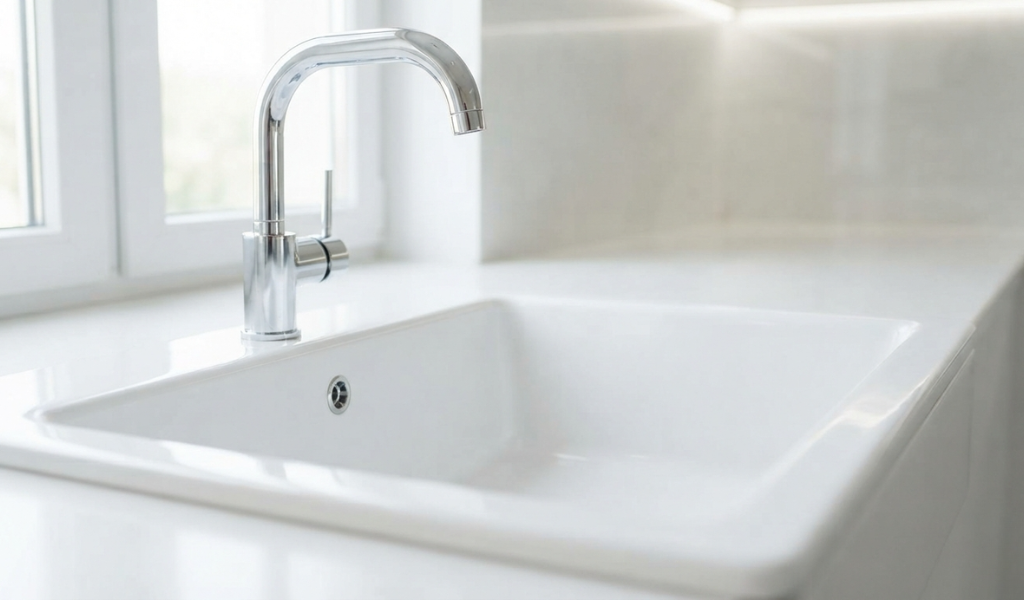
Porcelain sinks are a classic choice for kitchens and bathrooms. They look elegant, they’re built to last, and they give any space a clean, polished feel. But if you’ve ever noticed yellow stains, dull patches, or stubborn grime building up in your porcelain sink, you know that keeping it looking its best takes a little effort.
The good news? Learning how to clean a porcelain sink is easier than most people think. With the right tools, the right products, and a simple routine, you can bring back that bright, glossy finish without spending hours scrubbing.
This guide covers everything you need to know. From the best way to clean a porcelain sink on a daily basis to how to remove stains from your porcelain sink that have been there for months—we’ve got you covered. We’ll also walk you through what not to use on porcelain kitchen sinks, so you can avoid the common mistakes that cause chips, scratches, and dullness over time.
By the end of this post, you’ll have a clear, step-by-step plan that fits easily into your regular cleaning routine.
Porcelain is made from a clay base that’s fired at high heat and coated with a smooth, glass-like glaze. That glaze is what gives your sink its bright white shine—but it’s also what makes porcelain a little more delicate than stainless steel or composite sinks.
The surface can scratch if you use harsh scrubbing tools. It can stain if you let coffee, tea, or food sit in it for too long. And if you use the wrong cleaning products, you can strip the glaze over time, leaving the surface looking dull and worn.
That doesn’t mean porcelain is high-maintenance. It just means a gentle, consistent cleaning approach works far better than a rough, irregular one.
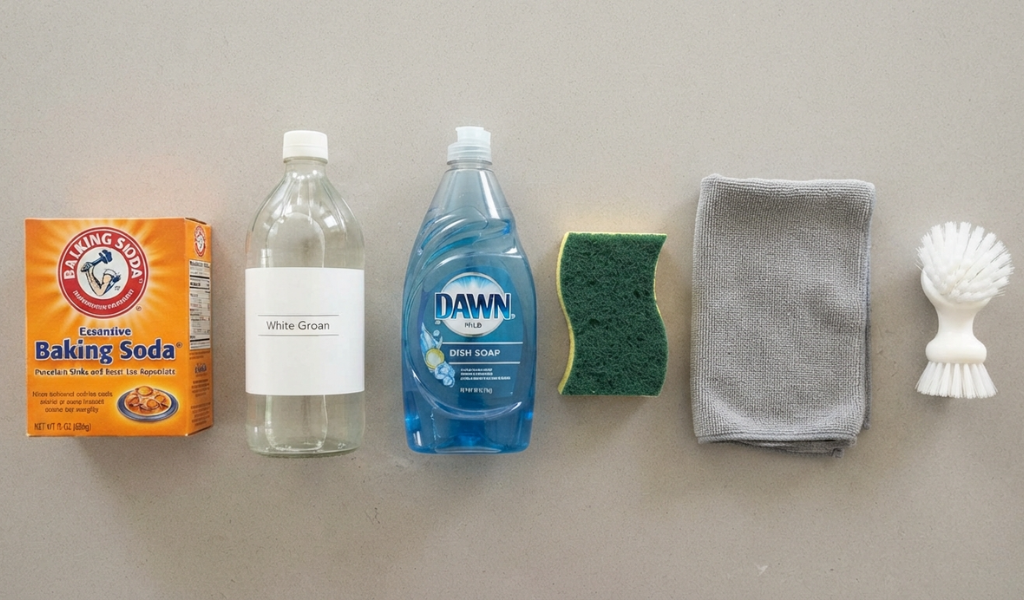
Before you begin, gather a few simple supplies. You probably already have most of these at home.
Avoid steel wool, abrasive scouring pads, or any cleaner with bleach. More on that in a later section.
For regular maintenance, this is the best way to clean a porcelain sink without damaging the surface. Try to do this every few days, or at least once a week, to keep buildup from forming.
Start by clearing out any food scraps, soap residue, or other debris from the sink. Give it a thorough rinse with warm water to loosen any surface dirt.
Apply a small amount of mild dish soap to a soft sponge or microfiber cloth. Scrub the entire surface of the porcelain sink, paying extra attention to areas around the drain and faucet where grime tends to collect. Rinse well with warm water.
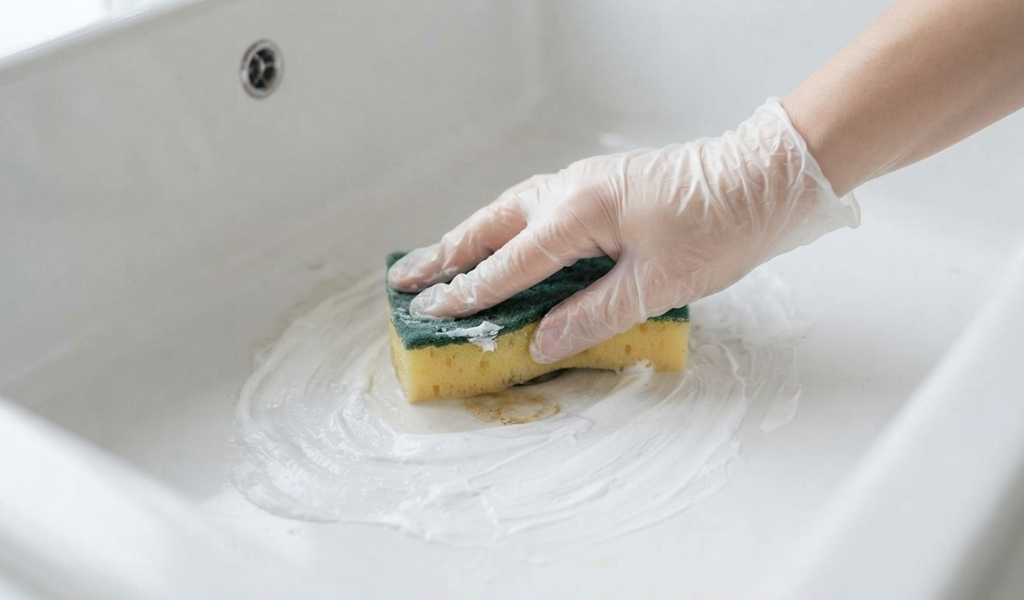
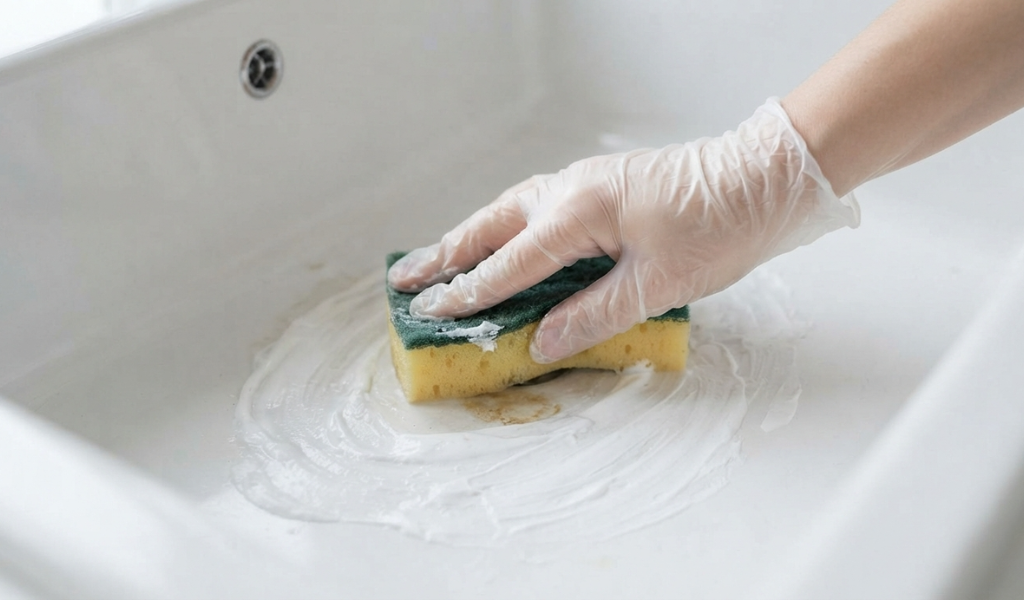
For a deeper clean, mix baking soda with just enough water to form a thick paste. Apply it to the surface of the sink using a soft sponge, and rub it in using gentle circular motions. Baking soda is mildly abrasive in the best possible way—it lifts grime without scratching the glaze. Let the paste sit for five to ten minutes before wiping it away.
Once you’ve wiped away the baking soda, spray the sink lightly with a mixture of equal parts white vinegar and water. This helps remove any remaining residue and leaves the surface with a nice shine. Rinse with clean water afterward.
This step is often skipped, but it makes a real difference. Use a clean microfiber cloth to dry the sink completely. This prevents water spots and mineral deposits from forming, especially if you live in an area with hard water.
Even with regular cleaning, stains can build up over time. Coffee, tea, rust, food dyes—these are all common culprits. Here’s how to remove stains from your porcelain sink without damaging the surface.
Sprinkle an oxygen-bleach powder (like OxiClean) directly onto the stained area. Add a small amount of warm water to activate it, then scrub gently with a soft brush using circular motions. Let it sit for 10 to 15 minutes, then rinse with cool water. Repeat if needed.
You can also use a cleaner made specifically for porcelain surfaces for stubborn staining. Always follow the product’s instructions carefully.
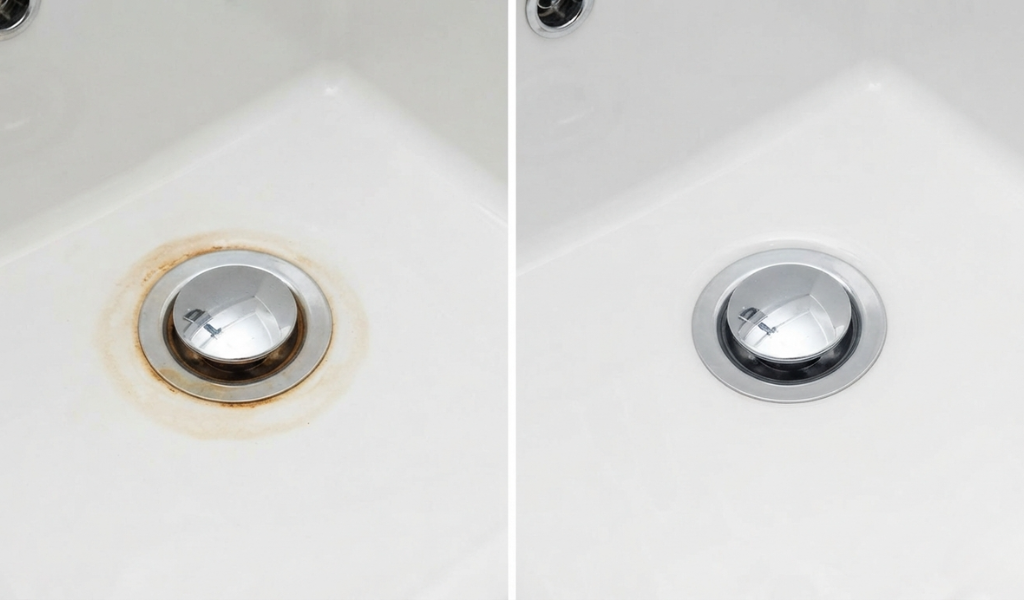
Rust stains can look alarming, but they’re usually removable. Squeeze a small amount of lemon juice onto the stain and let it sit for a few minutes. Lemon juice is naturally acidic, which helps break down rust without harming the glaze. Scrub gently with a soft sponge and rinse thoroughly.
Apply a few drops of hydrogen peroxide to a soft sponge and gently work it into the stained area. Leave it for five minutes, then rinse with water. Hydrogen peroxide is effective on organic stains like coffee and tea.
A practical tip: tackle stains as soon as you notice them. The longer a stain sits, the harder it becomes to remove. Make it a habit to rinse out the sink after every use, especially if you’ve been making coffee or cooking with anything that stains easily.
This is just as important as knowing what to use. A lot of common cleaning products can actually damage a porcelain sink over time. Here’s what to avoid:
Steel wool or metal scrubbers. These will scratch the glazed surface and leave permanent marks.
Bleach. Regular chlorine bleach can dull and discolor the finish of a porcelain sink. It may seem like a powerful cleaner, but over time it breaks down the protective glaze.
Abrasive powder cleaners. Products with harsh abrasives are too rough for porcelain. They can wear away the glossy coating and leave the surface looking scratched and uneven.
Ammonia-based cleaners. These are too harsh for porcelain and can damage the glaze with repeated use.
Rough scouring pads. Even if they look soft, green or nylon scouring pads can be more abrasive than they appear. Stick with a soft sponge or a microfiber cloth to stay safe.
Knowing what not to use on porcelain kitchen sinks is one of the most effective ways to keep your sink looking new for longer.
Cleaning your porcelain sink regularly is the foundation of good care, but there are a few extra habits that can help maintain that bright, white finish over time.
Water left sitting in your sink—especially hard water—can leave behind mineral deposits and white chalky spots. After washing dishes or cleaning up, take 30 seconds to wipe the sink dry with a soft cloth. It’s a small step that prevents a lot of buildup.
If you wash heavy pots and pans in your sink, a rubber mat on the bottom can protect the porcelain from scratches and chips. Pans and utensils can be surprisingly rough on the surface, and a mat absorbs that impact.
Coffee, red wine, tea, tomato sauce—these things can stain porcelain surprisingly quickly. If you pour any of these down the drain, give the sink a quick rinse right after rather than leaving it to sit.
On top of your regular weekly cleaning, set aside time once a month to give your porcelain sink a more thorough clean. Use the baking soda paste method, check for any early signs of staining, and scrub around the faucet and drain where buildup tends to hide.
After cleaning, a light coat of car wax or a product made for porcelain surfaces can add an extra layer of shine and help repel future stains. Apply a small amount, let it dry, and buff it off with a clean cloth.
A porcelain sink is one of those things that, when clean, makes your whole kitchen or bathroom feel fresh. When it’s dull or stained, it has the opposite effect.
The good news is that maintaining a porcelain sink doesn’t require expensive products or a lot of time. A gentle daily routine, the right cleaners, and a few smart habits are all it takes to keep it looking its best. Avoid the products that damage the glaze, tackle stains quickly, and dry the sink after use—and your porcelain sink can stay white and shiny for many years.
Start with the steps in this guide, and you’ll notice a difference almost immediately.
For best results, rinse your porcelain sink after every use and do a proper clean with dish soap and a soft sponge at least once a week. A deeper clean with baking soda or an oxygen-based cleaner is recommended once a month to keep staining and mineral buildup under control.
Yes, baking soda is one of the safest and most effective options for cleaning a porcelain sink. Mix it with a little water to form a paste, apply it with a soft sponge, and scrub gently in circular motions. It removes grime and light staining without scratching the glazed surface.
Regular chlorine bleach is not recommended for porcelain sinks. It can dull and discolor the glaze over time. If you need a stronger stain treatment, use an oxygen-based bleach product like OxiClean instead, which is gentler on the porcelain surface.
Lemon juice works well for rust stains on porcelain. Apply it directly to the stain, let it sit for a few minutes, then scrub gently with a soft sponge and rinse. For more stubborn rust, a porcelain-specific cleaner can also be effective.
Dullness is usually caused by hard water mineral deposits, or by using cleaning products that are too harsh for the surface. Try wiping the sink with a diluted white vinegar solution to remove mineral buildup, and always dry the sink after cleaning to prevent water spots from forming.
A paste made from baking soda and water is one of the best DIY cleaners for a porcelain sink. For extra shine after cleaning, a 50/50 spray of white vinegar and water works well as a finishing rinse. Both are gentle, affordable, and effective.
Use a rubber sink mat to protect the bottom of the sink from heavy cookware. Avoid metal scrubbers, steel wool, and abrasive scouring pads. Always use a soft sponge or microfiber cloth when scrubbing, and stick to non-abrasive cleaning products.