Physical Address
304 North Cardinal St.
Dorchester Center, MA 02124
Physical Address
304 North Cardinal St.
Dorchester Center, MA 02124

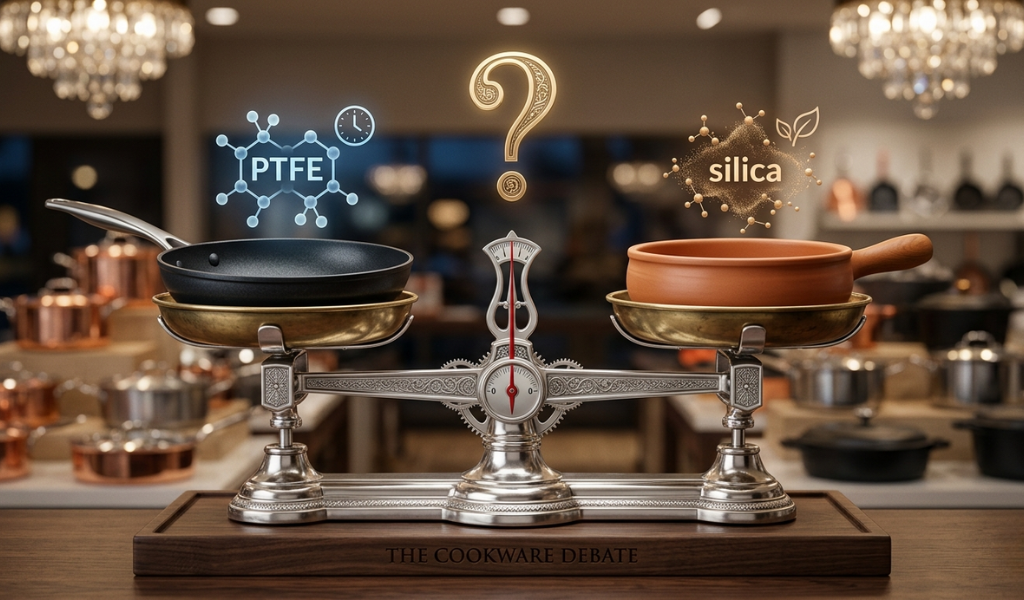
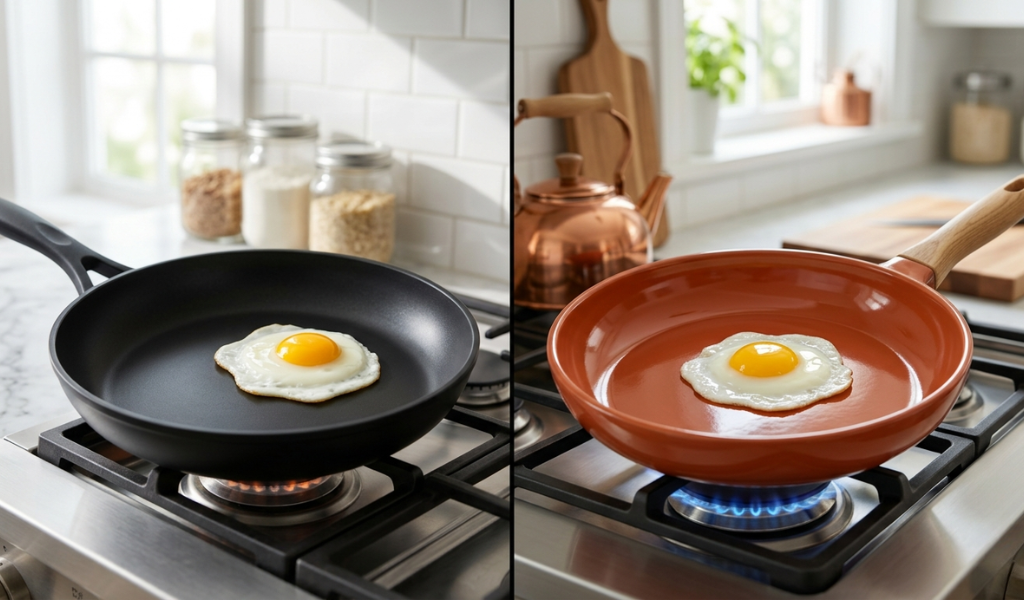 If you have ever stood in the kitchen aisle of a department store, staring blankly at a wall of gleaming skillets, you are not alone. Choosing between ceramic vs nonstick cookware feels like a high-stakes decision. On one hand, you want those Saturday morning eggs to slide off the pan easily. On the other hand, you’ve likely heard the concerns about chemicals and overheating safety.
In this guide, we’re going to help you understand the differences between ceramic and nonstick cookware. We will look at the science, the safety, and the real-world performance so you can decide which one deserves a spot on your stovetop.
Ceramic cookware is generally considered a safer and more eco-friendly option because it is free from PTFE and PFAS chemicals. Traditional nonstick cookware, however, offers better food release and longer-lasting nonstick performance. The best choice depends on your cooking style, budget, and safety preferences.
Before we dive into the nitty-gritty, let’s clear up a common misconception: ceramic cookware isn’t actually made of solid ceramic like a coffee mug or a tile. If it were, it would crack the moment it hit a hot burner. Instead, both ceramic and traditional nonstick pans usually have a metal core—typically aluminum, but sometimes stainless steel or even copper—that is coated with a slippery layer.
The “ceramic vs nonstick” argument is really an argument about the coating chemistry.
Both are designed to do one thing: prevent food from sticking. However, the way they are manufactured, how they react to high heat, and how they interact with your health are worlds apart. While ceramic and nonstick cookware may look similar on the shelf, they perform very differently once you start cracking eggs.
Traditional nonstick has been one of the most popular cookware options since the 1960s. It revolutionized home cooking because, for the first time, you could cook a delicate piece of fish without half of it staying stuck to the pan.
PTFE is one of the most slippery substances known to man. It belongs to a family of chemicals known as PFAS (per- and polyfluoroalkyl substances). These are often called “forever chemicals” because they are incredibly stable and do not break down easily in the environment or the human body.
The reason professional chefs and home cooks alike still use nonstick PTFE pans is simple: reliability. A PTFE pan like the Tramontina Professional series offers a level of “slipperiness” that is hard to match. You can practically cook an egg with zero butter or oil, and it will still slide around easily with very little oil or butter.It is also quite forgiving; it doesn’t stain easily, and it resists the “gumming up” that can happen with oils on other surfaces.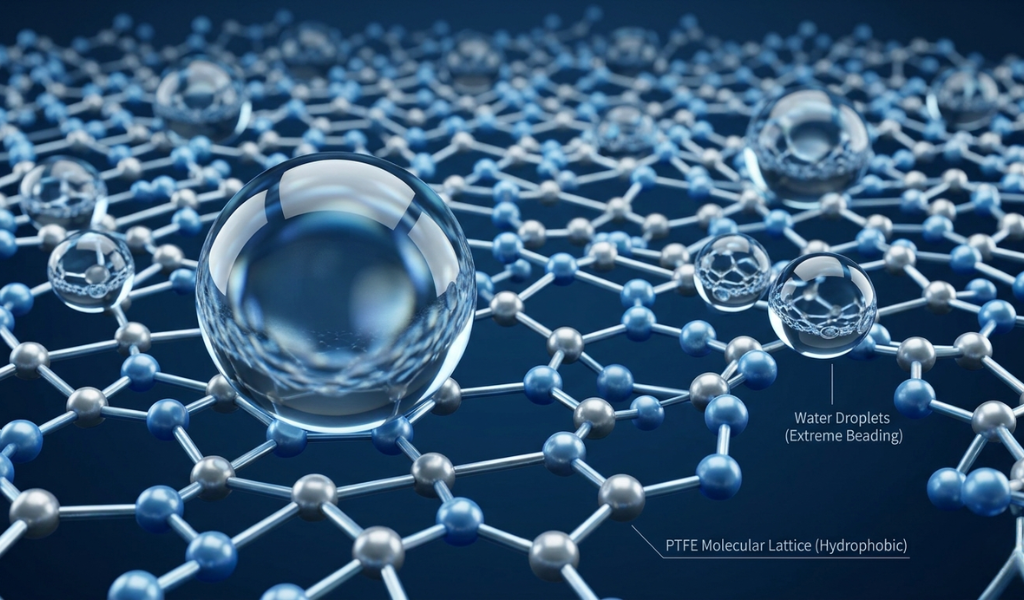
The chemical bond in PTFE is strong, but it has a breaking point. When these pans are heated above 500°F (260°C), the coating begins to degrade. At this point, it can release polymer fumes. For humans, inhaling these fumes can cause “Teflon flu”—a temporary but unpleasant set of chills and fever. For pet birds, whose respiratory systems are incredibly sensitive, these fumes can be fatal. This is why you must never use traditional nonstick for high-heat tasks like searing steaks or stir-frying.
As consumers became more concerned about “forever chemicals,” the industry looked for an alternative. Enter ceramic cookware. Marketed as the “green” or “natural” choice, ceramic pans like Caraway or GreenPan exploded in popularity.
The “ceramic” in your pan is actually a “sol-gel” (solution-gelation) coating. This involves converting a liquid silane solution into a solid, gel-like layer that is then cured with heat. The result is a hard, shiny surface that mimics the properties of real ceramic.
One of the biggest reasons people choose ceramic is that it looks beautiful. Because it isn’t restricted to the dull gray or black of PTFE, manufacturers can make these pans in stunning colors—terracotta, sage green, and navy blue. Furthermore, ceramic is naturally more heat-resistant than PTFE. It can typically withstand temperatures up to 800°F (427°C) without breaking down or releasing toxic gases. However, just because the coating can handle that heat doesn’t mean the pan should be used that way (more on that later).
One common question many buyers ask is: is ceramic cookware non toxic?
The marketing will tell you a resounding “Yes!” You will see labels like “PFAS-free,” “PFOA-free,” “Lead-free,” and “Cadmium-free.” In the context of traditional nonstick risks, this is all true. Ceramic coatings do not contain the plastic polymers that cause concern for some health-conscious consumers.
However, we have to be honest about the term “non-toxic.” In the cookware industry, this term isn’t strictly regulated by a central government agency in the way organic food is. Every brand has its own proprietary recipe for its sol-gel coating. While the base is silica (sand), other minerals and pigments are added to give the pan its color and durability.
Recent reports, including some from 2025, have suggested that while ceramic is a great alternative to PTFE, we shouldn’t assume it’s “chemical-free.” Manufacturing any nonstick surface involves chemistry. That said, if your primary goal is to avoid PFAS and prevent the risk of inhaling polymer fumes, ceramic is widely considered the ‘safest modern choice’ available today. It provides peace of mind that traditional Teflon simply cannot offer to some.
When we compare ceramic vs nonstick in a real-world kitchen test, the differences become obvious within the first week of use.
In the “Egg Test,” traditional nonstick almost always wins. PTFE is simply more “hydrophobic” (water-repelling) and “oleophobic” (oil-repelling) than ceramic. If you are a beginner who struggles with sticking, PTFE provides a wider safety net. Ceramic is very slick when new, but it has a slightly higher “surface tension,” meaning you might need a drop more oil than you would with a brand-new Teflon pan.
Most ceramic pans, such as those from Le Creuset, are built with heavier materials to match their premium price tag. This means they have excellent heat retention. Once they get hot, they stay hot. This is great for frying a pork chop where you don’t want the pan temperature to drop the second the meat hits the surface.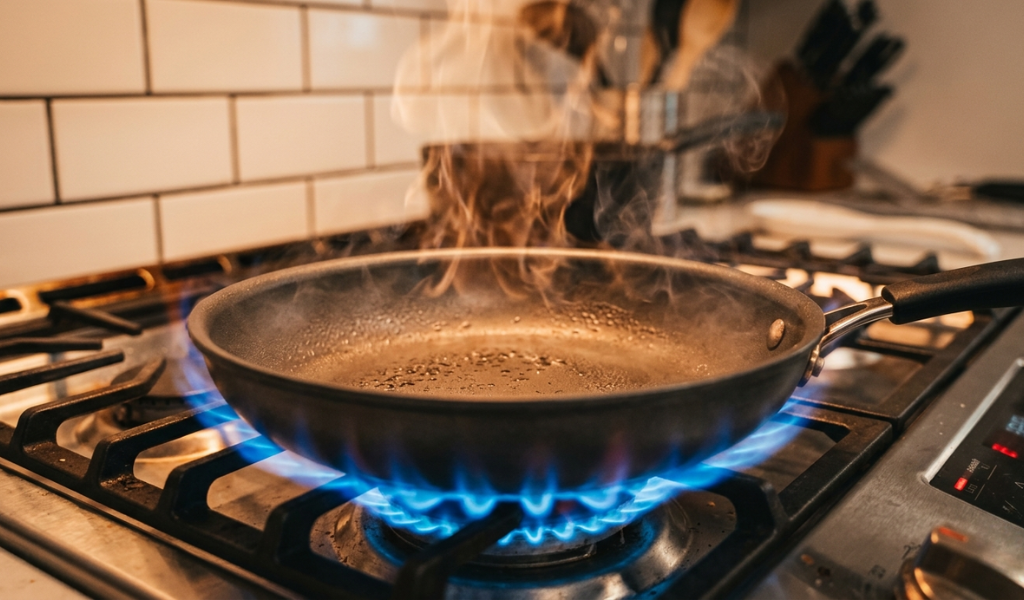
Traditional nonstick pans are often made of thinner spun aluminum. They heat up almost instantly and cool down just as fast. This responsiveness is vital for delicate sauces or scrambled eggs, where a few seconds of too much heat can ruin the dish.
I hate to be the bearer of bad news, but neither of these pans is an heirloom piece. If you are looking for a pan to leave to your grandchildren, buy cast iron. Ceramic and nonstick cookware have a limited shelf life.
Traditional nonstick usually dies by “the thousand cuts.” Every time you use a spatula or wash it, the soft plastic coating wears down just a tiny bit. Eventually, it starts to flake or peel. Once you see a scratch that reveals the metal underneath, you should stop using the pan, as those flakes will end up in your food.
Ceramic doesn’t usually peel; it “loses its magic.” Because the surface is glass-like, it is very brittle. Over time, “micro-cracks” develop due to thermal shock (going from a hot stove to a cold sink). Furthermore, if you use high heat, the proteins and sugars in your food can “carbonize” into the pores of the ceramic. This creates a sticky film that is nearly impossible to remove, effectively ending the pan’s nonstick life. Most people find that a ceramic pan loses its “easy-release” property much faster than a PTFE pan—often within 6 to 12 months of heavy use.
To get the best results from the ceramic vs nonstick debate, you have to change how you cook.
In the modern world, we can’t ignore the footprint our purchases leave behind. This is a major factor in the ceramic vs nonstick choice.
The production of PTFE has historically been linked to significant environmental pollution. Specifically, the runoff from factories producing PFAS has contaminated water supplies in various parts of the world. While modern regulations in 2026 are much stricter than they were twenty years ago, the fact remains that PTFE is a synthetic plastic that will essentially stay in a landfill forever once you throw the pan away.
Ceramic is generally considered more eco-friendly. The raw material (silica) is abundant, and the “curing” process in the factory releases up to 60% less CO2 than the process used for PTFE coatings. Additionally, because ceramic can withstand higher heat without outgassing, it is perceived as a “cleaner” product for the home environment. However, since ceramic pans often lose their nonstick ability faster, you might end up throwing away more pans over a ten-year period, which has its own environmental cost.
When shopping for ceramic vs nonstick cookware, you will notice a huge price gap.
If you are a student or someone just starting out, a budget nonstick pan is a smart move. If you are someone who wants a “showpiece” kitchen and values the health-conscious branding, the investment in ceramic might be worth it—just be prepared to replace it sooner than you’d like.
Regardless of which side of the ceramic vs nonstick fence you sit on, maintenance is the key to longevity. Most people ruin their pans in the sink, not on the stove.
The quickest way to kill a pan is “thermal shock.” If you take a screaming hot ceramic pan and plunge it into cold soapy water, the metal core and the coating will contract at different speeds. This causes the coating to crack or lift. Always let your pan reach room temperature before it touches water.
I don’t care what the box says. Dishwashers use incredibly abrasive detergents and high-pressure hot water that will “sandpaper” your nonstick surface over time. A soft sponge, warm water, and mild dish soap are all you need. If there is stuck-on food, let it soak for ten minutes rather than scrubbing.
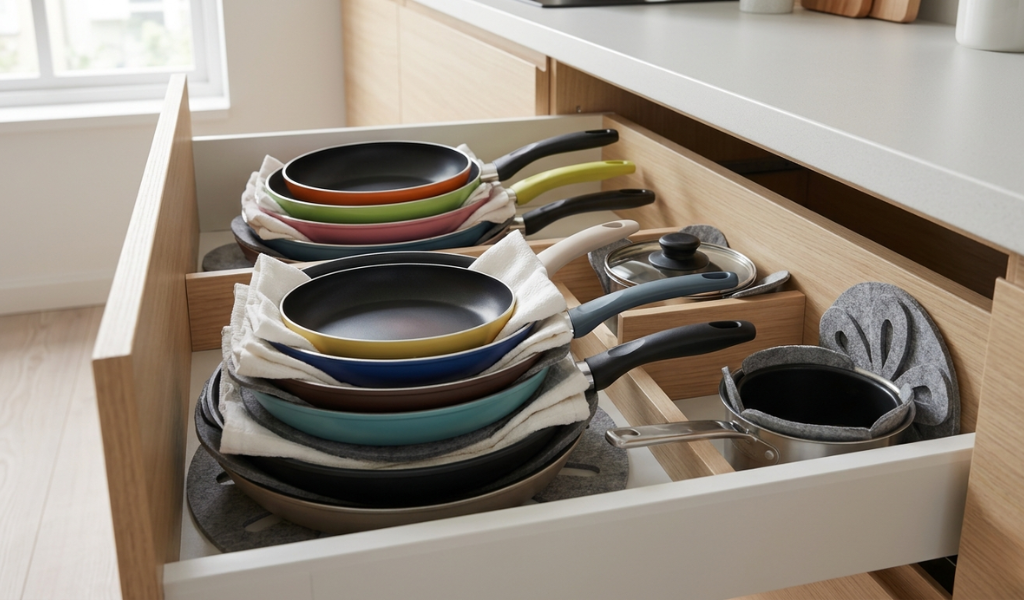
Don’t just stack your pans on top of each other. The bottom of one pan will scratch the delicate surface of the one beneath it. Use felt pan protectors, paper towels, or even old dishcloths between them to keep the surfaces pristine.
If all this talk of replacing pans every two years sounds exhausting, there is a third way. You can step out of the ceramic vs nonstick debate entirely.
A carbon steel pan, like the OXO Obsidian, is essentially the professional version of a nonstick pan. It’s made of iron and carbon, and through a process called “seasoning” (baking oil onto the surface), it develops a natural, non-toxic nonstick layer. It’s lighter than cast iron and gets better the more you use it. If the nonstick surface fails, you don’t throw the pan away—you just re-season it.
Cast iron is the original nonstick. It takes a while to heat up, but it is virtually indestructible. It’s perfect for everything from cornbread to steak. While it’s not quite as “slippery” as a brand-new Teflon pan, it is 100% non-toxic and will last for several lifetimes.
If you’ve decided which material is right for you, here are our tried-and-tested favorites:
This pan is a workhorse. It’s affordable, has a comfortable silicone handle, and the PTFE coating is incredibly resilient. It’s the pan you’ll find in many restaurant kitchens because it just works.
If you want a pan that has a stylish modern design, this is it. It has a heavy gauge aluminum core for even heating and one of the slickest ceramic surfaces we’ve ever tested. It’s also induction-compatible, which is a huge plus.
Kyocera is a leader in ceramic technology (they also make amazing knives). Their pans are lightweight, affordable, and offer a very high-quality sol-gel coating that offers strong performance for its price range.
At the end of the day, the ceramic vs nonstick cookware debate isn’t about which one is “best,” but which one fits your lifestyle and your values. If you want the classic, ultra-slick performance that makes cooking effortless and you aren’t worried about the chemistry of PTFE, Traditional nonstick is a reliable and budget-friendly option.
However, if you are looking to move away from synthetic polymers, care deeply about the environmental footprint of your kitchen, and want a beautiful cookware option with a modern design, ceramic is a fantastic choice. Just remember that both require a gentle touch—no high heat, no metal spoons, and no dishwashers.
Whichever you choose, remember that these pans are important everyday kitchen tools. Treat them gently, keep the heat low, and they will reward you with many delicious, stick-free meals.
Ready to upgrade your kitchen? Invest in a high-quality pan today and experience the difference that a truly nonstick surface can make in your daily routine!
Generally, yes. The manufacturing process for ceramic (sol-gel) typically releases fewer greenhouse gases and doesn’t involve the “forever chemicals” (PFAS) associated with PTFE production. However, because neither pan lasts forever, the environmental cost of frequent replacement is a factor for both. Ceramic’s shorter lifespan can sometimes offset its cleaner manufacturing.
Yes, but be careful. Extra virgin olive oil has a very low smoke point. If it reaches that point, it can “polymerize” or turn into a varnish-like film on the ceramic surface. This film is what makes ceramic pans lose their nonstick properties. It is better to use oils with a higher smoke point, like avocado or grapeseed oil, for anything above a low simmer.
This usually happens because of “invisible” buildup. Over time, tiny amounts of protein and burnt oil fill the pores of the ceramic coating. A deep clean with a bit of baking soda and water paste can sometimes restore the surface by lifting those oils, but often it’s just a sign that the coating has naturally worn down.
Modern Teflon (PTFE) is PFOA-free and considered safe for human use by global health agencies, provided it isn’t overheated. The “danger” mostly comes from fumes released at temperatures above 500°F, which can cause “Teflon flu” in humans and is lethal to pet birds. As long as you stay at medium heat, it is safe.
It depends on the base of the pan. Since ceramic and aluminum are not magnetic, the pan must have a bonded stainless steel plate on the bottom to work on induction. Most premium brands like Caraway or Misen include this, but many budget brands do not. Always check the packaging for the induction-ready symbol.