Physical Address
304 North Cardinal St.
Dorchester Center, MA 02124
Physical Address
304 North Cardinal St.
Dorchester Center, MA 02124

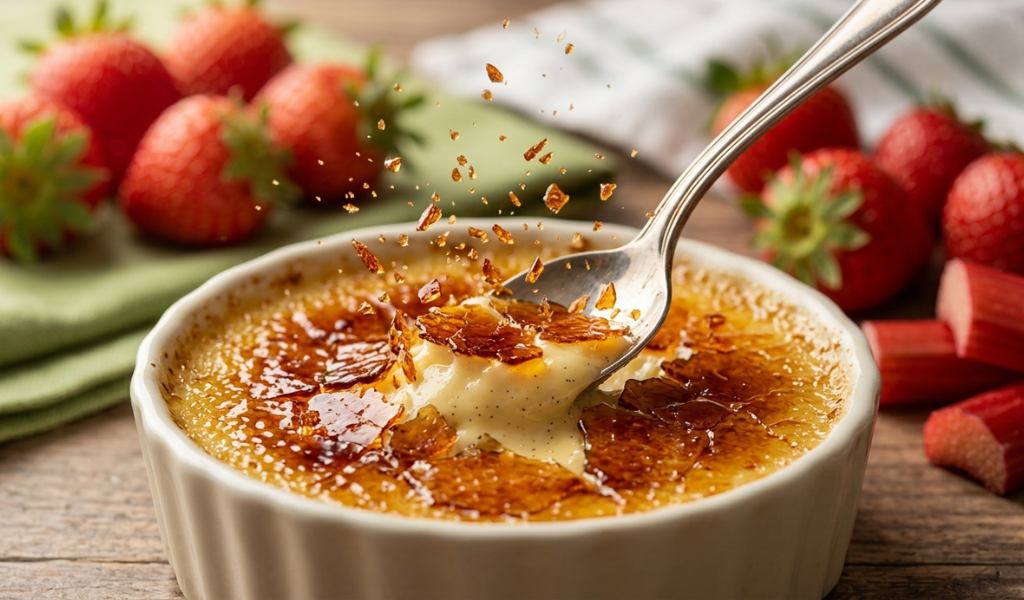
There is something satisfying about the first tap of a spoon against a crisp caramelized sugar crust. That sharp crack is the universal starting gun for one of the world’s most beloved desserts. But what if beneath that silky, vanilla-flecked custard lay a hidden treasure? Enter the Strawberry Rhubarb Crème Brûlée, a dessert that takes the rich base of a classic French custard and combines it with the tart, jammy flavor of spring’s favorite fruit duo.
While a traditional crème brûlée is a masterpiece of simplicity, adding strawberry rhubarb transforms it into a multi-dimensional experience. The richness of the heavy cream and egg yolks acts as the perfect foil for the tart flavor of the rhubarb. It is a balancing act of fat, sugar, and acid that will leave your guests wondering why they ever settled for the plain version.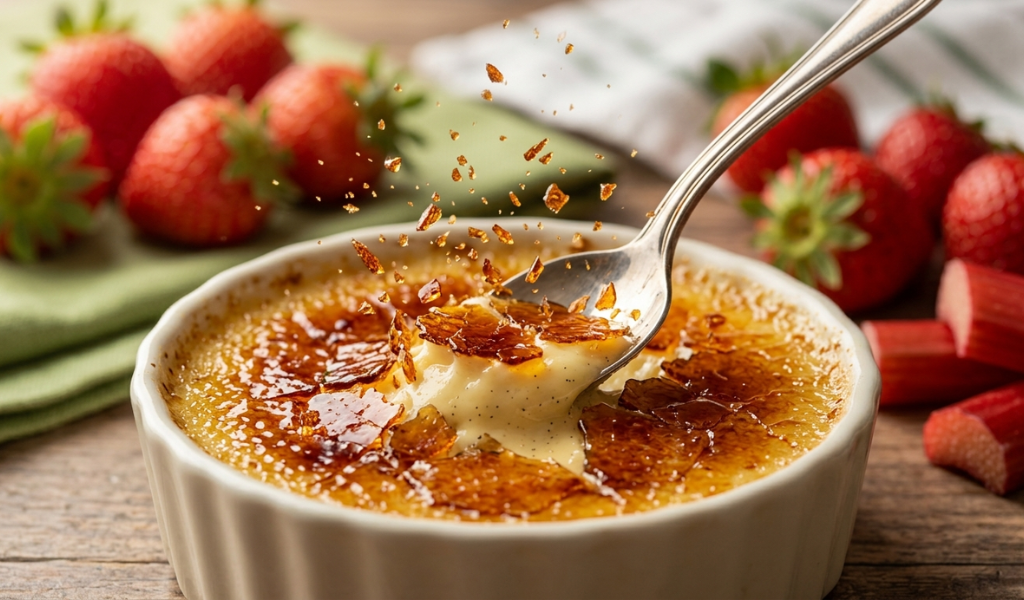
Whether you are an experienced baker or a home cook looking to impress at your next dinner party, this guide will walk you through every step of creating this stunning Strawberry Rhubarb Crème Brûlée. We will cover everything from achieving that crisp sugar topping to preventing the fruit layer from making the custard watery.
Strawberry Rhubarb Crème Brûlée is a creamy French custard dessert layered with roasted strawberries and rhubarb, then topped with a crisp caramelized sugar crust. The sweet strawberries balance the tart rhubarb, while the rich vanilla custard creates a smooth and flavorful dessert that is perfect for spring gatherings, dinner parties, or seasonal dessert recipes.
In the world of dessert recipes, few pairings are as iconic as strawberry and rhubarb. Often referred to as “the pie plant,” rhubarb is technically a vegetable, but its aggressive tartness makes it a legendary companion for sweet berries. On its own, rhubarb can be overwhelmingly puckery, but when it meets the floral sweetness of a sun-ripened strawberry, something truly special happens.
When we incorporate these into a brulee, we are moving away from the heavy, doughy crust of a traditional pie and toward something much more elegant. The strawberries provide a soft, melting texture and a rosy hue, while the rhubarb provides the structural acidity needed to cut through the heavy cream of the custard. This balance of sweetness and tartness makes the dessert more flavorful. It is a sophisticated upgrade that elevates the crème brûlée from a standard bistro offering to a seasonal showstopper that captures the very essence of spring.
To make a rich Strawberry Rhubarb Crème Brûlée , quality is everything. Because there are so few ingredients, each one must be of the highest caliber to achieve that restaurant-quality finish.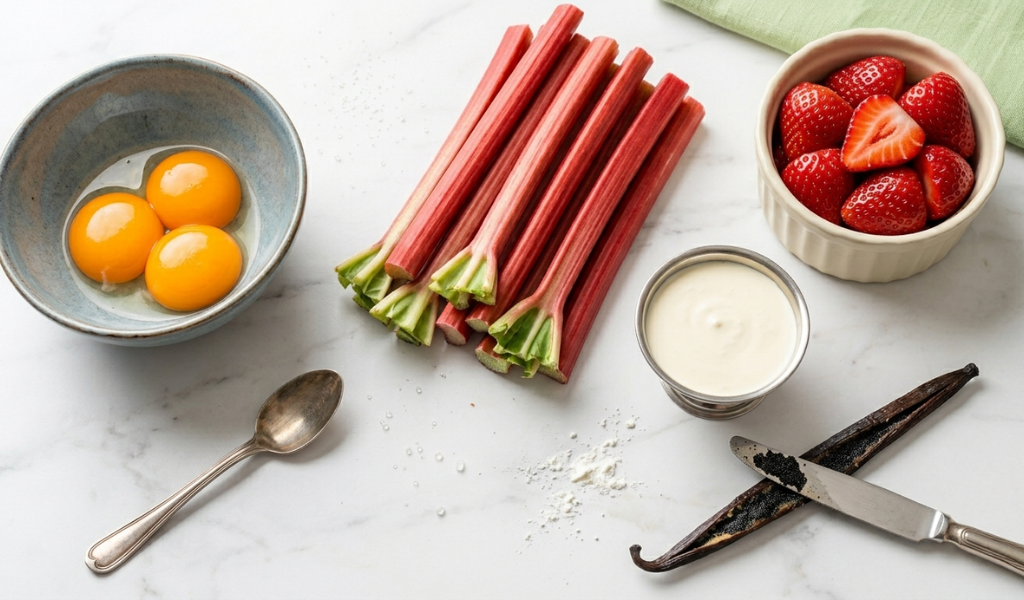
Strawberries: Fresh is always the best choice. Look for berries that are fragrant and red all the way to the hull. If they are white near the stem, they won’t have that deep sweetness.
Rhubarb: Choose stalks that are firm and crisp, much like celery. Redder stalks will give you a prettier pink color, but green stalks taste just as good.
Sugar: A touch of granulated sugar is necessary to draw out the juices and create a natural syrup during the roasting process.
The biggest challenge when adding fruit to a crème brûlée is moisture control. Fresh fruit is naturally full of water; if you simply toss raw berries into the bottom of a ramekin and pour custard over them, that water will release during baking. This results in a “weepy” custard that is loose and watery.
The secret to a successful Strawberry Rhubarb Crème Brûlée is roasting the fruit first. By dicing the strawberry rhubarb mixture into small, half-inch pieces and baking it with a bit of sugar before the custard ever touches it, you achieve two things:
Concentrated Flavor: The water evaporates in the high heat of the oven, leaving behind an intense, candy-like fruit flavor.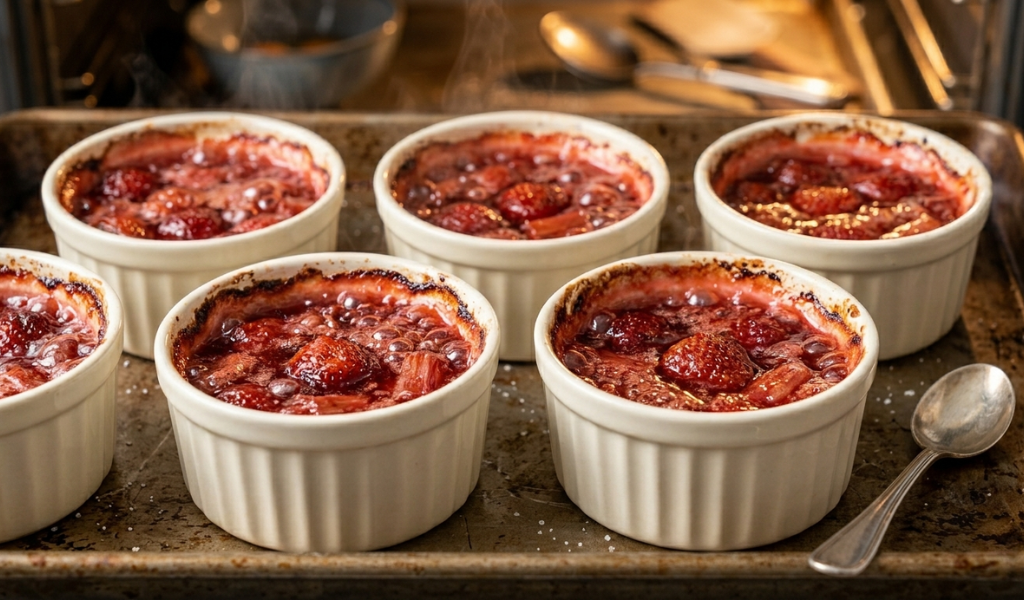
Structural Integrity: The fruit collapses into a ‘jammy’ puddle that is dense enough to support the weight of the heavy custard.
Make sure you roast the fruit until the juices have thickened into a rich syrup. If it looks like a thin soup, give it another five to ten minutes in the oven. Letting this base cool to room temperature is also vital, as it allows the pectin to set slightly before the next layer is added.
A perfect crème brûlée should be smooth as velvet, without a single bubble, grain, or curd. Achieving this requires a gentle touch and an understanding of egg chemistry.
This is the most critical technical step. You cannot simply dump hot cream into cold eggs; the heat will instantly cook the yolks, leaving you with sweet scrambled eggs. You must slowly drizzle the warm cream into the yolk and sugar mixture while whisking constantly. This gradually “introduces” the heat to the eggs, keeping them in a liquid state.
Baking your ramekins in a shallow pan of hot water is non-negotiable. The water acts as a heat regulator. Since water cannot exceed 212°F, it ensures the custard edges don’t reach oven temperatures (325°F+) and overcook before the center is done. This gentle, indirect heat is what prevents that ‘eggy’ or rubbery texture.
When you are ready to pour your custard over your cooled strawberry rhubarb base, you must be careful. If you pour it too quickly, the weight of the liquid will punch a hole through the fruit layer, causing it to swirl upward and muddy the custard. Instead, hold a metal spoon upside down over the ramekin and pour the custard gently over the back of it. This diffuses the stream, allowing the custard to spread evenly over the fruit layer.
Ready to cook? Follow these expanded steps for a foolproof Strawberry Rhubarb Crème Brûlée.
Preheat your oven to 400°F (200°C). Dice your strawberries and rhubarb into uniform pieces so they cook at the same rate. Toss them with 1/4 cup of sugar. Divide the mixture evenly among six 4-ounce ramekins. Bake for 25-30 minutes. You want to see the juices bubbling and reducing into a dark, rosy syrup. Remove them and let them cool until they are just lukewarm.
While the fruit cools, lower your oven to 325°F (163°C). In a medium saucepan, combine the heavy cream, milk, and vanilla. Bring it to a bare simmer over medium heat. You’ll know it’s ready when small bubbles form around the edges of the pan. Turn off the heat and let it steep for 5 minutes.
In a medium bowl, whisk your 4 egg yolks with 1/3 cup of sugar and a pinch of salt. Don’t do this too far in advance, as the sugar can actually “burn” the yolks and create tiny hard lumps if they sit together for too long without being whisked.
Slowly temper the warm cream into the egg mixture as discussed. Once combined, pour the entire mixture through a ‘fine-mesh strainer’ into a clean pitcher or large measuring cup. This step is essential for removing any foam or tiny bits of cooked egg that may have formed.
Place your fruit ramekins into a high-sided roasting pan. Use the spoon method to fill each ramekin with custard. Carefully pour boiling water into the roasting pan until it reaches halfway up the sides of the ramekins. Bake for 25 to 30 minutes. The edges should be set, but the center should still have a slight “wobble” when you gently shake the pan.
Remove the ramekins from the water using tongs. Let them cool on the counter for 30 minutes, then cover each one loosely with plastic wrap. Chill in the refrigerator for at least 4 hours, but 12-24 hours is even better. This time allows the fats to solidify, creating a rich and creamy texture.
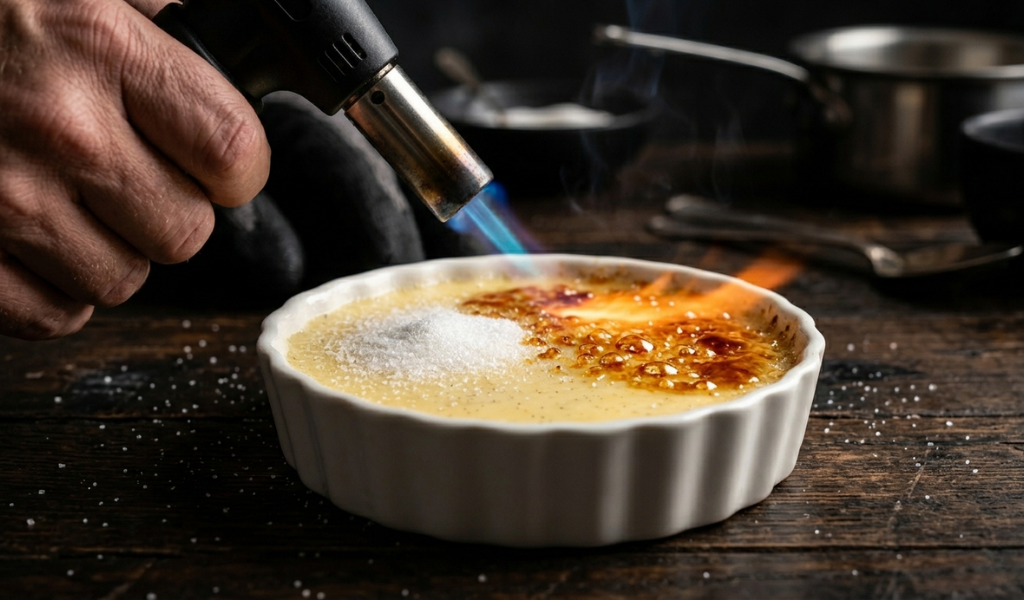
This is the most satisfying part of making a brulee. To get that signature hard-shell finish, you need to master the sugar-to-flame ratio.
While Strawberry Rhubarb Crème Brûlée is a perfect spring dish, the versatility of these dessert recipes means you can play with the flavors.
The Strawberry Rhubarb Crème Brûlée is more than just a dessert; it’s an exploration of textures and flavors. From the brittle, caramelized sugar top to the velvety custard and finally the tart, jammy rhubarb at the bottom, every spoonful offers something new.
While it requires a few steps and some patience for chilling, the results are undeniably professional. It is the kind of dish that makes people slow down and savor every bite. So, the next time you see fresh stalks of rhubarb at the market, skip the pie and reach for the cream. Your taste buds will thank you.
Did you try this recipe? Tag us in your photos or leave a comment below with your favorite crème brûlée twist!
Q: Can I use frozen rhubarb if fresh isn’t in season? A: Yes, you can. However, frozen rhubarb holds a lot more water than fresh. Make sure to thaw it completely and pat it dry before roasting. You may also need to increase the roasting time by 5-10 minutes to ensure the juices become syrupy rather than watery.
Q: Why did my custard separate or “weep” liquid? A: This is usually a sign of overbaking. If the eggs get too hot, they tighten up and squeeze out the moisture, creating a watery pool. Use an instant-read thermometer to check the custard; it should be between 170°F and 175°F when you pull it out of the oven.
Q: Can I make the fruit compote in a big batch instead of in the ramekins? A: Definitely. You can roast the strawberry rhubarb in a single baking dish, let it cool, and then spoon it into the ramekins. This is sometimes easier if you are making a large quantity for a party.
Q: How long will the caramelized top stay crunchy? A: Not very long! The sugar shell is hygroscopic, meaning it absorbs moisture from the air and the custard. It will start to soften within 30 to 60 minutes. For the best experience, torch the sugar immediately before serving.
Q: Is it okay to use low-fat milk for the custard? A: We strongly advise against it for this specific recipe. Because there is a moist fruit layer at the bottom, you need the high fat content of heavy cream to create a stable, thick custard that won’t turn into a liquid mess when it touches the fruit juices.
Q: Can I use brown sugar for the topping? A: Brown sugar contains more moisture and molasses, which makes it melt unevenly and burn very quickly. Stick to granulated white sugar or ‘raw turbinado sugar’ for the most consistent, crisp sugar crust.