Physical Address
304 North Cardinal St.
Dorchester Center, MA 02124
Physical Address
304 North Cardinal St.
Dorchester Center, MA 02124


Thinking about upgrading your kitchen? If you’re shopping for a new stove, you may be wondering why should you consider an induction cooktop over the gas or electric options you’ve always known. The short answer: speed, safety, and a much easier clean-up. But there’s a lot more to love once you dig into the details.
Induction technology has been around for a while, yet many home cooks still feel unsure about making the switch. Maybe you grew up cooking over a gas flame, or maybe the idea of buying new pots sounds like a hassle. Those concerns are fair. The good news is that induction cooking has come a long way, and the benefits often outweigh the small adjustments you’ll need to make.
In this guide, we’ll walk through what an induction cooktop actually is, how it works, and the real reasons it might be the perfect fit for your home. By the end, you’ll have a clear picture of whether this modern appliance deserves a spot in your kitchen.
So, what is an induction cooktop exactly? In simple terms, it’s a stovetop that uses magnetic energy to heat your pots and pans directly, rather than heating a burner first. Traditional electric stoves warm a coil, and gas stoves use an open flame. An induction cooktop skips that middle step entirely.
The surface itself stays much cooler than a gas or electric stove because the heat is created inside the cookware, not on the glass top. That single difference changes the whole cooking experience. Your kitchen stays cooler, spills don’t bake onto the surface, and the risk of burns drops significantly.
From the outside, an induction cooktop looks sleek and modern. It’s usually a flat, smooth sheet of glass with touch controls. No knobs, no grates, no fuss. That clean look is one reason so many people choose induction when they remodel their kitchens.
The magic behind induction comes from electromagnetic technology. Under the glass surface sits a coil of copper wire. When you turn the cooktop on and place a compatible pan on top, an electric current runs through that coil and creates a magnetic field.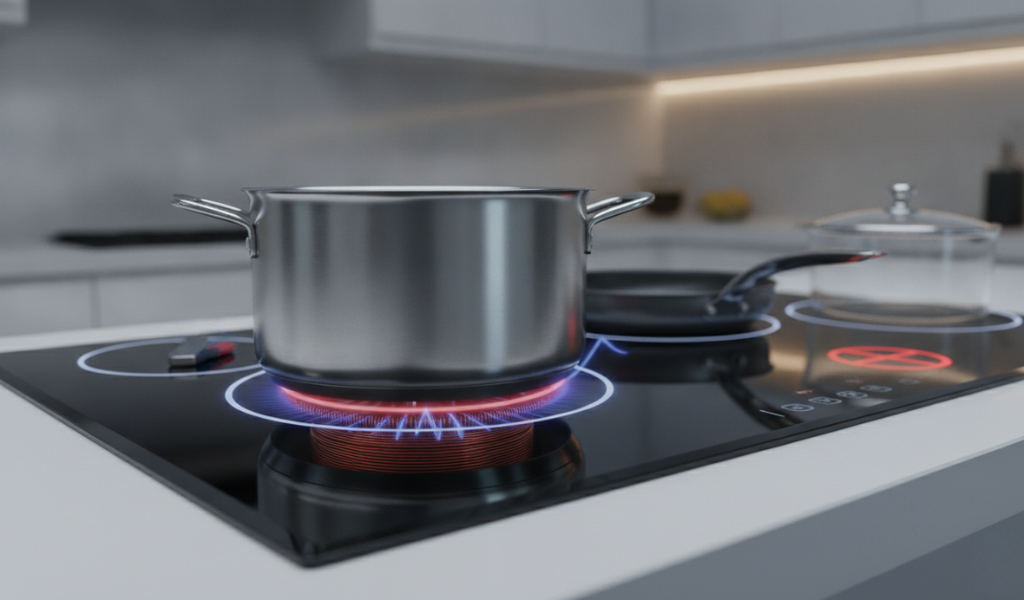
This magnetic field reacts with the metal in your cookware, which makes the pan itself heat up. Because the heat is generated right where you need it, almost no energy is wasted. The cooktop transfers heat straight to the food instead of warming up the air around your pots.
Here’s a neat detail: if you lift the pan off the surface, the heating stops almost instantly. There’s no lingering hot coil to worry about. Many induction cooktops also include a heat retention indicator that tells you when the surface is still warm to the touch, adding another layer of safety to your daily routine.
This is the question most people ask before buying. To work with induction, your pots and pans need to be magnetic. That means they must contain iron, like cast iron or magnetic stainless steel. Aluminum, copper, and glass cookware won’t work on their own unless they have a magnetic base.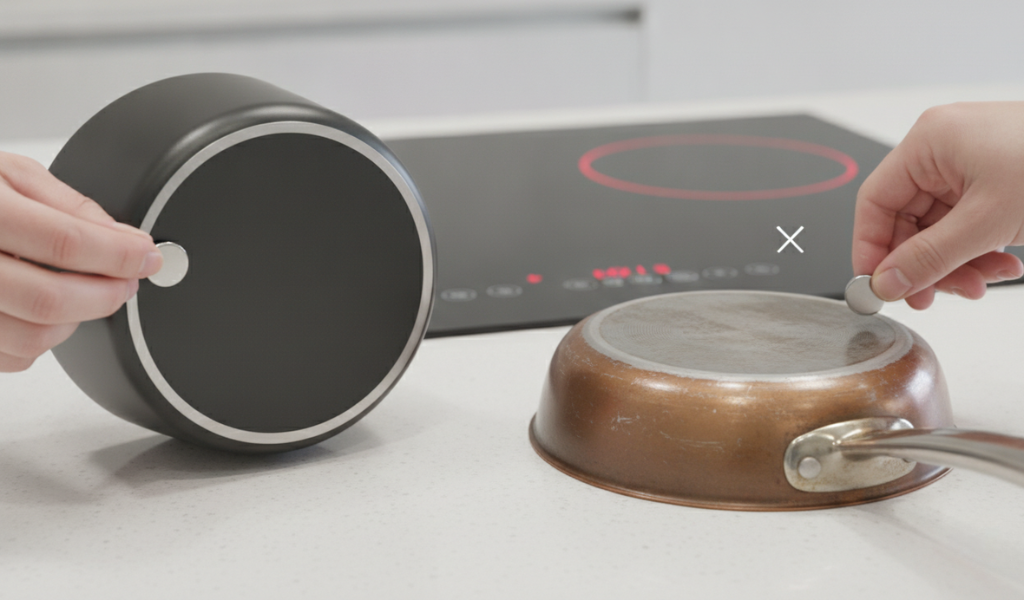
Want a quick way to check? Grab a fridge magnet and hold it against the bottom of your pan. If it sticks firmly, your cookware is induction-ready. If it slides off or barely holds, you’ll need to look at new options.
Don’t let this requirement scare you off. Most modern cookware sets are already designed to work with induction, and many older pots will pass the magnet test too. If you do need to buy a few new pieces, you’ll find plenty of affordable, induction-friendly options at any kitchen store. Think of it as a small one-time cost for years of better cooking.
When people list the pros of induction cooktops, a few key benefits always rise to the top. Let’s break them down one by one so you can see exactly what you’d gain.
Speed is the feature that wins most people over. An induction cooktop can boil a pot of water in nearly half the time of a gas or electric stove. There’s no waiting for a coil to glow red or a flame to slowly warm your pan.
Picture a busy weeknight when you just want to get dinner on the table. With induction, your water boils in minutes, so that quick pasta dish or pot of soup comes together faster. Even small tasks like melting butter or chocolate happen quickly and evenly, which makes cooking feel a lot less stressful.
Anyone who has scrubbed a gas stove knows the pain of cleaning around grates and burner caps. Induction cooktops remove that headache completely. The flat glass surface wipes clean with a soft cloth in seconds.
Because the surface doesn’t get screaming hot, spills and splatters don’t burn onto the glass. A little sauce that bubbles over won’t turn into a stubborn, crusty mess. For a deeper clean, a quick wipe with a dedicated cooktop cleaner keeps everything looking new. It’s hard to overstate how much time this saves over a year of cooking.
Induction gives you fine control over your heat, which can genuinely improve your cooking. The temperature responds instantly when you adjust it, much like a gas flame but even more precise. Turn it down and the heat drops right away. Turn it up and you get more power in a flash.
This precision means fewer burnt sauces and fewer overcooked meals. Delicate jobs like simmering a custard or tempering chocolate become far more forgiving. Many induction cooktops also come with smart features such as power-boost settings for rapid heating and child-safety locks to keep little hands protected.

Safety is a huge selling point, especially for households with young children or older family members. Since there’s no open flame and the surface stays relatively cool, the chance of accidental burns drops dramatically. If something flammable lands on the cooktop while a pan isn’t there, it won’t catch fire.
The auto-shutoff feature adds even more peace of mind. Walk away and forget to turn it off? Many models will power down on their own once the pan is removed or after a set time. That kind of built-in protection is hard to match with traditional stoves.
Because induction sends heat directly into the pan, very little energy escapes into the room. Studies generally show induction is more efficient than both gas and standard electric cooking. More of the energy you pay for actually goes toward cooking your food.
That efficiency can mean lower energy bills over time. It also keeps your kitchen cooler during the summer, since you’re not pumping extra heat into the air. Your air conditioner will thank you on hot days.
No appliance is perfect, so it’s only fair to mention the trade-offs. Induction cooktops usually cost more upfront than basic electric or gas models. You may also need to invest in compatible cookware, as we covered earlier.
Some cooks miss the visual cue of a flame and the feel of cooking over gas. There’s a short learning curve as you get used to how quickly induction responds. And in the rare event of a power outage, you won’t be able to cook, whereas a gas stove can still work with a manual light.
None of these are deal breakers for most people. Once you adjust, the daily benefits tend to make the switch well worth it.
To see why induction shines, think about a few everyday scenarios. Making chili oil at home? The fast, even heat lets you infuse the oil perfectly without scorching the spices. A homemade batch can be ready in under half an hour.
Hosting friends and juggling several dishes at once? The precise control lets you simmer a sauce on one zone while searing vegetables on another, with no guesswork. And on those mornings when you’re rushing to make breakfast, an induction cooktop heats your pan before you’ve even finished cracking the eggs.
These small wins add up. Over weeks and months, you’ll notice cooking feels smoother and faster, which makes the whole experience more enjoyable.
If you decide to make the leap, a few simple habits will help you get the best results. First, match your pan size to the cooking zone for even heating. Second, take advantage of the power-boost setting for fast boiling, then dial it back to a steady simmer.
Wipe the surface after each use to keep it spotless and prevent buildup. Use flat-bottomed cookware for the strongest contact and most efficient heating. And don’t be afraid to experiment with the precise temperature settings, since dialing in the right heat is what makes induction so rewarding.
So, why should you consider an induction cooktop? It comes down to faster cooking, easier cleaning, better safety, and real energy savings. While there’s a small upfront cost and a brief adjustment period, the everyday benefits make induction a smart choice for modern kitchens.
If you love to cook and want an appliance that keeps pace with your life, an induction cooktop is well worth a serious look. Take time to compare models, test your current cookware with a magnet, and picture how the daily perks would fit your routine. Your future self, standing over a sparkling clean cooktop with dinner ready in record time, will be glad you did.
Ready to upgrade your kitchen? Visit a local appliance showroom or book a cooking demonstration to experience the difference for yourself before you buy.
For most home cooks, yes. The faster cooking, easier cleaning, and added safety features tend to justify the higher upfront price. If you cook often and value efficiency, an induction cooktop offers strong long-term value.
You need magnetic cookware, such as cast iron or magnetic stainless steel. To check what you already own, hold a fridge magnet to the bottom of a pan. If it sticks firmly, that pan will work on an induction cooktop.
Induction is one of the safest cooking methods for families. There’s no open flame, the surface stays cooler than other stoves, and many models include child-safety locks and auto-shutoff features to prevent accidents.
Induction can boil water in roughly half the time of a gas stove. Because heat goes straight into the pan, you spend less time waiting and more time actually cooking.
Yes. Induction sends most of its energy directly into your cookware instead of the surrounding air, making it more efficient than gas or standard electric stoves. Over time, that efficiency can lower your energy costs.
Since induction runs on electricity, it won’t work during a power outage. If reliable cooking during outages matters to you, keep a backup option in mind, such as a portable gas burner.
There’s a short learning curve, mostly because induction responds so quickly. After a few meals, most people adjust easily and come to enjoy the precise, responsive control it offers.