Physical Address
304 North Cardinal St.
Dorchester Center, MA 02124
Physical Address
304 North Cardinal St.
Dorchester Center, MA 02124


If you have ever bitten into a walnut or a pecan straight from the tree, you probably noticed they aren’t exactly “snack-ready.” Freshly harvested nuts are often soft, slightly bitter, and full of moisture. To get ‘perfect crunch’ and preserve them for months, you need to master the art of drying.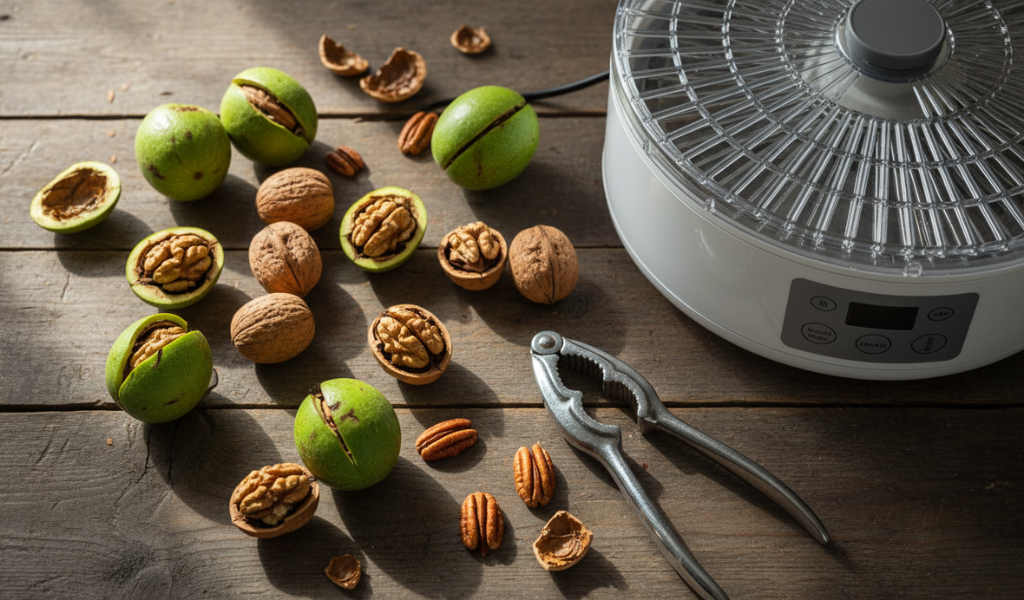
Learning how to dry nuts in a dehydrator is a total game-changer for gardeners, foragers, and bulk shoppers alike. While nature takes its time drying nuts in the sun, a food dehydrator speeds up the process, prevents mold, and keeps the oils inside the nuts from going rancid.
In this comprehensive guide, we will walk through everything from preparation to storage, ensuring your dry nuts stay fresh, crispy, and delicious.
To dry nuts in a dehydrator, spread them in a single layer on trays, set the temperature to 100°F (38°C), and dry for 24–48 hours depending on the type. Make sure there is proper airflow, avoid stacking, and check for a crisp, brittle texture before storing.
You might wonder why you can’t just leave your harvest in a basket on the porch. While air-drying is the traditional method, it is incredibly hit-or-miss. High humidity can cause your crop to rot before it ever gets crisp.
Using a food dehydrator provides a controlled environment. By maintaining a steady, low temperature and consistent airflow, you effectively “cure” the nut. This process firms up the nutmeat and develops the flavor. Unlike an oven, which often runs too hot and “cooks” the delicate fats, a dehydrator keeps things gentle. Plus, if you enjoy dry fruits, you can often dry your nuts and fruits in the same session, making it a versatile kitchen tool.
Nuts are unique because they are high in fat but also contain significant water when fresh. If you store them while they are still “green” or damp, mold will move in within days.
When you learn how to dry nuts in a dehydrator, you are essentially doing two things:
Before we start, let’s gather our supplies. You don’t need much, but having the right gear makes the job easier.
Let’s get into the meat of the process. Whether you are working with walnuts, hazelnuts, or pecans, the method is fairly consistent.
If you’ve gathered your nuts from the wild or your backyard, the first step is removing the outer husks. Once the husks are gone, give the shells a quick scrub to remove dirt.
Pro Tip: If you are drying “in-shell,” keep them whole. If you prefer to dry just the nutmeat, crack them first, but keep in mind that shelled nuts dry much faster.
Spread your nuts in a single layer on the dehydrator trays. Do not stack them! Air needs to flow around every side of the shell or nutmeat to ensure even drying.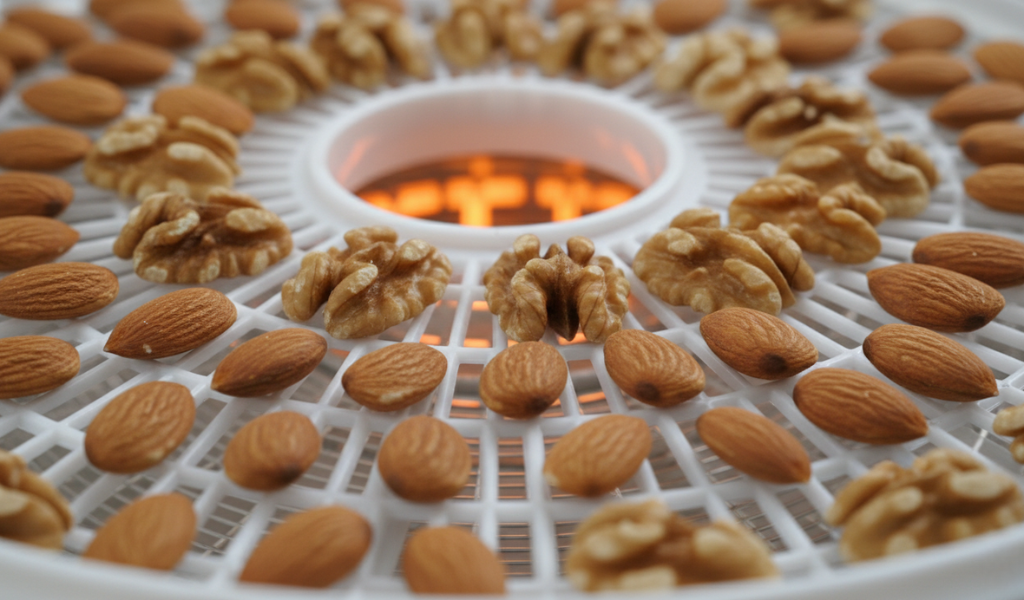 If you have particularly large nuts (like walnuts in the shell), you may need to remove every other tray to provide enough clearance.
This is the most critical part of how to dry nuts in a dehydrator. You want the temperature to stay around 100°F (38°C).
Why so low? If the temperature climbs too high, the oils inside the nut will “cook” or “rust,” leading to a bitter, off-flavor. We want to evaporate water, not roast the fat. Open the vents on your machine to keep the air moving.
Drying nuts isn’t a 20-minute task. It usually takes between 24 to 48 hours.
The time required to dry nuts in a dehydrator varies significantly based on their preparation and whether they are still in their shells. For nuts that are already shelled and dry, the process is relatively quick, typically taking between 12 to 24 hours. However, if you are drying in-shell varieties, you should expect a longer timeframe of 24 to 48 hours to ensure the heat penetrates the outer casing and removes all internal moisture.
The drying duration increases further if you have pre-soaked the nuts—a common practice to reduce phytic acid and improve digestibility. Soaked nuts generally require at least 24 hours or more to return to a shelf-stable state. Regardless of the type, it is crucial to let the nuts cool completely to room temperature before testing for doneness. A properly dried nut should be uniformly crisp and brittle; if the center remains soft or chewy, they require additional time in the dehydrator to prevent spoilage during storage.
Not all nuts are created equal. Some have higher oil content, while others have thicker shells.
These are the most common candidates for the food dehydrator. Because they have high oil content, keeping the heat low is non-negotiable. If drying in the shell, expect a full 48 hours.
Almonds are slightly denser. If you are drying home-grown almonds, ensure the hulls have split naturally before you harvest. Once in the dehydrator, they typically dry faster than walnuts because they have less internal moisture.
These are trickier. Cashews, in particular, usually require specialized processing to remove toxins in the shell, so most home users will be drying pre-processed nutmeats. For these, a shorter time of 12-16 hours at 100°F is usually sufficient to achieve that ‘crunchy texture’.
If you are a health enthusiast, you’ve likely heard of “activating” nuts. This involves soaking them in salt water to break down phytic acid (which can make nuts hard to digest).
However, soaking leaves you with soggy nuts. This is where your food dehydrator shines. After soaking, rinse the nuts and spread them on the trays. Dehydrate at 100°F until they are completely dry. This results in a “light-as-air” crunch that is far superior to raw nuts.
You cannot accurately test a nut while it is still warm inside the machine. Heat makes the fats more fluid, which can make the nut feel softer than it actually is.
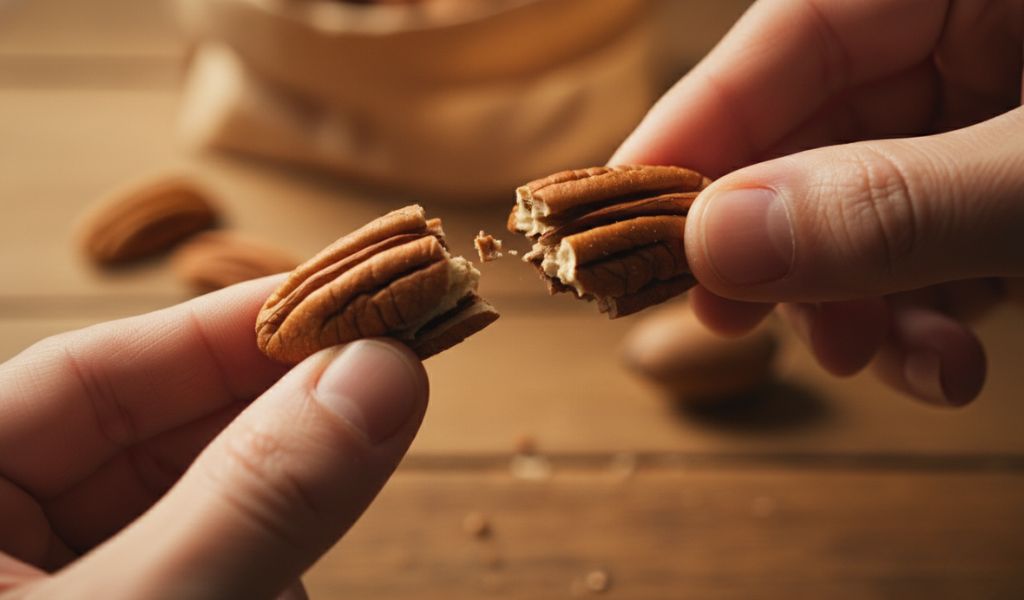
Once you have invested up to 48 hours in the dehydration process, it is vital to store your nuts correctly to prevent them from absorbing ambient moisture and losing their crunch. Because dry nuts act like sponges, they should be placed in airtight containers, such as glass jars with tight-fitting lids, immediately after they have cooled. For short-term use, keeping these containers in a cool, dark environment like a pantry or cellar will maintain their quality and prevent the oils from turning rancid.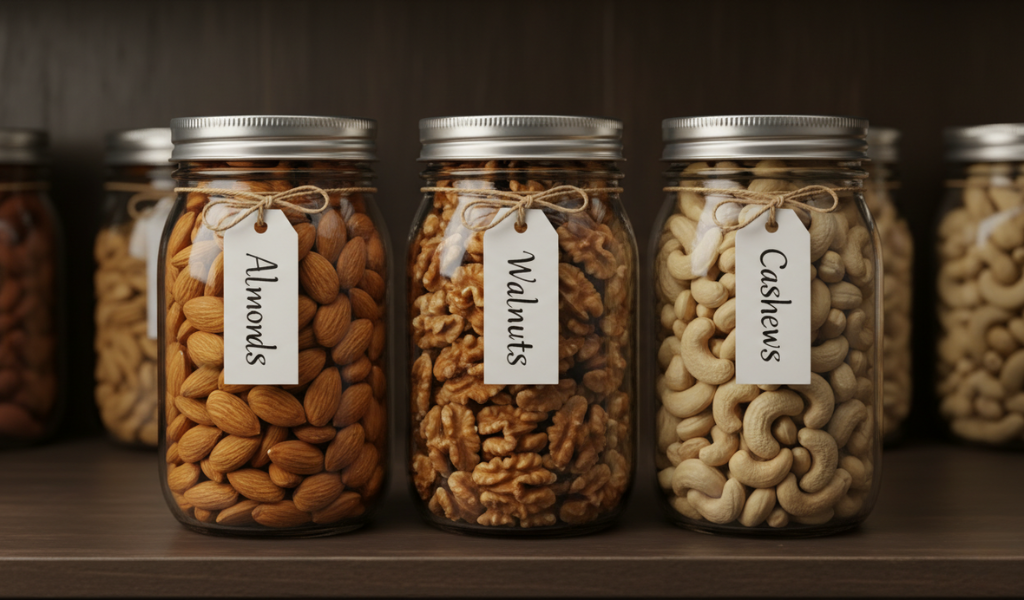
For those managing a larger harvest or looking for long-term preservation, the freezer is the most effective option. By placing the dried nuts in vacuum-sealed bags and storing them at sub-zero temperatures, you can extend their shelf life for up to two years. This method not only protects the flavor and nutritional profile but also ensures that the effort put into the drying process provides a fresh, crisp snack long after the initial dehydration.
Even experts can slip up. Here are a few things to watch out for:
Mastering how to dry nuts in a dehydrator is a rewarding skill that saves money and improves the quality of your food. By using a food dehydrator at a low temperature, you preserve the delicate nutrients and create a snack that is infinitely better than store-bought alternatives.
Whether you are drying dry fruits to go along with them or just prepping your winter stash of nuts, the key is patience. Keep the airflow high, the heat low, and the moisture out.
Ready to get started? Pull out your dehydrator, grab a batch of fresh nuts, and start drying today. Your future self (and your taste buds) will thank you!
Can I dry nuts in an oven instead of a dehydrator?
You can, but it is difficult. Most ovens don’t go as low as 100°F. If your oven’s lowest setting is 170°F, you risk roasting the nuts rather than drying them. A food dehydrator is much safer for preserving raw quality.
Do I need to soak nuts before drying them?
It’s not required, but many people prefer it for health reasons. Soaking helps reduce anti-nutrients. If you soak them, the dehydrator is the best way to get them crispy again.
How long do dried nuts last?
Properly dry nuts stored in an airtight container in a cool place can last 4–6 months. In the freezer, they can last 1–2 years.
Why do my walnuts taste bitter?
This usually happens if they were dried at too high a temperature or if they have started to go rancid. Using the “low and slow” method in a dehydrator helps prevent this.
Can I dry “nuts” and “dry fruits” together?
Yes! Just be aware that fruits usually have much more moisture and might take longer. Also, the nuts might pick up a slight aroma from the fruit, which is usually quite pleasant.
What happens if I don’t dry them long enough?
Any remaining moisture will act as a breeding ground for mold. If you aren’t sure, it is always better to dry them for a few extra hours than to stop too early.