Physical Address
304 North Cardinal St.
Dorchester Center, MA 02124
Physical Address
304 North Cardinal St.
Dorchester Center, MA 02124

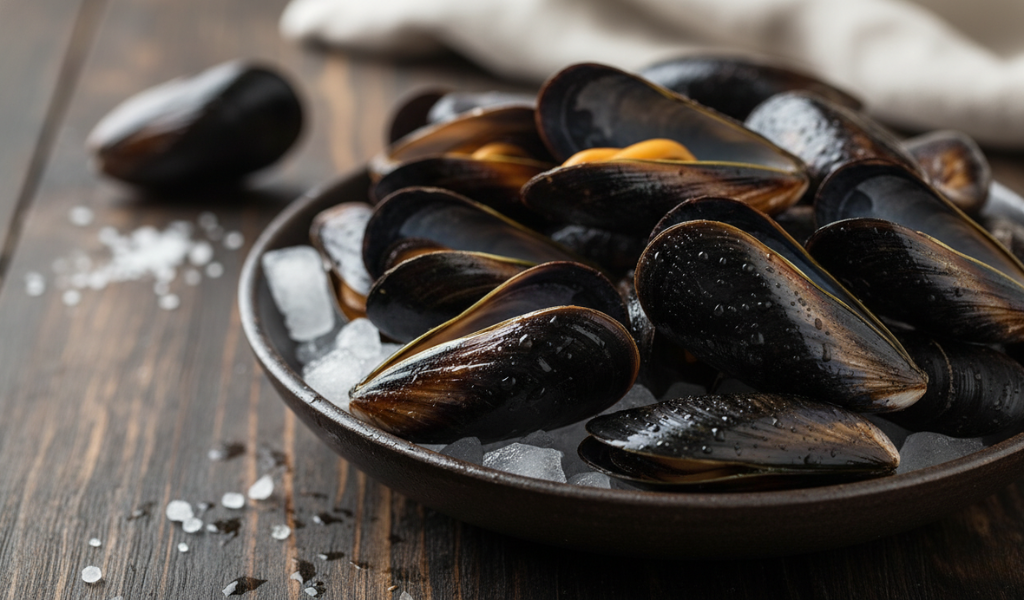
There is something inherently sophisticated about a big, steaming bowl of mussels served with a crusty baguette. For a long time, home cooks were intimidated by fresh seafood, fearing that preparing shellfish at home was a messy, dangerous, or overly technical chore. You might have heard horror stories about grit, sand, or “bad” mussels that make you sick.
I’m here to tell you that those fears are largely a thing of the past. Learning how to clean mussels is actually one of the simplest culinary skills you can master. In fact, from the moment you take them out of the fridge to the moment they hit the pan, you’re looking at about 15 minutes of work. Whether you are working with farm raised mussels or wild-caught varieties, the process is straightforward, satisfying, and results in a world-class meal at a fraction of restaurant prices.
In this comprehensive guide, we will walk through everything from selection and storage to the actual step-by-step process of cleaning and how to debeard mussels so they are ready for the pot.
To clean mussels, rinse them under cold water, scrub the shells, remove the beard, discard cracked or open mussels that do not close when tapped, and cook immediately while fresh.
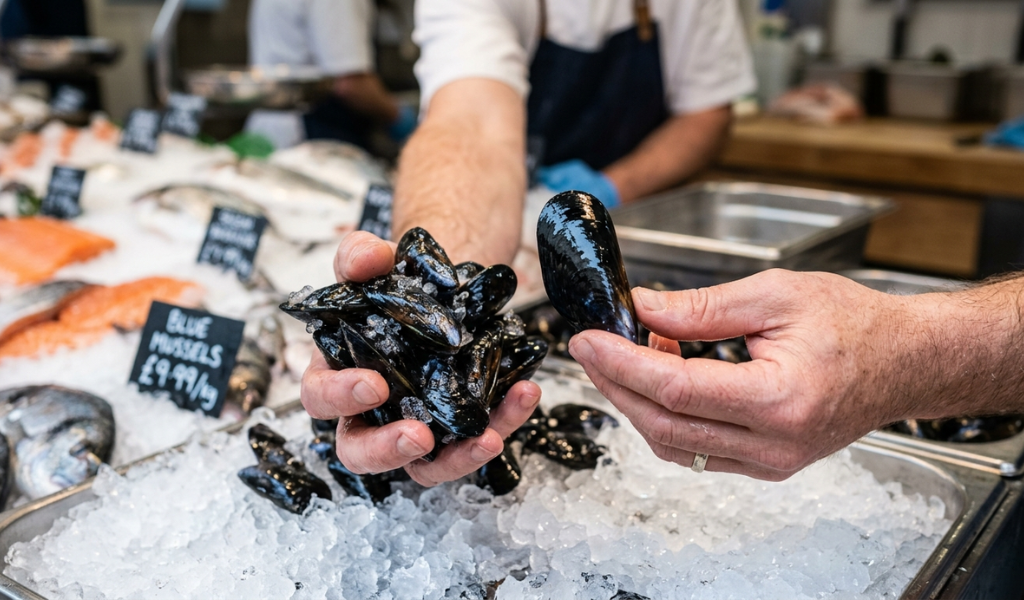
Before you can learn how to clean mussels, you have to know what to look for at the market. Unlike a steak or a piece of salmon, mussels are sold alive. This is the golden rule of seafood: if it’s a bivalve (mussels, clams, oysters), it must be living right up until the moment it is cooked.
When you arrive at the fish counter, look at the display. The mussel shells should be tightly closed or, at the very least, glistening with moisture. If the shells look dry or dusty, it’s a sign they’ve been sitting out too long.
If you are a beginner, I highly recommend looking for farm raised mussels. Unlike some types of aquaculture that can be hard on the environment, mussel farming is incredibly sustainable.
Most commercial mussels are grown on vertical ropes suspended in the ocean. This means they never touch the muddy seabed, resulting in much cleaner mussel shells and almost zero internal grit. Because they are raised in controlled environments, they are often “purged” (soaked in clean water to filter out impurities) before they even reach the store.
Wild mussels, however, are often harvested from rocks or the ocean floor. They tend to be barnacle-crusted and may require a bit more elbow grease to clean. However, some enthusiasts prefer the robust, varied flavor of wild-caught fresh seafood.
Once you get your mussels home, remember that they are living creatures that need to breathe. The biggest mistake people make is sealing them in a plastic bag or submerging them in a bucket of tap water.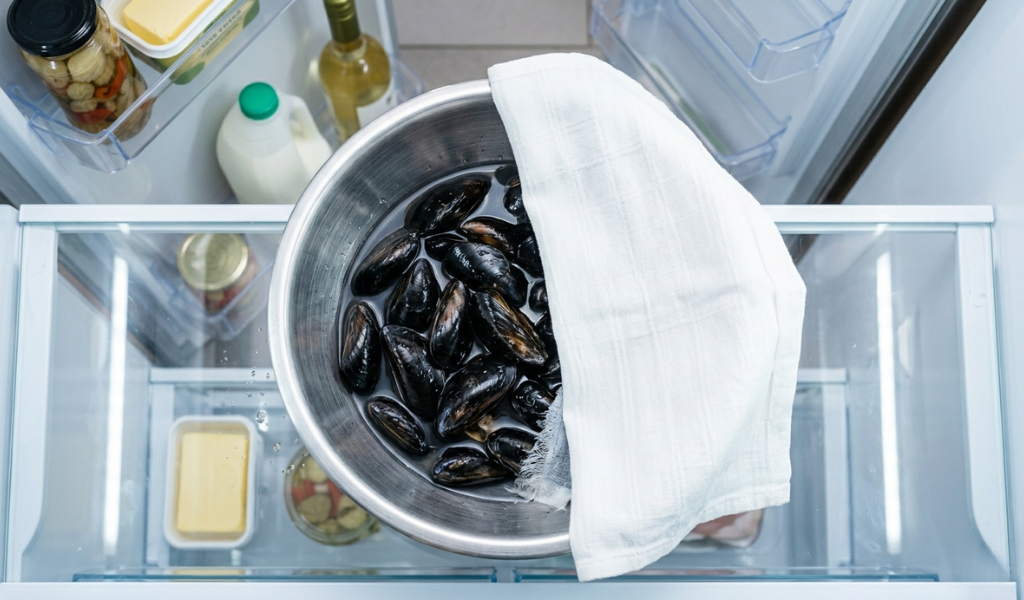
Now, let’s get into the heart of the matter: how to clean mussels properly. If you bought rope-grown mussels, this process will be a breeze.
Place your mussels in a colander in the sink. Run cold, fresh water over them. Use your hands to move them around, ensuring that any loose silt or seaweed is washed away.
Most farm raised mussels are pristine, but occasionally you’ll find a bit of mud or a stray barnacle. Use a stiff kitchen brush to lightly scrub the surface of the mussel shells. You don’t need to make them shine like a diamond; you just want to remove anything that might fall off into your delicious cooking broth.
As you rinse, pick up each mussel individually. This is the best time to check for weight. If a mussel feels unusually heavy, it might be a “mud blister”—a shell filled with silt instead of meat. Give it a quick pry; if it’s full of mud, toss it.
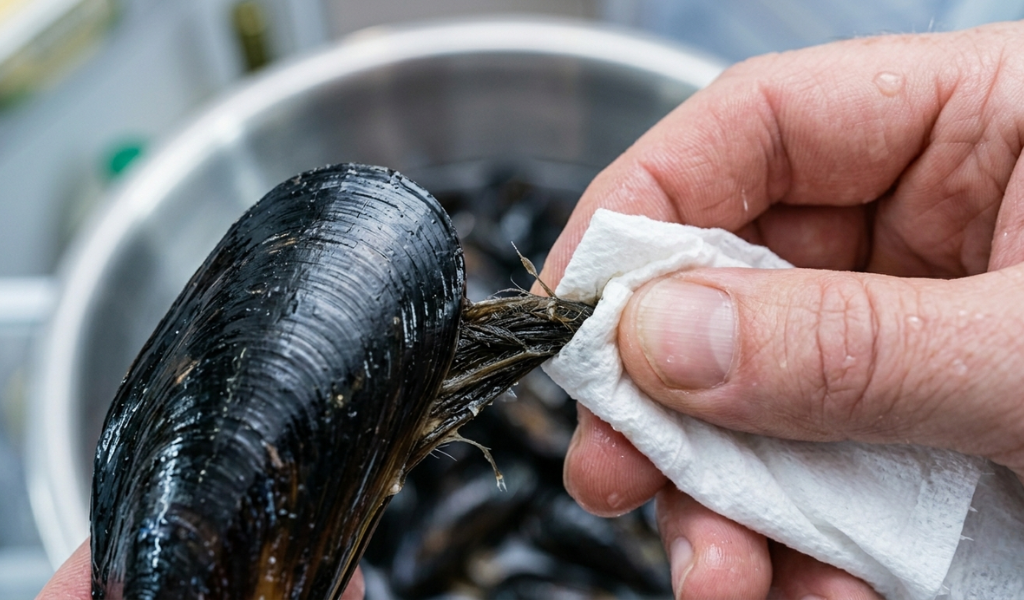
You may have noticed a fuzzy, brownish clump protruding from the side of the shell. This is the “byssus thread,” commonly known as the “beard.” This is how the mussel anchors itself to ropes or rocks in the wild. While the beard isn’t harmful to eat, it has a very unpleasant, ‘tough texture’ that you definitely don’t want in your pasta.
Pro Tip: Do not debeard your mussels until right before you are ready to cook them. Removing the beard can sometimes kill the mussel, and you want them as fresh as possible when they hit the heat.
One of the most important parts of knowing how to clean mussels is knowing which ones to throw away.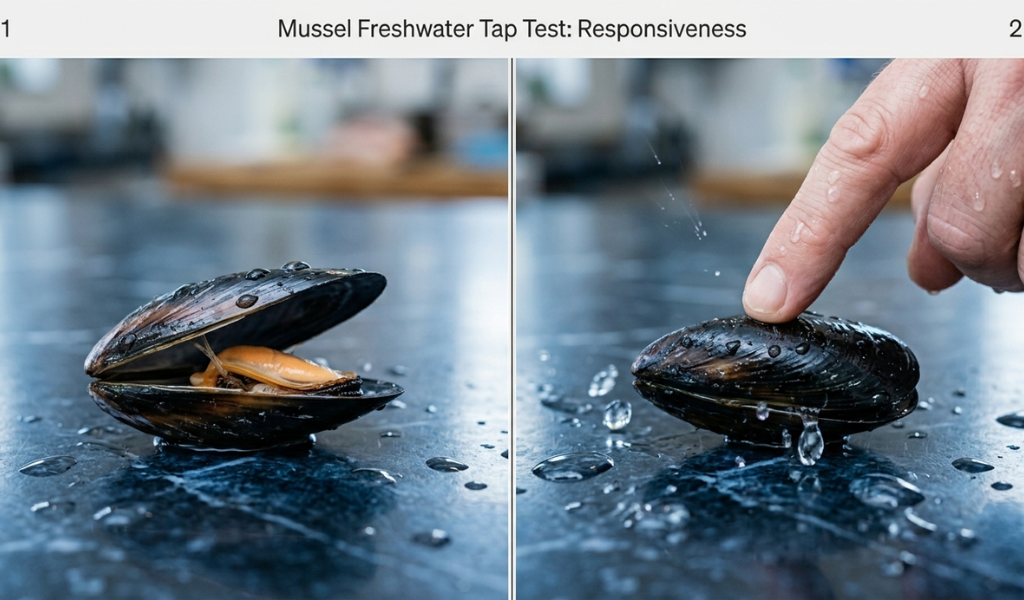
It is natural for mussels to open up slightly while they are “relaxing” in your fridge. This doesn’t necessarily mean they are dead. To check, give the open shell a firm tap against the counter or ‘clack’ two mussels together.
Eating a dead mussel is the primary cause of the “bad seafood” experiences people fear, so when in doubt, ‘throw it out’.
When dealing with fresh seafood, safety is just as important as flavor. Because mussels are filter feeders, they require a bit of extra mindfulness to ensure your dinner remains a healthy experience.
Now that you know how to clean mussels, you are ready for the stove. But before you start, let’s debunk a major myth that has persisted for decades.
For years, cookbooks told us that if a mussel doesn’t open after cooking, it must be bad and should be discarded. Recent culinary science has proven this wrong. Often, a mussel that stays shut simply has a ‘stronger adductor muscle’ or is slightly stuck. As long as it was alive when it went into the pot and it smells fresh, you can pry it open and enjoy the meat inside.
Mussels cook incredibly fast. In a hot pan with a bit of white wine, garlic, and butter, they usually open in 3 to 5 minutes. Overcooking them will turn the meat rubbery and small, so keep a close eye on the pot!
Mastering the art of how to clean mussels is a true milestone for any home cook. It transforms a perceived “luxury” ingredient into an accessible, everyday protein that is both sustainable and incredibly nutritious. By choosing high-quality farm raised mussels, practicing the ‘clack test’, and knowing exactly how to debeard mussels, you remove all the guesswork and risk from the equation.
Seafood doesn’t have to be intimidating. With a little bit of prep and a watchful eye, you can serve up a world-class meal that rivals any coastal bistro. So, grab a bottle of crisp white wine, some fresh parsley, and a warm loaf of bread—your perfect mussel dinner is only 15 minutes away.
Bad mussels smell sour, have cracked shells, or stay open after tapping. Discard them immediately.
It’s best to wait. You can rinse them a few hours early, but you should only debeard mussels right before cooking to ensure they stay alive and fresh.
Yes, it is not toxic. However, it is very fibrous and has a texture similar to dental floss, which can ruin the eating experience.
This is perfectly natural! The color difference is usually down to the gender of the mussel (females are often more orange/apricot colored, while males are paler). Both taste exactly the same.
If you are buying farm raised mussels, they are grown on ropes away from the sand, so they are already clean. If you have wild mussels, a 20-minute soak in salted water can help them “purge” any internal grit.
A good rule of thumb is about one pound (500g) per person if it is the main course, or a half-pound if it is an appetizer or part of a pasta dish.
It is not recommended to freeze them while they are still in the mussel shells and raw. If you have leftovers, remove the meat from the shells and freeze it in the cooking liquid for up to three months.