Physical Address
304 North Cardinal St.
Dorchester Center, MA 02124
Physical Address
304 North Cardinal St.
Dorchester Center, MA 02124

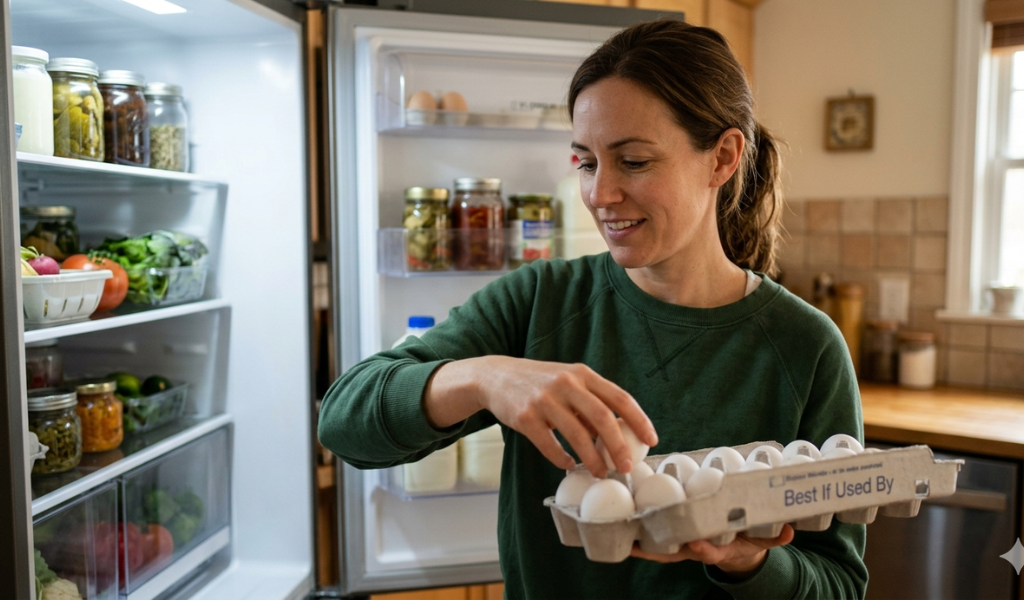
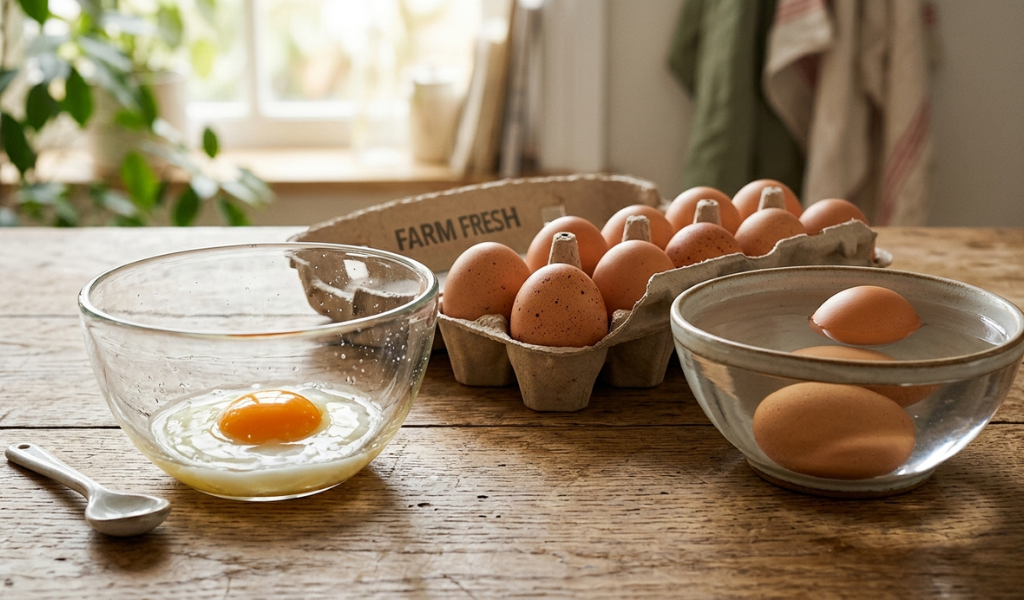 We’ve all been there: standing in front of the refrigerator with a carton of eggs and wondering whether they are still safe to eat. You want to make breakfast, but you are unsure if the eggs have gone bad. Understanding how long eggs last in the fridge can help reduce food waste and improve food safety.
The truth is, understanding how long eggs last in the fridge can save you money and prevent unnecessary food waste. Most people treat the date on the carton as a hard deadline, but eggs can stay fresh much longer than many people think. In this guide, we’ll dive into the science of egg storage, the famous ‘float test,’ and exactly how long those leftovers from Sunday brunch will stay safe to eat.
Raw eggs in the shell: 3–5 weeks. Hard-boiled eggs: Up to 1 week. Egg whites or yolks: 2–4 days. Frozen eggs: Up to 1 year. Eggs stay fresh longest when stored in their original carton in the back of the refrigerator at 40°F (4°C) or below.
When it comes to raw eggs, the timeline is much longer than most consumers realize. According to the USDA, when kept at a consistent temperature of 40°F (4°C) or below, raw eggs in the shell typically remain high-quality for three to five weeks from the day you put them in the fridge.
However, it is vital to distinguish between ‘quality’ and ‘safety’. A three-week-old egg might not be the best candidate for a poached egg—where you want a firm, tight white—but it is perfectly safe for a cake or a frittata. As eggs age, the chemical structure of the proteins begins to relax. The thick white becomes thinner, and the yolk membrane weakens. While the culinary performance changes, the egg remains safe to consume as long as bacteria haven’t breached the shell.
Part of the confusion about how long eggs last in the fridge stems from the confusing stamps on the packaging. Here is the breakdown of what those numbers actually mean:
This date is aimed at the retailer, not the consumer. It tells the grocery store how long they can display the product for sale. Interestingly, federal law does not require these dates on eggs (though many states do). Even if the sell-by date has passed, the eggs are typically safe for another three to five weeks if they have been handled correctly.
This is a ‘quality’ marker. It indicates the window during which the eggs are at their peak flavor and structural integrity. If you are making a delicate meringue or a soufflé, you want eggs within this window. If you are making scrambled eggs for the kids, going past this date is rarely an issue.
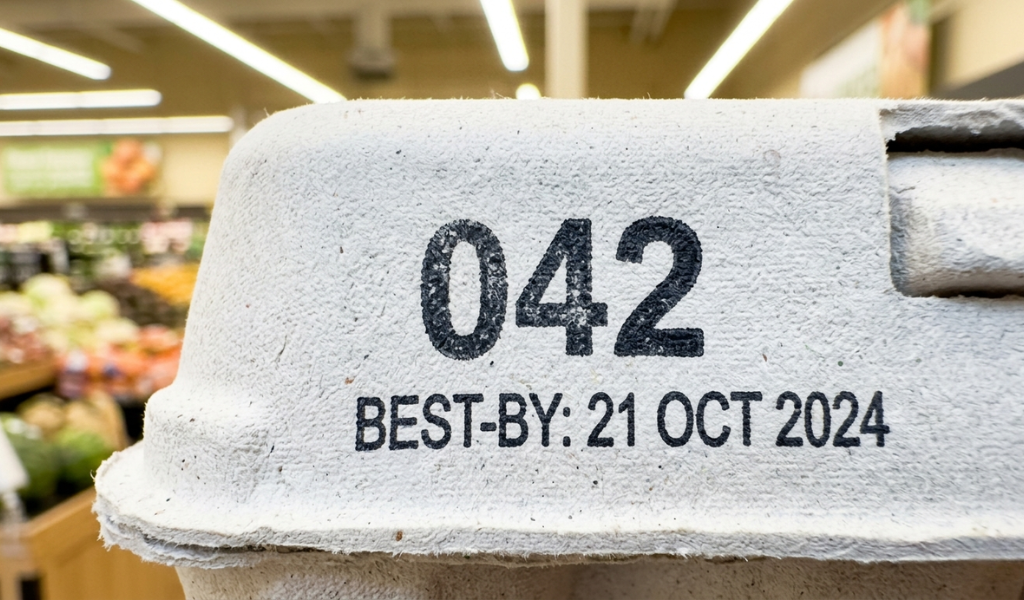
If you want to be a true egg expert, look for the three-digit code printed near the dates. This is the Julian Date, which represents the day of the year the eggs were packed. For example, a code of 001 means they were packed on January 1st, while 365 represents December 31st. Since eggs can stay fresh for 4–5 weeks from the pack date, this is the most accurate way to track their true age.
If you are nervous about an older egg, you don’t have to guess. The ‘float test’ is a reliable, science-based method to check freshness without cracking the shell.
Eggshells are naturally porous, containing thousands of microscopic holes. As an egg ages, moisture evaporates through these pores, and air moves in to replace it. This creates an ‘air cell’ at the large end of the egg. The older the egg, the larger the air cell, and the more buoyant the egg becomes.
Fill a bowl or deep glass with cold water, Gently place the egg inside. If it sinks and lays flat, it is very fresh. If it stands upright, it is older but usually still safe. If it floats, it should be discarded.
Most refrigerators come with those built-in egg trays in the door. While they look convenient, using them is one of the most common storage mistakes. The temperature in the fridge door fluctuates every single time you open it. This “thermal cycling” is incredibly hard on eggs. When the temperature rises and falls, the egg inside the shell expands and contracts. This can actually pull bacteria through the shell’s pores.
Stay in the Carton: Keep your eggs in their original carton. The cardboard or styrofoam acts as a buffer against temperature changes and prevents the eggs from absorbing strong odors (like onions or leftover fish) through their porous shells.
The Pointy-End Down Rule: Always store eggs with the pointed end down. This keeps the air cell at the top (the large end), which prevents the yolk from touching the shell and helps maintain the egg’s internal structure for longer.
Back of the Shelf: Store the carton on a middle or bottom shelf toward the back of the refrigerator. This is the coldest and most stable part of the appliance.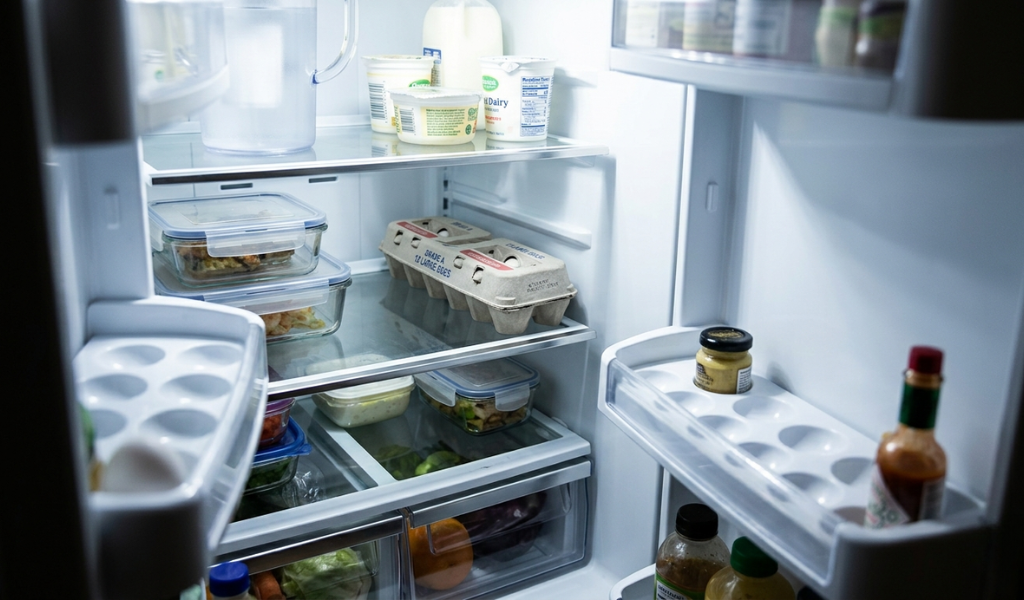
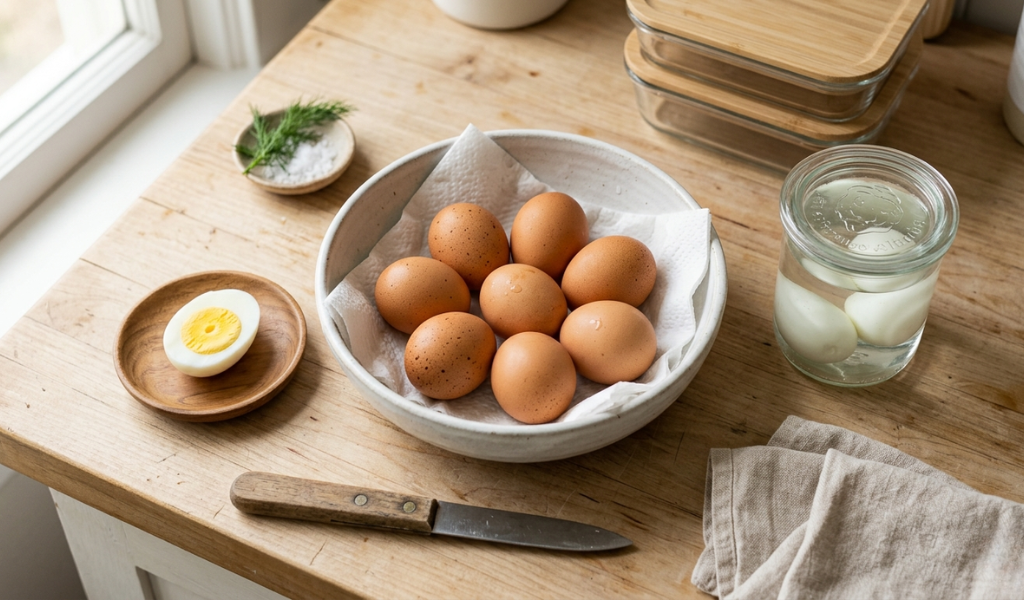
This is a common point of confusion. You might think that cooking an egg makes it last longer, but the opposite is true. When you boil an egg, the heat washes away the ‘bloom’ or ‘cuticle’—the natural protective coating on the shell that seals the pores.
Once the bloom is gone, the egg is far more vulnerable to spoilage. So, how long do hard boiled eggs last in the fridge? Whether they are peeled or still in the shell, the safety window is exactly seven days.
If you have a surplus of eggs—perhaps you found a great sale or your backyard chickens are over-performing—the freezer is a fantastic tool. However, you cannot simply toss a whole egg in the freezer. The water content in the white will expand, shattering the shell and creating a sticky, unsanitary mess.
Crack the eggs into a bowl, whisk gently to combine the yolks and whites, then add a small amount of salt or sugar to help prevent texture changes. Pour into freezer-safe containers or ice cube trays, label and freeze.
If you are a baker, you might only need the whites. Egg whites freeze beautifully with no additives. Simply pour them into a container and label them.
Yolks are trickier. If frozen alone, they become so thick they are almost impossible to use. To keep them fluid, you must whisk in a small amount of salt (for savory dishes) or sugar (for sweet dishes) before freezing.
Shelf Life: Frozen egg products are best used within four months, though they remain safe for up to a year.
Even if an egg passes the float test, you should always perform a secondary check once you crack it open. You should always check eggs carefully after cracking them open.
A spoiled egg has an unmistakable, pungent, sulfurous odor. This smell is produced by hydrogen sulfide gas as bacteria break down the proteins. If you catch even a faint whiff of this “rotten egg” smell, discard the egg immediately and wash the bowl thoroughly.
Look closely at the egg white (the albumen). In a fresh egg, the white is often slightly cloudy. If the white is pink, green, or iridescent, it is a sign of Pseudomonas bacteria. This is a dangerous type of spoilage that can cause severe food poisoning. If the yolk has black or brown spots, this is also a sign of mold or bacterial growth.
While not always a safety issue, a yolk that is flat and an egg white that runs like water across the pan is a sign of a very old egg. If there is no bad smell and no odd colors, it is likely safe but will have poor texture.
If you’ve traveled to Europe, you might have noticed eggs sitting out on the counter in grocery stores. This often leads to the question: why do we put eggs in the fridge in North America?
In the United States, the USDA requires that all commercial eggs be washed in a hot bath with soap and sanitizer to eliminate the risk of Salmonella. This process is very effective at cleaning the outside of the shell, but it also removes the ‘cuticle’—the thin, waxy layer that naturally seals the pores of the egg.
Without the cuticle, bacteria can easily migrate into the egg. Therefore, US eggs must be refrigerated to keep that bacterial growth at bay. In Europe, many countries vaccinate their hens against Salmonella and leave the cuticle intact, allowing the eggs to be stored safely at room temperature.
To ensure your eggs last in the fridge as long as possible, your handling habits matter just as much as your storage location.
Understanding how long eggs last in the fridge is about more than just food safety—it’s about being a smarter, more sustainable cook. By ignoring the ‘best-by’ date and relying on the Julian date and the float test, you can significantly reduce food waste in your home.
The key takeaways are simple: keep them in their original carton, store them in the back of the fridge, consume hard boiled eggs within a week, and always trust your nose. When you handle eggs with a bit of scientific know-how, you can store and use eggs more safely and confidently .