Physical Address
304 North Cardinal St.
Dorchester Center, MA 02124
Physical Address
304 North Cardinal St.
Dorchester Center, MA 02124

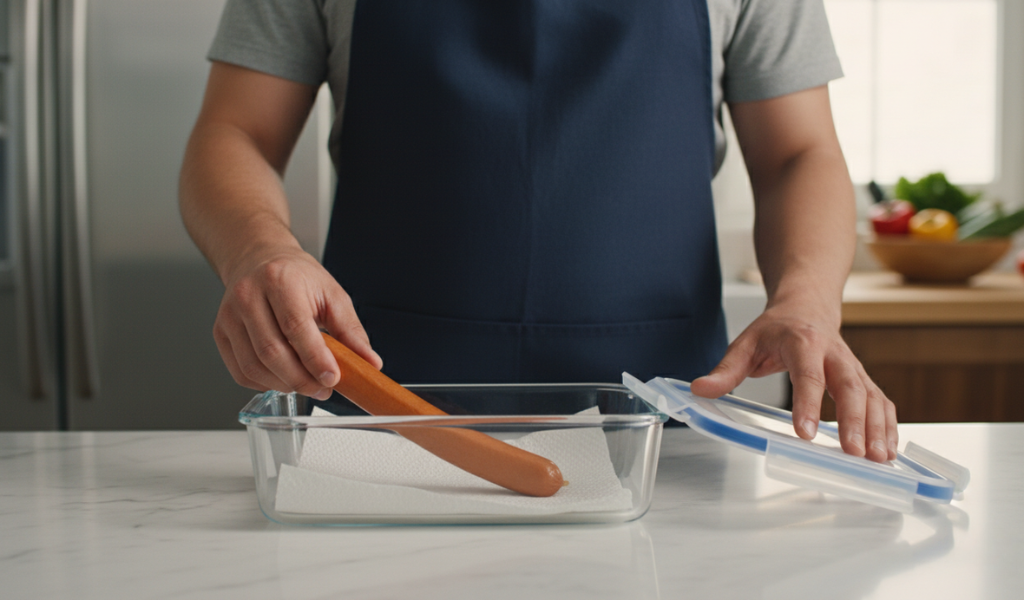
Hot dogs are convenient, fully cooked foods that can stay fresh for days when stored correctly. However, once the original package is opened, exposure to air and moisture can quickly reduce quality and increase the risk of spoilage. Proper storage helps maintain flavor, texture, and food safety.
In this guide, you will learn how to store hot dogs in the refrigerator and freezer, whether you can freeze hot dogs safely, how to use a Hot Dog Storage Container effectively, and the best methods for keeping hot dogs fresh for longer.
Hot dogs should be stored in an airtight container or sealed bag in the refrigerator at 34°F to 38°F after opening. Unopened hot dogs can last up to two weeks in the fridge, while opened packages should be used within 7 days. For longer storage, hot dogs can be frozen in freezer-safe bags for up to 2 months.
To truly master how to store hot dogs, you first have to understand the product sitting in your fridge. A hot dog is a ‘comminuted’ meat product. This is a fancy culinary term meaning the meat (beef, pork, chicken, or a blend) has been ground into a very fine, smooth paste before being stuffed into casings and cooked.
Most commercial hot dogs are fully cooked at the factory—usually by being smoked or steamed in large industrial ovens. They are treated with curing agents, most commonly sodium nitrite. These additives do two things: they give the meat its characteristic pink or reddish color, and more importantly, they inhibit the growth of Clostridium botulinum, the bacteria that causes botulism.
However, because hot dogs are high in moisture and protein, they remain a “magnet” for surface molds and lactic acid bacteria once exposed to the air. When you store a hot dog, you aren’t just storing meat; you are managing a delicate environment where moisture levels and surface bacteria are constantly in flux.
Timing is everything in food preservation. Understanding the “ticking clock” of hot dog storage is the first step toward a safe kitchen.
A factory-sealed, vacuum-packed sleeve of hot dogs is a marvel of modern food engineering. Because all oxygen has been removed, bacteria have a very hard time growing. In a refrigerator kept at 40°F (4°C) or colder, an unopened package can last for roughly two weeks.
Even if the “sell-by” date on the package passes, if the seal is still tight and the package doesn’t look “bloated” or puffy, the meat is generally safe within that two-week window. A bloated package is a major red flag—it means bacteria inside have started producing gases.
The second you break that vacuum seal, the “one-week rule” begins. The USDA suggests consuming opened hot dogs within 7 days. During this week, the quality will slowly degrade. The meat loses its internal moisture to the dry air of the fridge, and it begins to absorb “off-flavors” from other items nearby, like half-cut onions or aromatic cheeses.
We’ve all felt it—the dreaded “hot dog slime.” But what exactly is it? This slippery film is a ‘biofilm’ created by lactic acid bacteria. These bacteria are ubiquitous in our environment. While they are often harmless in small amounts, their presence on meat signifies that the product is beginning to ferment and spoil.
The liquid inside the package, often called “purge,” is a mixture of water and meat proteins that have “leaked” out of the muscle fibers. If hot dogs sit in this liquid for too long, the pH level of the surface shifts, making it even easier for spoilage bacteria to thrive. This is why effective hot dog storage requires moving the meat away from this liquid as soon as the package is opened. If you leave them in the juice, they will go from “fresh” to “funky” in half the time.
If you’re asking what’s the best way to store hot dogs, the answer involves a bit more effort than just tossing them back onto a shelf. Here are the three most common and effective methods:
This is the gold standard. Glass is non-porous, meaning it doesn’t absorb odors and it’s very easy to sanitize.
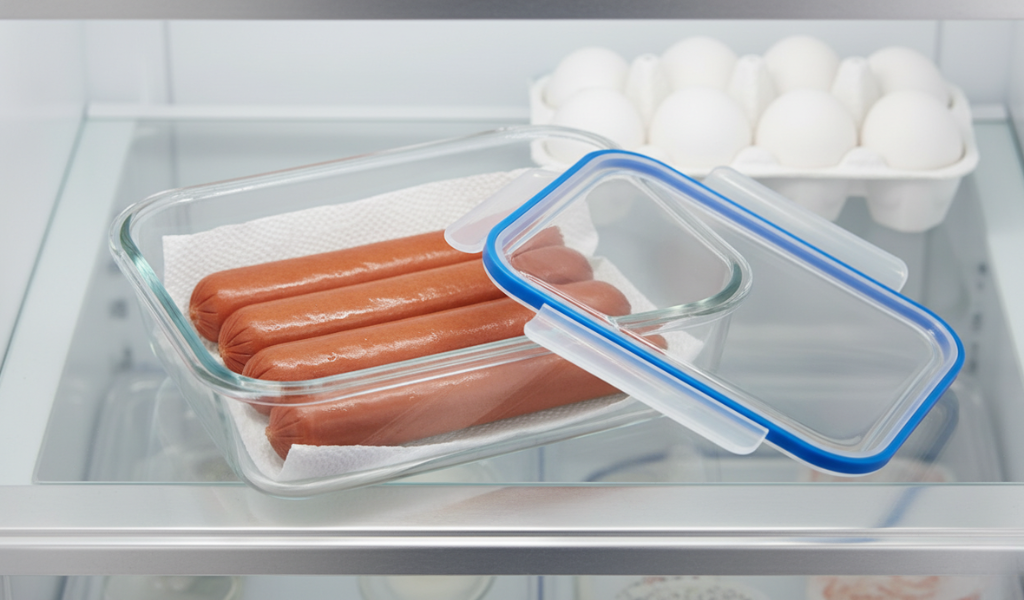
A decent fallback for most households, but only if you use it correctly.
Many people try to “reseal” the original plastic sleeve with a rubber band, a chip clip, or even just by folding it over. This is the absolute worst way to handle hot dog storage.
Original packaging is designed for one thing: a one-time vacuum seal. Once that plastic is torn, it becomes porous and prone to microscopic tears. It is almost impossible to get a true airtight seal with a clip. The “mystery liquid” will inevitably leak out, creating a sticky, smelly mess on your refrigerator shelves that is a pain to clean. If you want your hot dogs to stay fresh, the first step is to discard the original plastic entirely and move the meat to a dedicated, rigid vessel.
You may have seen a specialized Hot Dog Storage Container in the kitchen gadget aisle or on Amazon. These are typically long, narrow plastic boxes with individual slots or ridges for each dog.
These containers provide ‘mechanical protection’. In a crowded fridge, things often get stacked. A dedicated container ensures your hot dogs won’t get squished by a carton of eggs or a heavy jar of pickles. They also prevent the dogs from rolling around like loose logs every time you open the fridge door.
The main issue is that they are “single-use” items. You can’t exactly use a hot dog-shaped container to store leftover soup or a salad. However, for a family that hosts a weekly ‘hot dog night’ or has kids who eat them regularly, the investment in a Hot Dog Storage Container is worth it for the organization and moisture control alone.
The most common question people ask during the summer is: can you freeze hot dogs? The answer is a resounding yes. Hot dogs are actually one of the best meats to freeze because their high fat and salt content acts as a natural antifreeze, preventing the formation of large, jagged ice crystals that usually turn frozen meat into “mush.”
If you freeze a whole pack together, you get a “hot dog brick” that is impossible to separate. Follow this instead:
Pat Dry: Use a paper towel to remove every drop of “purge” from the surface.
The Tray Setup: Lay the hot dogs on a baking sheet lined with parchment paper. Make sure they are not touching each other.
The First Freeze: Put the tray in the freezer for exactly two hours.
Bagging: Transfer the now ‘rock-hard’ franks into a heavy-duty freezer-safe bag. Squeeze out all the air.
This method allows you to pull out exactly one or two hot dogs whenever you want a snack, without having to defrost the entire batch. Frozen hot dogs remain high-quality for about 1 to 2 months, though they stay technically safe to eat for much longer.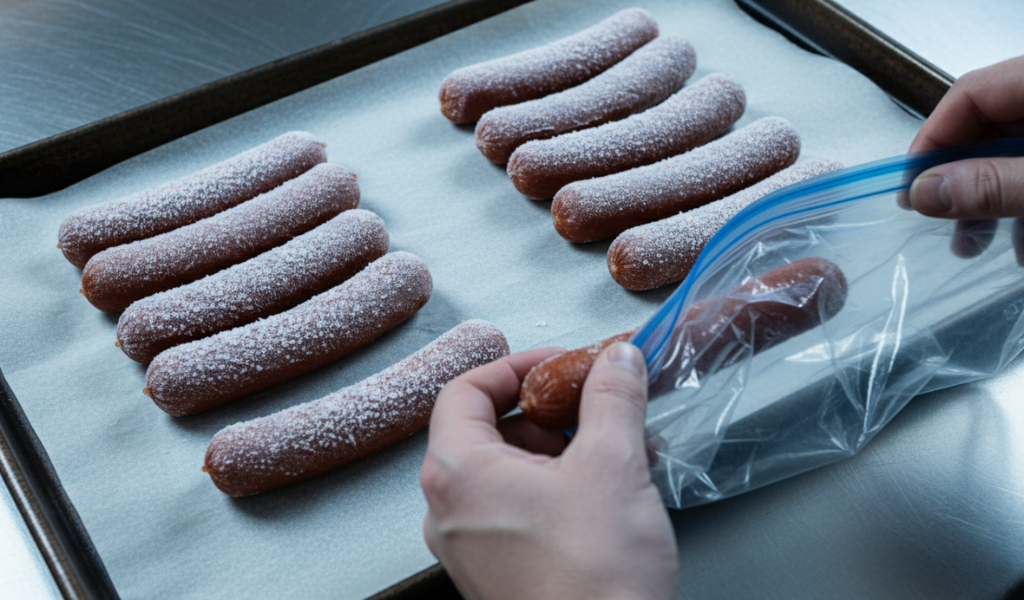
Proper hot dog storage knowledge also includes knowing how to bring them back to life safely.
If you are a serious “bulk buyer,” investing in a home vacuum sealer is a game-changer for hot dog storage. By vacuum-sealing smaller portions (2 or 4 dogs per bag), you can extend their freezer life from two months to nearly six months. This prevents freezer burn—that white, dehydrated patch of meat that tastes like cardboard.
When you vacuum seal at home, you are essentially recreating the factory environment. This is by far the most effective way to ensure your hot dogs taste exactly like they were just bought, even months down the line.
Safety should always come first. If you suspect your hot dogs have turned, go through this mental checklist before taking a bite:
The Golden Rule: When in doubt, throw it out. A $6 pack of franks is not worth the misery of food poisoning.
Hot dogs should always be stored below 40°F (4°C) to reduce bacterial growth. Pregnant women, older adults, and people with weakened immune systems should reheat hot dogs thoroughly before eating.
You might see “uncured” hot dogs at the store. This is often a marketing term. These products usually use celery powder, which is a natural source of nitrates. Whether “cured” or “uncured,” the storage rules remain the same. However, hot dogs with fewer preservatives may actually spoil faster once opened. If you prefer organic or preservative-free brands, you should aim to eat them within 3 to 5 days rather than the full week.
If you have a few stragglers in your Hot Dog Storage Container and you don’t want to freeze them, get creative! You don’t always need a bun to enjoy them.
The Breakfast Hash: Dice your leftovers into small cubes. Sauté them with potatoes, onions, and bell peppers. Top with a fried egg for a high-protein breakfast.
Stir-Fry Surprise: In many cultures, sliced hot dogs are a popular addition to fried rice. Their salty, smoky flavor pairs perfectly with soy sauce and sesame oil.
Corn Dog Muffins: Chop two or three hot dogs into small pieces and fold them into a batch of corn muffin batter. Bake them in a muffin tin for a perfect kid-friendly snack.
Mac and Cheese Upgrade: Slicing hot dogs into “coins” and stirring them into a pot of creamy mac and cheese is a classic comfort food move that never goes out of style.
Proper hot dog storage helps maintain freshness, flavor, and food safety. After opening a package, store hot dogs in an airtight container or sealed bag in the refrigerator and use them within one week. For longer storage, freezing is a safe and effective option when done correctly.
By following proper refrigeration and freezing methods, you can reduce food waste and keep hot dogs ready for quick meals, cookouts, and snacks whenever needed.
Yes, you can. Since they are pre-cooked at the factory, they are safe to eat cold. However, for the best flavor and to ensure they are 100% safe from surface bacteria, heating them until they are steaming is always the best practice.
The “two-hour rule” is the law here. Do not leave hot dogs at room temperature for more than two hours. If the temperature outside is above 90°F (like a typical July afternoon), that limit drops to one hour.
No. Washing meat can actually splash bacteria around your sink and countertops. If the hot dogs are slimy, it’s a sign they are spoiling—rinsing them won’t make them safe to eat.
This is usually just beet juice or other natural colorants used in the casing. It’s not blood, and it’s perfectly safe, though it’s a good sign that you should move them into an airtight container with a paper towel to soak up the mess.
You can, but it’s not ideal. The original plastic isn’t thick enough to prevent freezer burn over a long period. For the best quality, wrap the original pack in a layer of heavy-duty aluminum foil or put the whole thing inside a freezer-safe bag.
Generally, yes. Turkey and chicken franks have a higher moisture content and a slightly different protein structure, which can cause them to become “mushy” a day or two sooner than all-beef varieties.
Your refrigerator should always be between 34°F and 38°F. Anything above 40°F puts you in the “danger zone” where bacteria can double every 20 minutes.