Physical Address
304 North Cardinal St.
Dorchester Center, MA 02124
Physical Address
304 North Cardinal St.
Dorchester Center, MA 02124


You push a button, wait two minutes, and somehow a cold plate of pasta comes out steaming hot. Most of us use a microwave every single day — but few people actually know how it works. Understanding how a microwave works isn’t just satisfying trivia. It can help you use your microwave oven more safely, more effectively, and get better results every time you cook.
This guide breaks it all down: the science behind the heat, the difference between a microwave and an oven, common settings explained, safety tips, and answers to the questions people ask most.
At its core, a microwave works by using electromagnetic radiation to heat food from the inside out. A component called a magnetron generates microwave energy — a type of radio wave — that bounces off the metal walls inside the appliance and penetrates the food placed inside.

Here’s where it gets interesting. Water molecules inside food are polar, meaning they have a positive and negative end. When microwave energy hits these molecules, it causes them to vibrate rapidly — billions of times per second. That friction generates heat. So unlike a stovetop or conventional oven, a microwave doesn’t heat the air around your food. It heats the food directly.
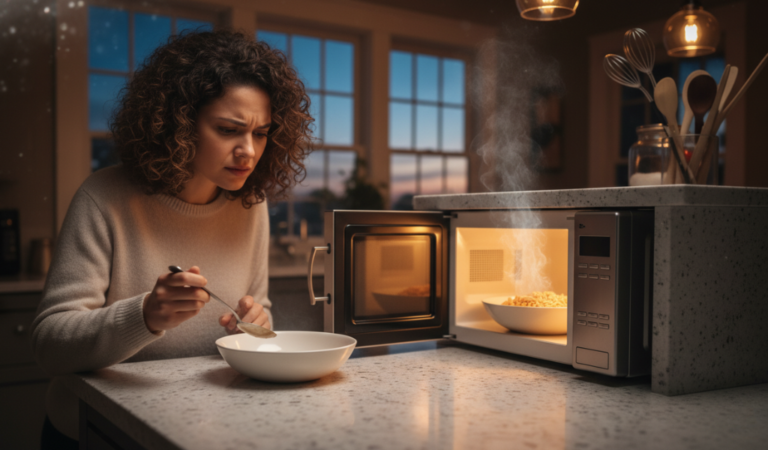
This is why a cold mug can come out of the microwave feeling cool to the touch while the liquid inside is scalding. The mug contains very few water molecules, so it barely absorbs any energy. The liquid inside? It heats almost instantly.

To really understand how a microwave oven works, it helps to know the main components:
Each of these parts works together seamlessly. Remove any one of them and the whole system breaks down. That’s why even minor damage — like a cracked waveguide cover — can lead to uneven cooking or sparking.

This is one of the most searched questions around microwaves, and for good reason. The difference between a microwave and an oven comes down to how heat is applied to food.
A conventional oven heats the air inside the cavity using electric coils or gas burners. That hot air surrounds the food and slowly cooks it from the outside in — a process called conduction. This is why roasting a chicken takes an hour or more, but the outside gets nicely browned in the process.
A microwave oven, on the other hand, skips the hot air entirely. Microwave energy goes straight into the food, exciting water molecules and generating heat from within. This is why microwaves are so much faster — and why they don’t brown or crisp food the same way a traditional oven does.
Here’s a quick comparison:
| Feature | Microwave | Conventional Oven |
| Cooking method | Electromagnetic energy | Hot air (conduction) |
| Speed | Very fast (minutes) | Slower (30–60+ minutes) |
| Browning/crisping | Limited | Yes |
| Energy efficiency | Higher | Lower |
| Best for | Reheating, defrosting | Baking, roasting |
Choose a microwave if speed and convenience are the priority. Choose a conventional oven if texture, browning, or baking is the goal. Many households benefit from having both.
Knowing how to use a microwave correctly can make a big difference in both results and safety. Here are some practical tips:
Modern microwave ovens do a lot more than just reheat leftovers. Here’s what some of the most common settings actually do:
Some microwave ovens include a sensor that detects steam released from food as it heats. The appliance uses that data to automatically adjust cooking time and power level — so you don’t have to guess.
Convection microwaves combine traditional microwave energy with a heating element and a fan that circulates hot air. The result? You can bake, roast, and crisp foods just like a regular oven — but faster. This setting is particularly useful for cooking chicken, roasting vegetables, or even baking small cakes.
The defrost setting uses a lower power level — usually around 30% — to thaw frozen food gradually without accidentally cooking the edges. Most models let you defrost by weight or time.
Some microwave ovens include a keep-warm function that uses gentle heat to hold cooked food at serving temperature for up to 60 minutes. This is handy when different parts of a meal finish cooking at different times.
Certain models include a top-down heating element that mimics a broiler, allowing you to brown and crisp the surface of food — something a standard microwave setting can’t do.

A microwave not heating is one of the most common issues people run into — and it’s understandably frustrating. Here are the most likely causes:
Some of these repairs are straightforward. Others — especially anything involving the high-voltage capacitor — should be handled by a qualified technician, as the components can store dangerous amounts of electricity even when the appliance is unplugged.
This question comes up often, and the short answer is yes — when used correctly, microwave cooking is safe. The electromagnetic waves used in a microwave are non-ionizing, meaning they don’t alter the chemical structure of food or make it radioactive.
That said, a few precautions are worth keeping in mind:
Following the manufacturer’s guidelines — and using common sense — makes a microwave oven one of the safest ways to heat food at home.
Understanding how a microwave works changes the way you use it. Once you know that the magnetron drives everything, that water molecules are what actually heat, and that power levels and resting time genuinely matter — you’ll get better results every time.
Whether you’re reheating last night’s leftovers, defrosting chicken for dinner, or experimenting with convection baking, there’s a lot this appliance can do when you know how to use it properly. Take a few minutes to explore the settings on your model — you might be surprised by what you’ve been missing.
A microwave uses a component called a magnetron to produce electromagnetic waves. These waves cause water molecules inside food to vibrate rapidly, which generates heat. The food heats from within rather than from an external heat source.
A conventional oven heats food by warming the surrounding air, which then cooks food from the outside in. A microwave heats food directly by exciting its water molecules with electromagnetic energy, making it significantly faster. Ovens are better for browning and baking; microwaves are better for speed and convenience.
The most common reasons a microwave stops heating include a failed magnetron, a faulty door switch, a blown thermal fuse, or a damaged high-voltage capacitor. If basic troubleshooting doesn’t resolve the issue, contact a qualified appliance repair technician.
Yes. Microwave ovens are safe for regular use when operated according to the manufacturer’s guidelines. Use microwave-safe containers, avoid sealing food too tightly, and always allow food to rest after heating to ensure even temperature distribution.
Use microwave-safe dishes, cover food to retain moisture, stir halfway through cooking for even heat distribution, and never put metal objects inside. Always let food rest for one to two minutes after heating before eating.
A microwave can cook food thoroughly, but it may struggle with thick or dense items. Using appropriate power levels, rotating or stirring food during cooking, and allowing resting time all help ensure food is cooked safely all the way through.
Never put metal containers, aluminum foil, non-microwave-safe plastics, sealed containers, whole eggs, or styrofoam not labeled microwave-safe into a microwave. These can cause sparking, chemical leaching, or pressure build-up that leads to burns or damage.