Physical Address
304 North Cardinal St.
Dorchester Center, MA 02124
Physical Address
304 North Cardinal St.
Dorchester Center, MA 02124

I think we can all agree that a pantry without a jar of peanut butter feels a little bit empty. It is the ultimate comfort food—perfect for a quick sandwich, a spoonful after a long day, or that secret ingredient in your favorite satay sauce. But have you ever pulled a forgotten jar from the back of the shelf and wondered, how long does peanut butter last, and is it actually safe to eat?
While peanut butter is famous for its long shelf life, it isn’t immortal. Whether you are dealing with a classic creamy brand or a jar of natural peanut butter, knowing the signs of spoilage can save you from a nasty taste and a potential stomach ache.
In this guide, we’re going to dive deep into the world of peanut storage. We will answer the burning question: does peanut butter go bad? Plus, we’ll look at the best ways to keep your spread fresh, creamy, and delicious for as long as possible.
When you look at a jar of peanut butter, you’ll usually see a “Best By” date. It is important to remember that this isn’t a hard expiration date. It is the manufacturer’s estimate of how long the product will remain at peak quality.
So, how long does peanut butter last in the real world? It mostly depends on the ingredients and whether the seal has been broken.
If the seal is still intact, you are in luck. Most commercial peanut butters contain stabilizers and have very low moisture content, which makes it hard for bacteria to grow. An unopened jar of regular peanut butter can easily last 6 to 9 months past the printed date if stored in a cool, dark place.
Once you twist that lid off, oxygen enters the chat. Oxygen is the enemy of fats. For a standard jar of processed peanut butter (the kind with added oils), you have about 2 to 3 months of peak freshness in the pantry. If you move it to the fridge, you can stretch that to nearly 6 to 9 months.
| Type of Peanut Butter | Pantry (Unopened) | Pantry (Opened) | Refrigerator (Opened) |
| Conventional/Regular | 6–9 Months | 2–3 Months | 6–9 Months |
| Natural (No Stabilizers) | 6 Months | 1 Month (Not Recommended) | 6 Months |
| Homemade | N/A | Not Recommended | 1–2 Months |
You might be surprised to learn that peanut butter doesn’t usually “rot” like a strawberry or a loaf of bread. Because it is so high in fat and low in water, it is a very hostile environment for mold and bacteria.
However, does peanut butter go bad? Yes, but it usually goes through a process called rancidity.
Rancidity happens when the fats in the peanuts are exposed to heat, light, and oxygen. Over time, the chemical structure of the oil changes. While eating rancid peanut butter might not make you instantly sick like food poisoning would, it tastes ‘’bitter or metallic’’ and loses all its nutritional value. In some cases, consuming highly oxidized oils can cause digestive upset or inflammation over the long term.
Before you spread that peanut butter on your toast, give it a quick inspection. If you are wondering how to tell if peanut butter is bad, look for these four red flags:
This is the most common sign of rancidity. Fresh peanut butter should smell like roasted peanuts—warm and nutty. If it smells like soap, metallic, or even like a box of old crayons or oil paint, the oils have turned. Throw it out.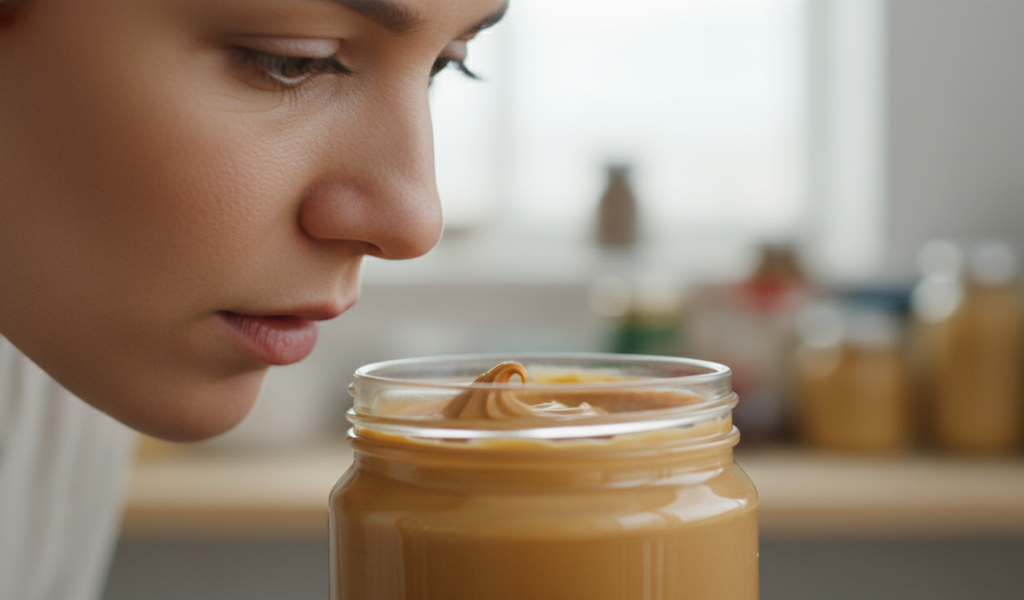
Is your once-creamy spread now hard, dry, and brittle? While peanut butter naturally firms up over time, extreme changes in texture usually mean the moisture and oils have evaporated or separated to the point of no return. If it feels more like ‘dry clay’ than a spread, it’s past its prime.
Take a look at the shade of brown. If the peanut butter has shifted from a light tan to a significantly darker, muddy brown, it has likely oxidized.
While rare, mold can happen if the jar is contaminated. If you’ve ever “double-dipped” with a spoon that had jam or breadcrumbs on it, those organic bits can grow mold inside the jar. If you see any fuzzy growth or green spots, do not try to scoop it out—the whole jar is compromised.
When we talk about natural peanut butter, we are referring to the stuff that usually has only two ingredients: peanuts and salt.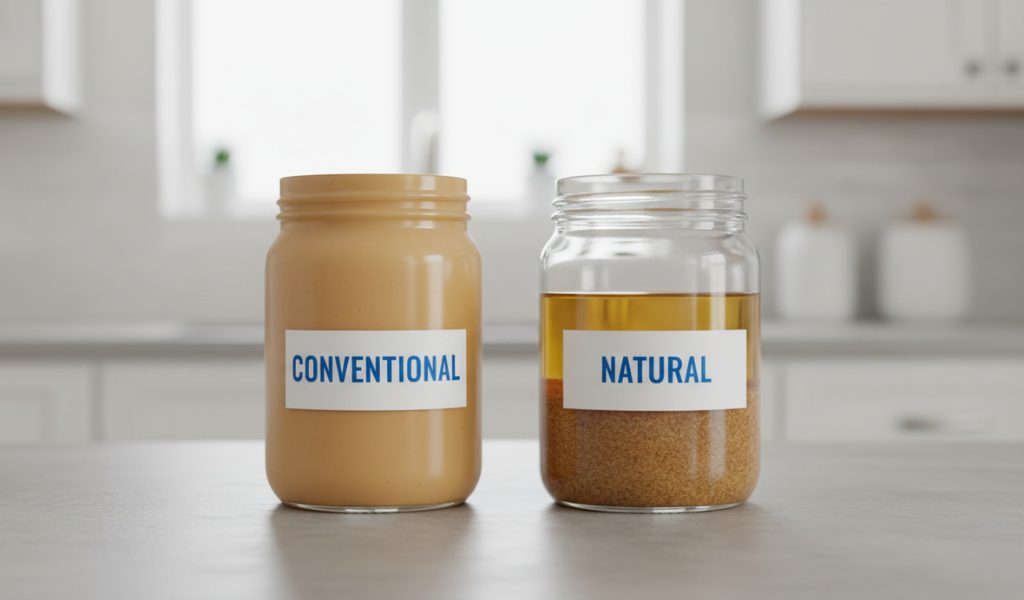
Conventional brands (like Jif or Skippy) add hydrogenated vegetable oils or palm oil. These act as stabilizers. They keep the peanut butter creamy and prevent the oil from floating to the top. They also act as preservatives, which is why regular peanut butter lasts so much longer at room temperature.
Natural peanut butter lacks these stabilizers. This is why you see a layer of oil at the top of the jar. Because the peanut oil is sitting there exposed to the air at the top, it goes rancid much faster. If you leave a natural jar in a warm pantry, it can start to taste “off” in just a few weeks.
This is the great debate of the kitchen. The answer depends on your preference and the type of jar you bought.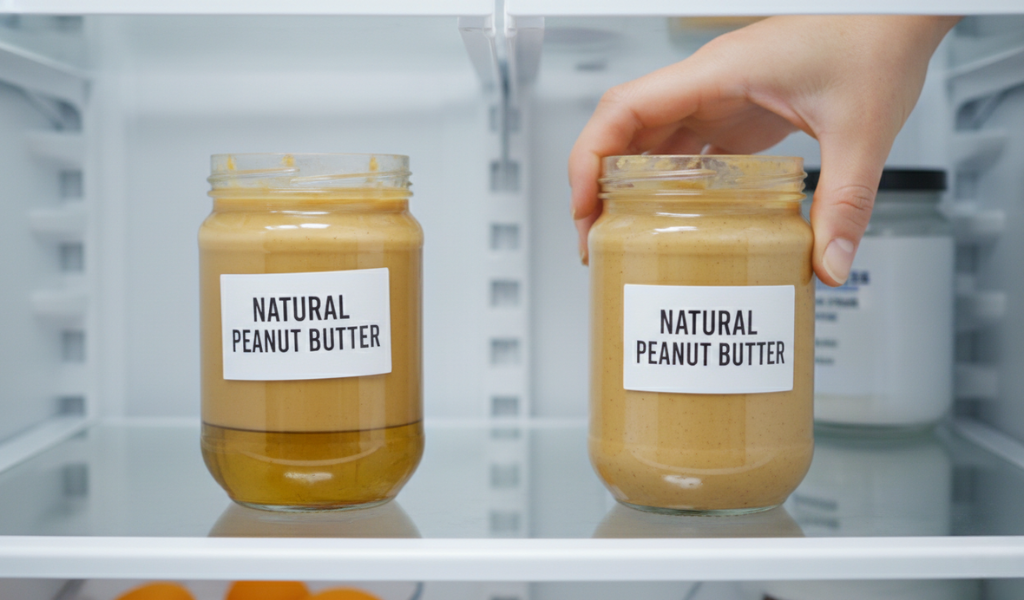
So, does peanut butter need to be refrigerated? * For Conventional Peanut Butter: No, it isn’t strictly necessary. Most brands are perfectly shelf-stable. However, if you live in a very hot or humid climate, the fridge will keep the oils from breaking down, ensuring it stays fresh for much longer.
Pro-Tip: If you hate how hard peanut butter gets in the fridge, try taking it out 15 minutes before you need it. It will soften up just enough to be spreadable without tearing your bread.
If you want your peanut butter to go the distance, follow these simple storage rules:
So, how long does peanut butter last? In short: a long time, but not forever. A standard jar is usually good for about 3 months in the pantry after opening, while the fridge can keep it fresh for nearly a year. Always remember that natural peanut butter is a bit more high-maintenance and prefers the cold.
The best way to ensure you are eating safe, delicious food is to use your senses. If the smell is off, the color is dark, or the taste is bitter, it is time to buy a fresh jar. Peanut butter is an affordable staple, so there is no reason to risk your health on a jar that has seen better days.
Now that you are a storage expert, go ahead and enjoy that PB&J with total peace of mind!
Yes! As long as there are no signs of spoilage (like a soapy smell or mold), peanut butter is usually perfectly fine to eat for several months after the “Best By” date. That date is for quality, not safety.
This is completely normal! It is called oil separation. Without chemical stabilizers, the natural oils in the peanuts separate from the solids. Just give it a good stir and pop it in the fridge to keep it blended.
While rare, it is possible. If the peanut butter is contaminated during manufacturing or if you introduce moisture/bacteria with a dirty spoon, it can harbor Salmonella or mold. Always practice good hygiene.
You likely won’t get “sick” in the traditional sense, but it will taste terrible. Some people might experience mild stomach upset. It’s best to avoid it as rancid oils contain ‘harmful free radicals’.
You sure can! If you bought in bulk, you can freeze peanut butter for up to a year. Just make sure there is a little bit of head-space in the jar as it might expand slightly. Thaw it in the fridge overnight.
Nope. Both have the same shelf life. The “crunch” is just pieces of peanuts, which follow the same spoilage rules as the blended paste.
If your jar has a sharp, chemical, or “paint-like” odor, it is definitely rancid. This happens when the fats have oxidized. It is time to throw it away and get a new one!