Physical Address
304 North Cardinal St.
Dorchester Center, MA 02124
Physical Address
304 North Cardinal St.
Dorchester Center, MA 02124

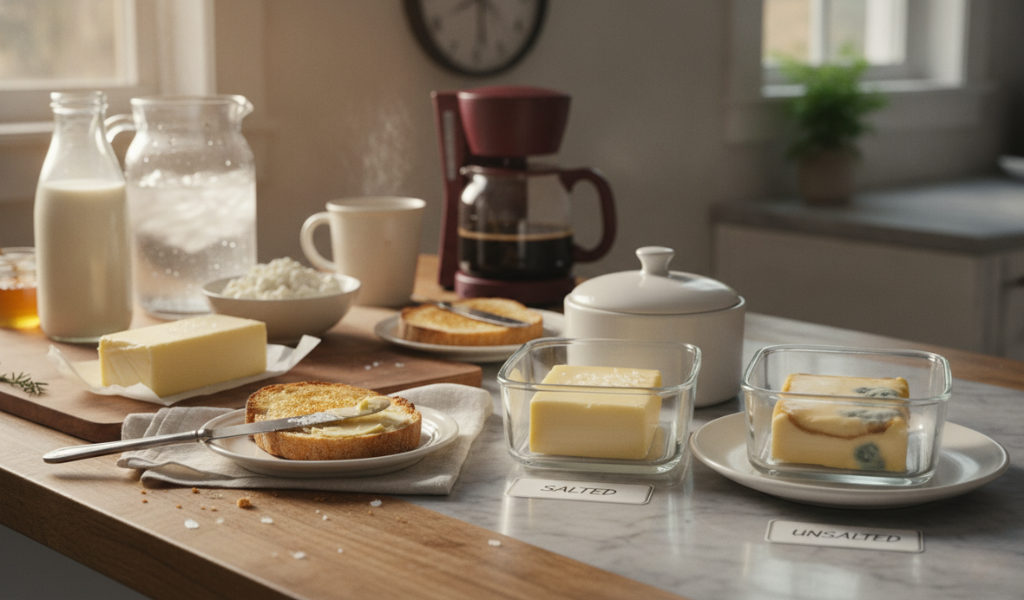
We’ve all done it. You pull the butter dish out for breakfast, get busy with the day, and forget to put it back. Hours later—maybe even the next morning—you spot it still sitting on the counter. So, can you leave butter out overnight without making yourself sick?
The short answer is yes, in most cases. Butter is one of the few dairy products that holds up surprisingly well at room temperature, thanks to its high fat content and low water content. But there’s more to it than a simple yes or no. How long can butter stay at room temperature before it turns? Should butter be refrigerated at all? And does it matter if it’s salted or unsalted?
This guide breaks it all down in plain terms. By the end, you’ll know exactly how to store your butter, how long it stays fresh on the counter, and when it’s time to toss it.
Most dairy products, like milk and soft cheese, spoil fast when left out. Butter plays by different rules. The reason comes down to what butter is made of.
Butter is roughly 80% fat, with only a small amount of water and milk solids. Bacteria need water and protein to grow, and butter simply doesn’t offer much of either. That high fat content acts like a natural shield, slowing down the spoiling process that ruins other dairy so quickly.
This is why your grandmother probably kept a butter dish on the counter without a second thought.  For generations, people stored butter at room temperature so it stayed soft and spreadable. The practice wasn’t reckless—it was based on how butter actually behaves.
That said, butter isn’t completely immune to going bad. The fat can still turn rancid over time, especially when exposed to heat, light, and air. So while leaving it out overnight is fine, leaving it out for weeks is a different story.
Yes, you can leave butter out overnight without any real risk. A single night on the counter won’t spoil your butter or make it unsafe to eat. When you wake up the next morning, that butter will be soft, spreadable, and perfectly good for your toast.
This holds true whether you forgot it by accident or left it out on purpose. A few hours, or even a full night, falls well within the safe window for butter at room temperature.
The one thing to keep in mind is your kitchen’s temperature. In a cool or moderate room, butter is happy to sit out for quite a while. But in a hot kitchen—say, during a summer heatwave with no air conditioning—butter softens fast and can start to turn sooner. If your counter feels warm to the touch, you may want to be a little more careful.
For most people in most homes, though, an overnight stay on the counter is nothing to worry about.
So we know overnight is fine, but how long can butter stay at room temperature before it actually goes bad? The general rule is that butter stays fresh on the counter for one to two weeks.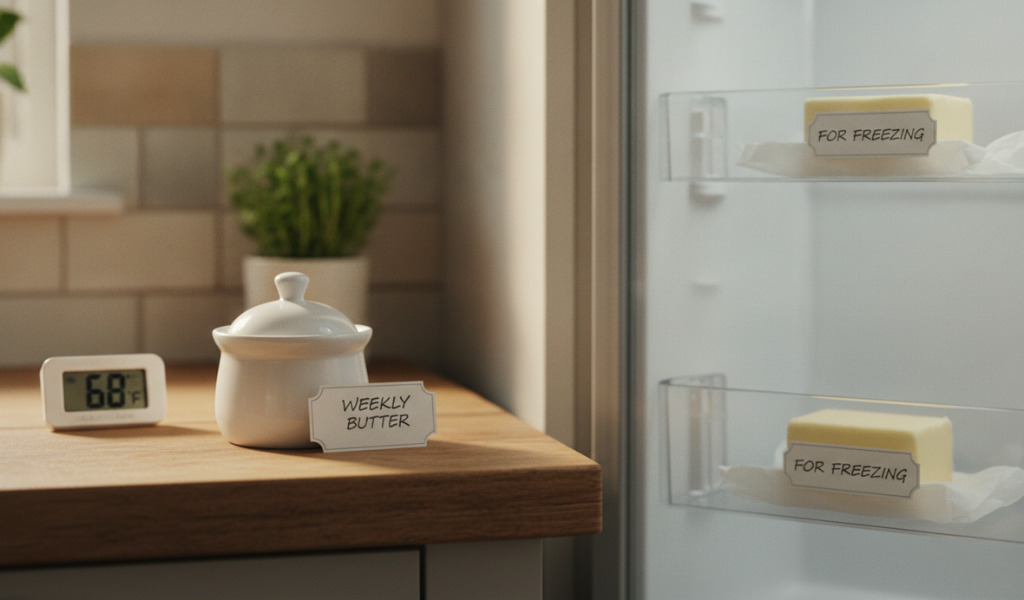
This depends heavily on your room temperature. The ideal range for storing butter out is between 60°F and 70°F (about 15°C to 21°C). In that sweet spot, butter keeps its flavor and texture for a good while.
Here’s a simple breakdown:
The danger isn’t really about bacteria making you sick. The bigger issue is rancidity. Over time, the fat in butter reacts with oxygen and starts to break down. This gives the butter an off, slightly sour or “crayon-like” smell and taste. It won’t usually hurt you, but it won’t taste good either.
A smart trick is to only leave out as much butter as you’ll use in a week or so. Keep the rest in the fridge or freezer, and refill your butter dish as needed.
It does, actually. Salt is a natural preservative, and it plays a real role in how long butter lasts on the counter.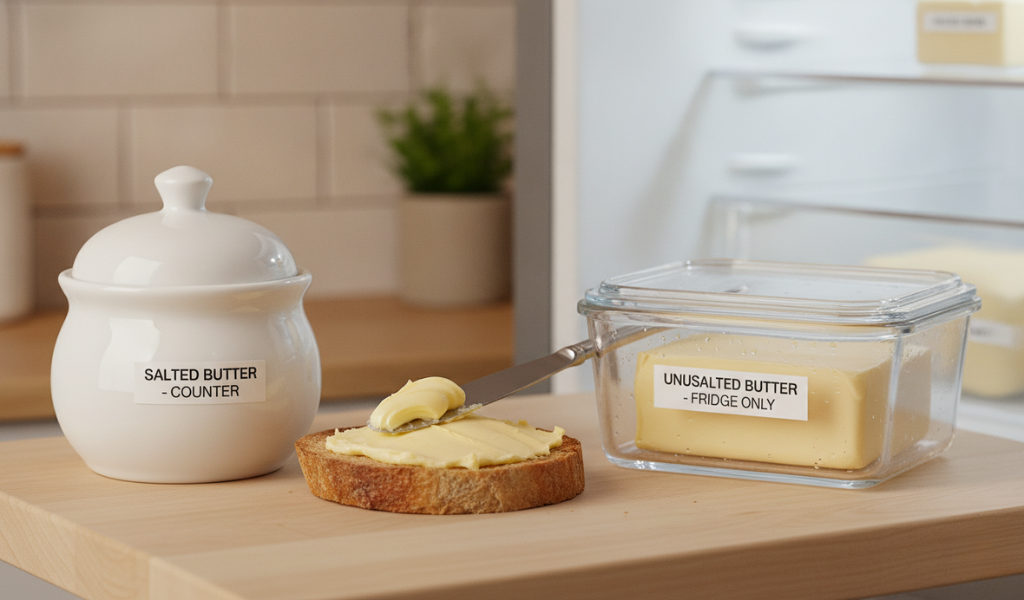
Salted butter holds up better at room temperature. The salt slows down bacterial growth and helps keep the butter fresh longer. If you like keeping butter out, salted is your best friend. It can comfortably sit on the counter for a couple of weeks in a cool kitchen.
Unsalted butter, on the other hand, is more delicate. Without that salt to protect it, it spoils a bit faster and is more likely to turn rancid. If you mostly use unsalted butter for baking, it’s wiser to keep it in the fridge and pull out only what you need.
The takeaway is simple. If you want a butter dish on the counter, choose salted butter for everyday use. Save the unsalted variety for the fridge.
This is where opinions split. Should butter be refrigerated, or is the counter just fine? The honest answer is that it depends on a few things: how fast you use it, what kind of butter it is, and how warm your home gets.
You don’t have to refrigerate butter for safety reasons in the short term, especially salted butter in a cool kitchen. Plenty of people around the world keep butter out year-round with no problems.
That said, refrigeration is the better choice in certain situations:
A good middle-ground approach works for many households: keep a small amount out in a covered butter dish for daily use, and store the rest in the fridge. That way you get soft, spreadable butter without risking the whole stash.
For long-term storage, the freezer is your best bet. Butter freezes beautifully and can last up to a year without losing much quality. Just wrap it well to protect it from freezer odors.
Butter rarely spoils in a dangerous way, but it can definitely go rancid. Knowing the warning signs helps you avoid that unpleasant taste in your food.
Smell. Fresh butter has a clean, creamy, slightly sweet scent. Rancid butter smells sour, cheesy, or a bit like old crayons. If something smells off, trust your nose.
Taste. A tiny taste will tell you a lot. Bad butter tastes sour, bitter, or simply unpleasant. Fresh butter tastes rich and mild.
Color. Butter that has gone bad may darken, especially on the outer edges. A yellow ring forming around lighter butter inside is a sign of oxidation.
Texture. Any sliminess, unusual hardness, or odd surface changes can signal spoilage.
If you spot mold, throw the whole thing out without question. Mold means the butter is no longer safe to use.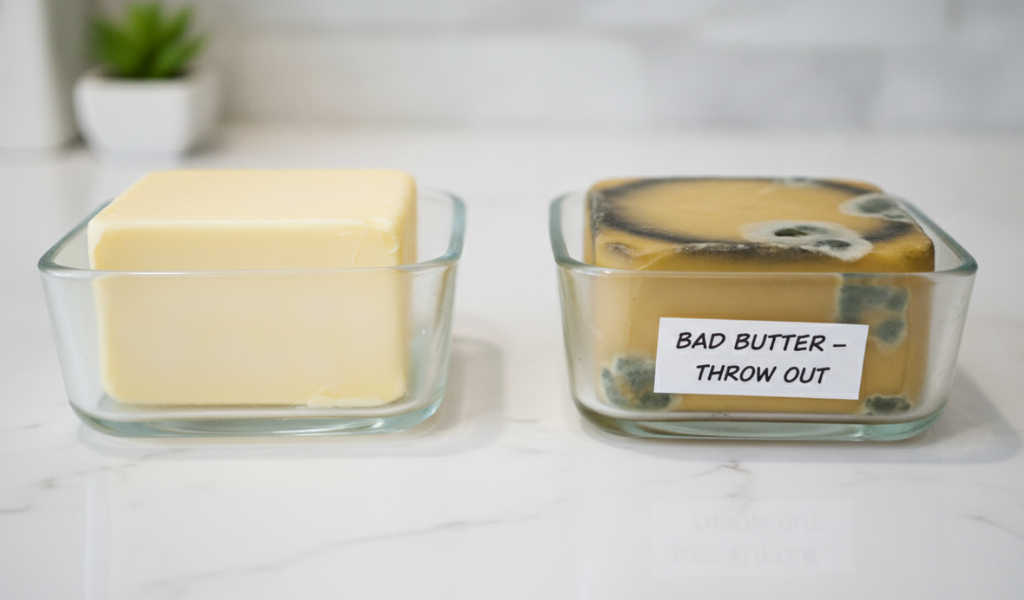
When in doubt, remember this: rancid butter won’t usually make you sick, but it will ruin the flavor of whatever you cook or spread it on. There’s no reason to use butter that’s past its prime.
A few simple habits go a long way toward keeping your butter fresh, whether on the counter or in the fridge.
Use a covered butter dish. Air and light are butter’s enemies. A covered dish protects it from oxidation and keeps it tasting fresh longer. A French butter crock is even better, since it seals butter away from air using water.
Keep it out of direct sunlight. Set your butter dish away from windows and the stove. Heat and light speed up rancidity.
Only leave out what you’ll use. Stick to a week’s worth on the counter. Refill from the fridge as needed instead of leaving a whole pound out.
Wrap it well in the fridge. Butter easily absorbs smells from other foods. Keep it wrapped in its original packaging or an airtight container so it doesn’t take on the flavor of last night’s leftovers.
Freeze the extra. If you’ve stocked up, freeze what you won’t use soon. Wrapped tightly, frozen butter stays good for months and thaws perfectly.
These small steps help you enjoy soft, spreadable butter while keeping waste and spoilage to a minimum.
So, can you leave butter out overnight? Absolutely. A night on the counter won’t harm your butter or your health. In fact, butter is built to handle room temperature far better than most dairy, thanks to its high fat content and low water content.
The real questions are about the long game. How long can butter stay at room temperature? Up to two weeks in a cool kitchen, less if it’s warm or unsalted. Should butter be refrigerated? Not always, but it’s the smart move for hot climates, unsalted butter, or bulk buying.
The best approach for most homes is a balanced one. Keep a small dish of salted butter on the counter for easy spreading, and store the rest in the fridge or freezer. Watch for signs of rancidity, use a covered dish, and you’ll always have fresh, delicious butter ready to go.
Next time you forget the butter on the counter overnight, you can relax. Your toast is safe, and your butter is just fine.
Can you get sick from eating butter left out overnight?
It’s very unlikely. Butter’s high fat and low water content make it a poor home for bacteria. Butter left out overnight is safe to eat, though it may eventually go rancid if left out for weeks rather than hours.
How long can butter stay at room temperature before it goes bad?
In a cool kitchen between 60°F and 70°F, butter stays fresh for one to two weeks. In warmer rooms, use it within a few days. Above 77°F, it’s best kept in the fridge.
Should butter be refrigerated or left on the counter?
Both work. Salted butter in a cool kitchen is fine on the counter for a week or two. Refrigeration is better for unsalted butter, hot climates, or when you buy butter in bulk.
Does salted butter last longer at room temperature than unsalted?
Yes. Salt acts as a natural preservative, so salted butter resists spoilage longer than unsalted butter. If you like keeping butter out, salted is the better choice.
How can I tell if my butter has gone bad?
Check the smell, taste, color, and texture. Rancid butter smells sour or like old crayons, tastes bitter, and may darken on the edges. Any mold means you should throw it out immediately.
What’s the best way to keep counter butter fresh?
Use a covered butter dish or a French butter crock, keep it out of sunlight and away from heat, and only leave out about a week’s worth at a time.
Can you freeze butter for long-term storage?
Yes. Butter freezes very well and can last up to a year. Wrap it tightly to protect it from freezer odors, then thaw it in the fridge when you need it.