Physical Address
304 North Cardinal St.
Dorchester Center, MA 02124
Physical Address
304 North Cardinal St.
Dorchester Center, MA 02124

If there is one snack that has stood the test of time—literally—it is the pickle. Whether it is a crunchy dill spear alongside a deli sandwich, a few sweet slices on a burger or just a late-night snack straight from the jar, pickles are a staple in almost every household. But have you ever reached into the back of your pantry, pulled out a dusty jar and wondered, “Do pickles go bad?”
It is a fair question. We often think of pickling as a way to preserve food forever but even the mightiest gherkin has its limits. While the vinegar and salt in the brine do a fantastic job of keeping bacteria at bay, they aren’t invincible. In this comprehensive guide, we are going to dive deep into the world of brined cucumbers. We will cover how long they actually last, the science of why they stay fresh, and exactly how to tell when your favorite snack has turned into a science project.
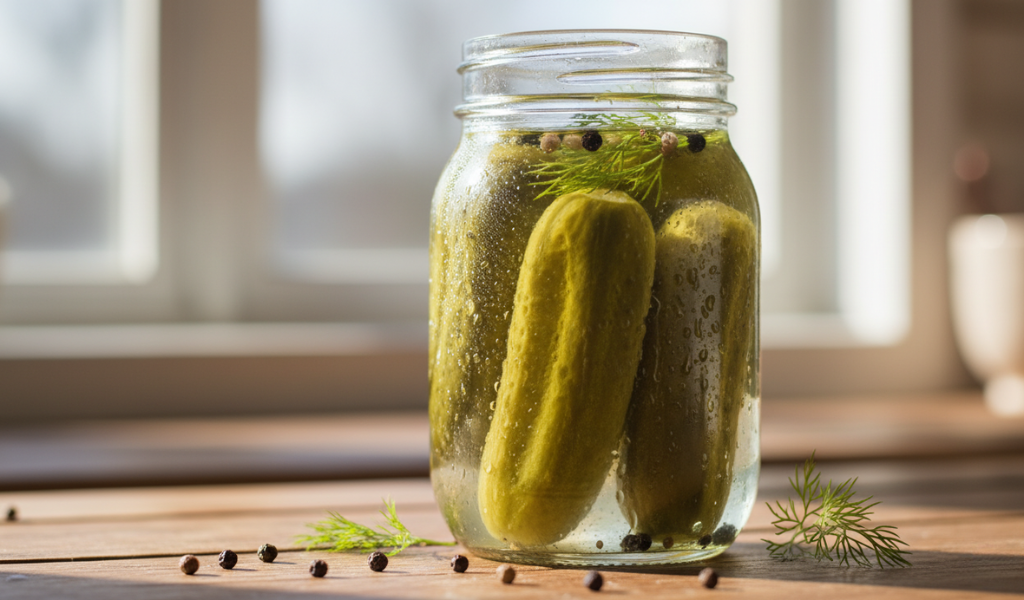
To put it simply: yes — pickles do go bad, but they last much longer than most foods. However, the timeframe is much longer than almost any other produce in your kitchen. Unlike a fresh cucumber which might turn into a puddle of mush in your crisper drawer within a week.
Through the process of pickling, the cucumber’s cellular structure is altered. It is submerged in a highly acidic environment that makes it difficult for most “harmful bacteria” to survive. However, pickles can spoil if they are exposed to air for too long contaminated by dirty utensils or if the protective brine loses its acidity over time. Whether they are store-bought or homemade, they will eventually lose their crunch and eventually, their safety.
To understand why pickles last so long we have to look at the liquid they live in. Pickling is essentially a war against spoilage. When you submerge a vegetable in a mixture of vinegar, water and salt, you are creating an environment that is too “hostile” for most harmful bacteria to survive.
There are two main ways pickles are made and each affects how they age:
The lifespan of your pickles depends heavily on how they were made and where you keep them. Most people are surprised to learn that an unopened jar of store-bought pickles can often last a year or more past the date printed on the label if stored in a cool dark place.
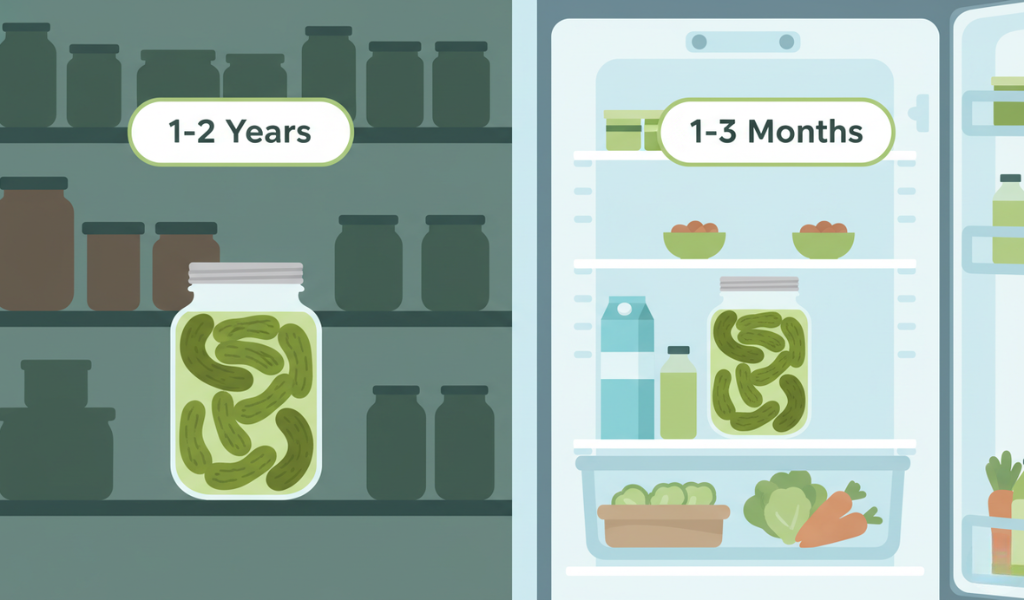
When looking at a jar you will usually see a “Best-By” or “Best Before” date. It is important to remember that this is not a strict safety expiration date. Instead, it is the manufacturer’s estimate of how long the pickles will remain at their “peak” crunch and flavor.
So, “can pickles expire” in the way milk does? Not exactly. After the date passes, the pickles might become softer or lose that sharp “zing.” However, as long as the seal is intact and there are no signs of spoilage they are generally safe to eat for several months beyond that stamped date. The “expiration” is more about quality than toxicity.
Not all pickles are created equal. The sugar content, the size of the cucumber and the spices used can all change the timeline.
Even if you follow all the rules, sometimes things go wrong. If you’re questioning a jar that’s been sitting in the fridge door for a while look for these five red flags:
Trust your nose. A healthy pickle should smell vinegary, salty and herbal. If you open the jar and are hit with a funky, yeasty or “rotten” scent, toss it immediately. A “sulfur” or “egg” smell is a major “no-go.”
If the metal lid on your jar is puffed up or “domed” it means gasses have built up inside. This is a sign of bacterial activity or secondary fermentation that shouldn’t be happening in a sealed jar. If the jar “hisses” or sprays liquid when you open it, it is definitely spoiled.
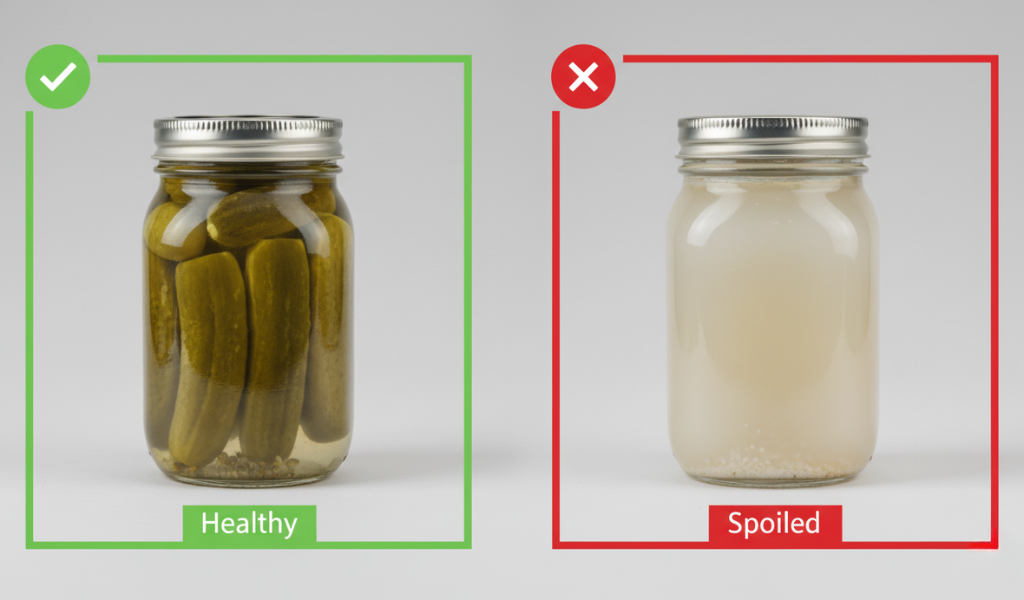
This one is tricky. In fermented pickles (like the ones found in the refrigerated deli section), a little cloudiness is normal—it is just the probiotic bacteria doing their job. However in standard vinegar-based store pickles, the liquid should be relatively clear. If the brine looks “milky” or thick, it is a sign that unwanted guests have moved in.
A good pickle should have a distinct “snap.” If your pickles have become slimy, mushy or fall apart when you touch them with a fork, they aren’t necessarily toxic, but they are definitely past their prime. Sliminess is often a precursor to mold growth.
This is the most obvious sign. If you see white, green or black “fuzzy” spots floating on the surface of the liquid or growing on the pickles themselves, the whole jar is compromised. Don’t try to scoop the mold out—microscopic “roots” likely inhabit the entire brine.
When NOT to Eat Pickles
When in doubt, it’s always safer to throw them away.
You might notice little seeds and bits of bark floating at the bottom of your jar. This is the “pickling spice” blend. While most people think these are just for flavor, many of the ingredients actually have antimicrobial properties that help the vinegar do its job.
Common ingredients in a “pickling spice” mix include:
Using a high-quality blend of spices doesn’t just make your pickles taste like a gourmet treat; it helps maintain the “ecosystem” inside the jar.
There is a lot of “misinformation” out there about what makes a pickle dangerous. Let’s clear some up:
To ensure your pickles stay “crunchy” and safe for as long as possible follow these simple human-tested tips:
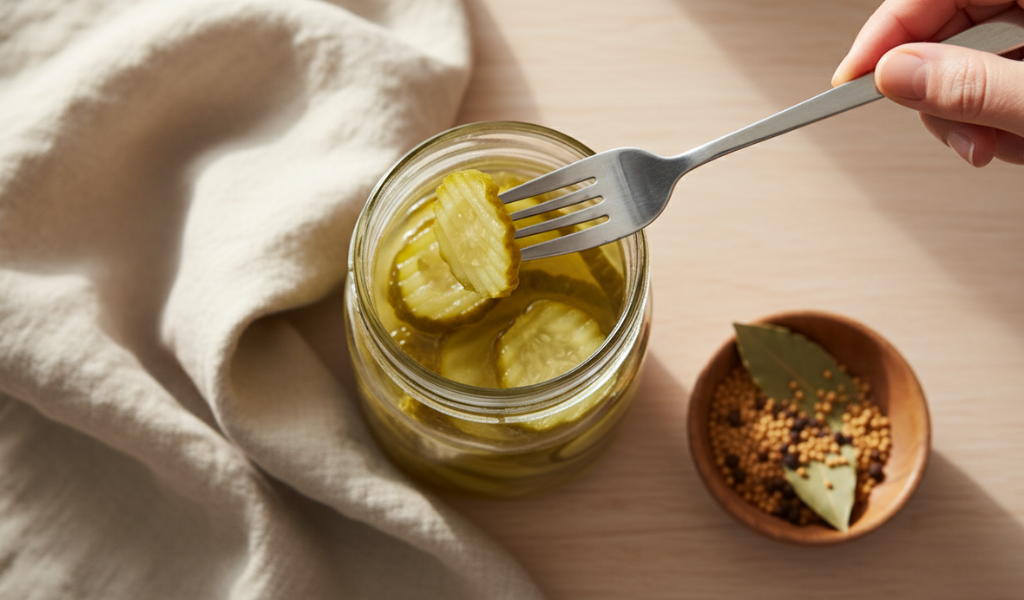
Sometimes you’ll see a white powder-like substance at the bottom of the jar. Before you ask “how long do pickles last” and throw them out, take a closer look. This is often just “spent yeast” or minerals from the salt used in the brine. In fermented pickles, this is a very common sight. If the pickles smell good and the brine isn’t thick or slimy, this sediment is perfectly natural and safe to consume.
So, “do pickles go bad”? They certainly do, but they are one of the most resilient foods in your kitchen. By keeping them submerged in their salty, vinegary bath and using clean forks to fish them out, you can enjoy that satisfying crunch for months.
Whether you are a fan of a spicy kick or a sweet crunch, understanding “how long do pickles last” helps you reduce food waste and keep your family safe. Remember to keep an eye out for “bulging lids” and “foul odors.” When in doubt, it is always better to spend a few dollars on a fresh jar than to risk a stomach ache. Pickles are meant to be a bright, tangy addition to your meals—keep them that way by practicing good “food safety” habits!
Q1: Can I eat pickles that have been left out overnight?
Generally, if they are commercially produced vinegar pickles, they will be fine for a short period because the acidity is so high. However, for the best safety and to maintain the texture, you should return them to the fridge as soon as possible. If they were left out in a very warm room for more than 24 hours, it’s safer to discard them as the risk of “contamination” increases.
Q2: Why did my pickles lose their crunch?
Texture loss usually happens because of enzymes or exposure to high temperatures. If you are making them at home, adding a “grape leaf” or more bay leaves to your “pickling spice” can help, as the tannins preserve crispness. For store-bought ones, it usually just means they are getting old or the seal was slightly compromised.
Q3: Is the white film on top of my pickles mold?
Not always. If it is a thin, flat, white film, it might be “Kahm yeast.” While not harmful, it can make the pickles taste a bit weird. However, if the film is “fuzzy” or has colors like blue, green, or black, that is definitely mold and the entire jar should be thrown away.
Q4: Can I reuse pickle brine to make more pickles?
You can! This is often called “re-pickling.” You can drop fresh cucumber slices into the leftover juice. Just keep in mind that the brine has been diluted by the water from the previous cucumbers, so these “fridge pickles” won’t last as long. You should eat them within a week or two and keep them strictly refrigerated.
Q5: Can pickles expire if they are kept in a plastic container?
Pickles are very acidic, and over time, acid can react with certain types of plastic. It is always better to store pickles in “glass jars.” If you move them to plastic, they may pick up a “plastic taste” and might spoil slightly faster than they would in glass.