Physical Address
304 North Cardinal St.
Dorchester Center, MA 02124
Physical Address
304 North Cardinal St.
Dorchester Center, MA 02124

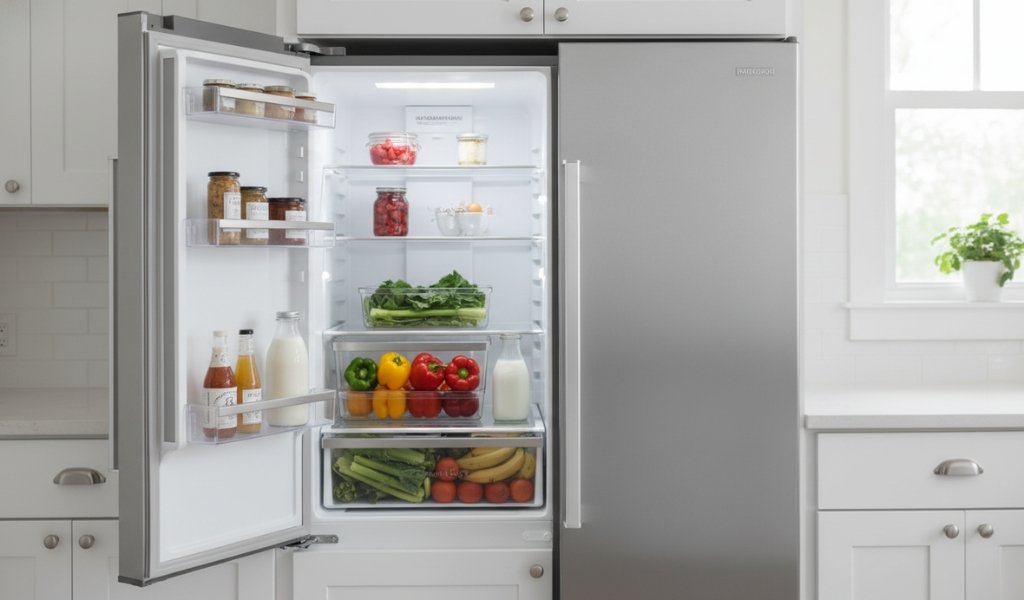
Choosing a new refrigerator is one of the most significant appliance investments you will make for your home. The debate between inverter vs. non-inverter refrigerators has become the central focus for homeowners looking to balance performance, food preservation, and monthly utility costs.
At the heart of every fridge lies the refrigerator compressor. Often described as the “engine” or “heart” of the appliance, this component is responsible for circulating refrigerant and maintaining the cold temperatures necessary to keep your groceries safe. Understanding the nuances of inverter systems versus non-inverter systems is essential for making a choice that fits your lifestyle and budget.
Before diving into the “Inverter vs. Non-Inverter” comparison, it is important to understand what a refrigerator compressor actually does.
The compressor’s job is to compress the refrigerant gas, raising its pressure and temperature, and then pushing it through the condenser coils where it releases heat. As the refrigerant cools and expands, it absorbs heat from inside the fridge, keeping your milk cold and your veggies crisp.
The primary difference between the two technologies lies in how the motor handles this workload.
Inverter refrigerators utilize advanced inverter systems that allow the compressor to operate at variable speeds.
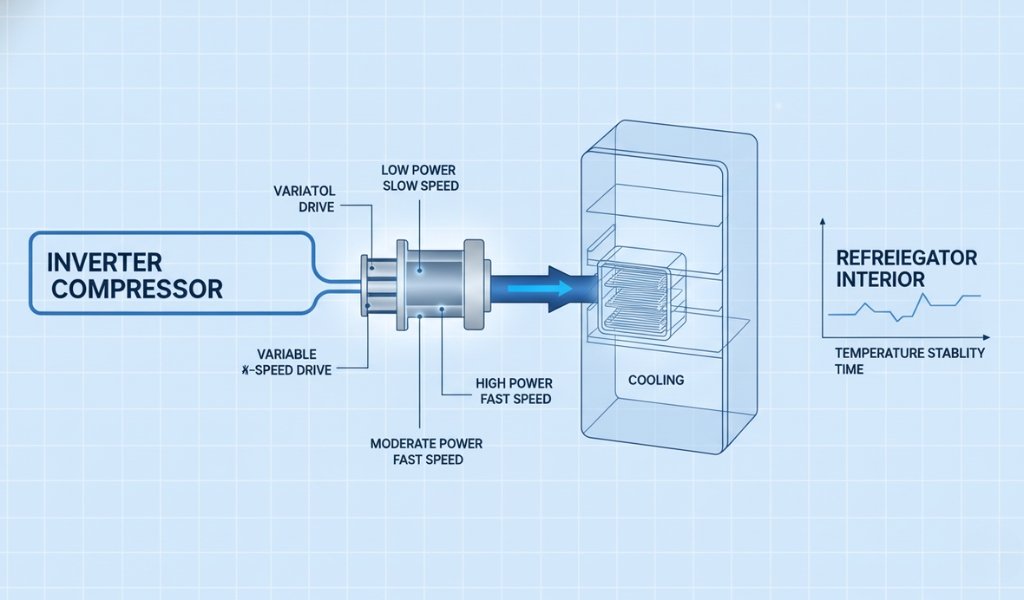
Think of it like a car’s accelerator rather than a simple light switch.
In an inverter system, the compressor does not simply turn “on” or “off.” Instead, it starts at a low speed and adjusts its RPM (revolutions per minute) based on the internal cooling demand.
This prevents the massive “start-up” power surges associated with older technology and leads to a much more stable environment for your food.
Non-inverter refrigerators use a traditional “Single Speed” or “Fixed Speed” compressor. This technology has been the standard for nearly a century.
A non-inverter compressor operates on a binary logic: it is either running at 100% power or it is completely off.
Because of this constant cycling, non-inverter systems experience more mechanical wear and tear and cause the internal temperature to fluctuate in a “sawtooth” pattern.
Now that we understand how both inverter and non-inverter refrigerators operate, it becomes easier to compare their real-world performance. The main differences between these two technologies appear in areas such as energy efficiency, noise levels, temperature stability, durability, and long-term operating costs. While inverter systems adjust compressor speed to maintain consistent cooling, non-inverter systems rely on repeated start-and-stop cycles. Understanding these differences will help you determine which refrigerator technology is better suited for your home, budget, and daily usage.
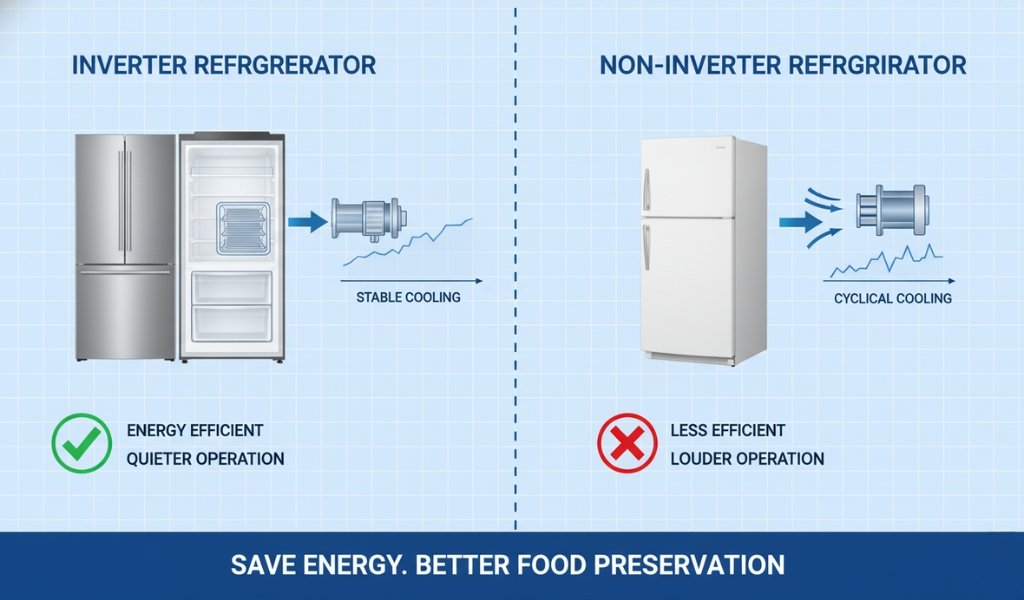
When we talk about the rivalry between inverter and non-inverter refrigerators, energy efficiency is the battleground where the most significant victories are won.As global energy prices fluctuate and “green” home standards become the norm, understanding how your refrigerator compressor consumes power is essential for any savvy homeowner.
The core reason inverter systems are more efficient lies in the elimination of the “startup surge.” Every time a non-inverter system kicks in, it requires a massive burst of electricity—often three to four times its running wattage—just to get the motor spinning from a dead stop. Because these units cycle on and off dozens of times a day, they waste a tremendous amount of energy simply “starting the engine.”
In contrast, inverter refrigerators are masters of momentum. They start slowly and, once they reach the desired temperature, they never truly stop. Instead, they “trickle” power, running at a low, energy-sipping speed that maintains the cold without the need for high-voltage restarts.
Appliance reviews consistently show that inverter technology reduces electricity consumption by 20% to 40%.
This isn’t just about the environment; it’s about your monthly overhead. Over a decade, an inverter fridge can save you enough money to practically pay for its own replacement.
Efficiency isn’t just about using less power; it’s about using power intelligently. Non-inverter systems are “dumb” systems—they run at 100% power even if the fridge is already almost cold enough. Inverter systems are “smart.” If you only open the door for a second to grab a bottle of water, the inverter detects the tiny change and adjusts its speed by perhaps only 5%. It uses the absolute minimum amount of energy required for that specific moment, ensuring that not a single watt is wasted.
In modern “open-concept” living, the kitchen is often part of the living room. This makes the acoustic performance of your refrigerator compressor more important than ever.
The primary goal of a fridge is to stop bacterial growth.

Stability is the key to achieving this.
When we talk about the “lifespan” of a refrigerator compressor, we are really talking about the wear and tear on the internal pistons and the electrical insulation.
This is the one area where non-inverter refrigerators hold an advantage.
Pro Tip: If you buy an inverter fridge, always use a high-quality voltage stabilizer or surge protector to protect the sensitive electronics.
The financial decision is a balance between your current bank balance and your future monthly budget.
| Cost Factor | Inverter System | Non-Inverter System |
| Purchase Price | $800 – $2,500+ | $400 – $1,200 |
| Monthly Power Bill | $5 – $8 (Estimated) | $12 – $20 (Estimated) |
| 10-Year Energy Cost | ~$720 | ~$1,800 |
| Repair Probability | Low (Compressor) / Med (Electronics) | Med (Compressor) / Low (Electronics) |
The “Real” Cost: While you might save $400 today by buying a non-inverter model, you will likely pay an extra $1,000 in electricity over the next decade. If you plan to stay in your current home for more than 4 years, the inverter refrigerator is mathematically the cheaper option.
Choosing between an inverter vs. non-inverter refrigerator is more than just a technical decision; it is a commitment to how your household will function for the next decade or two. As we navigate the appliance landscape of 2026, the shift toward inverter systems represents a broader movement toward “smart” sustainability and domestic tranquility.
The non-inverter refrigerator remains a respectable relic of engineering—a mechanical workhorse that is easy to understand, affordable to buy, and straightforward to fix. It serves its purpose beautifully in garages, dorm rooms, or temporary living situations where the immediate bottom line is the only priority. However, for the modern family home, the refrigerator compressor is no longer just a motor; it is a silent guardian of your health and finances.
Investing in inverter technology is an investment in the “unseen” comforts of home life. It is the peace of mind that comes from knowing your organic produce isn’t wilting behind a closed door due to temperature spikes. It is the subtle quiet of a midnight kitchen that isn’t interrupted by a jarring mechanical roar. Most importantly, it is a rare instance where the environmentally conscious choice—using 40% less energy—is also the one that saves you the most money in the long run.
While the upfront cost and the complexity of modern electronics may seem daunting, the decade-long warranties and the steady decline in monthly utility bills tell a compelling story of value. Whether you are a culinary enthusiast who demands precision or a budget-conscious homeowner looking to future-proof your kitchen, understanding these inverter and non-inverter systems ensures that your “heart of the home” will beat efficiently, quietly, and reliably for years to come.
Yes, for most households. While the upfront cost is higher, the reduction in electricity bills (20-40%) usually covers the price difference within 3 to 5 years. Additionally, the longer lifespan and better food preservation add value that outweighs the initial cost.
Not necessarily. The compressor itself is actually more durable. However, because they contain more complex electronic motherboards, they can be more sensitive to power surges. Using a surge protector makes them just as reliable as traditional models.
On average, an inverter fridge saves between $50 and $125 per year, depending on your local electricity rates and how often you open the door. Over the life of the appliance, this can total over $1,500 in savings.
It is not recommended. Unlike older mechanical systems, inverter systems require specialized diagnostic tools to test the electronic signals between the control board and the compressor. DIY repairs often void warranties.
Inverter compressors generally last longer (15-20+ years) because they do not suffer from the mechanical stress of constant “hard starts.” Non-inverter models typically see a decline in performance after 12-15 years.
Yes. By using less electricity, inverter refrigerators reduce the carbon footprint of your home. Many also use more modern, eco-friendly refrigerants that have a lower impact on global warming.
Would you like me to help you compare specific refrigerator brands that use these different