Physical Address
304 North Cardinal St.
Dorchester Center, MA 02124
Physical Address
304 North Cardinal St.
Dorchester Center, MA 02124

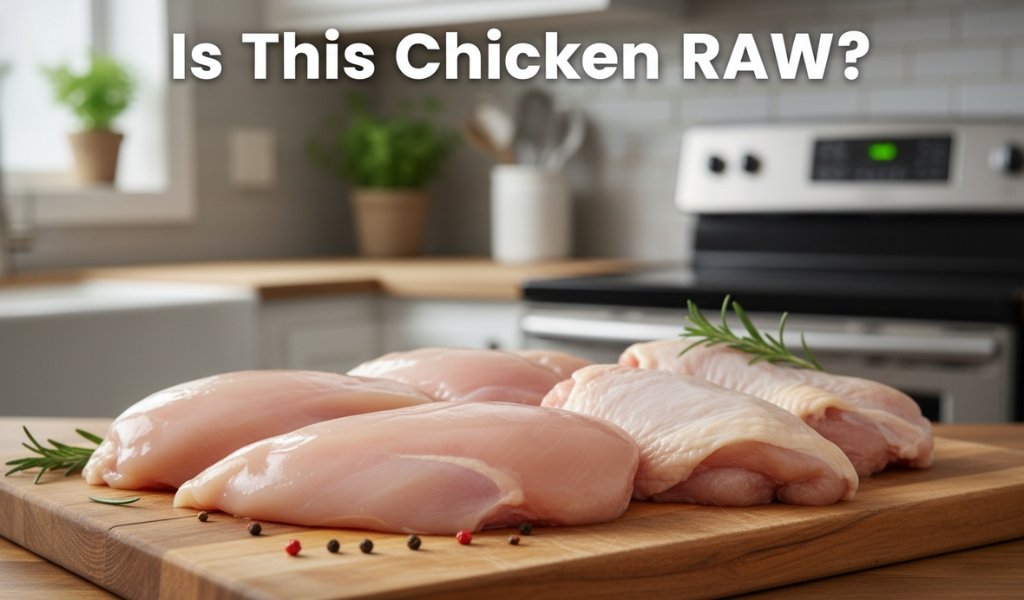
Poultry is a staple in kitchens worldwide, prized for its versatility, high protein content, and lean profile. Whether you prefer organic chicken for its ethical sourcing or standard chicken food products for everyday meal prep, there is one non-negotiable rule: safety. Unlike some other types of raw meat, chicken carries a high risk of pathogens like Salmonella and Campylobacter.
Knowing how to tell if raw chicken has gone bad is an essential skill for any home cook. It’s the difference between a delicious family dinner and a severe case of food poisoning. In this comprehensive guide, we will walk you through the sensory checks, storage timelines, and red flags that indicate your chicken is no longer fit for the pan.
Every piece of raw meat contains a natural population of bacteria. When we talk about “bad” chicken, we are usually dealing with two types of microorganisms:
This is why we use a combination of “best-by” dates and sensory checks. If the spoilage bacteria have taken over, it’s a clear sign that the environment was also ripe for pathogenic bacteria to multiply.
Your senses are your best defense in the kitchen.
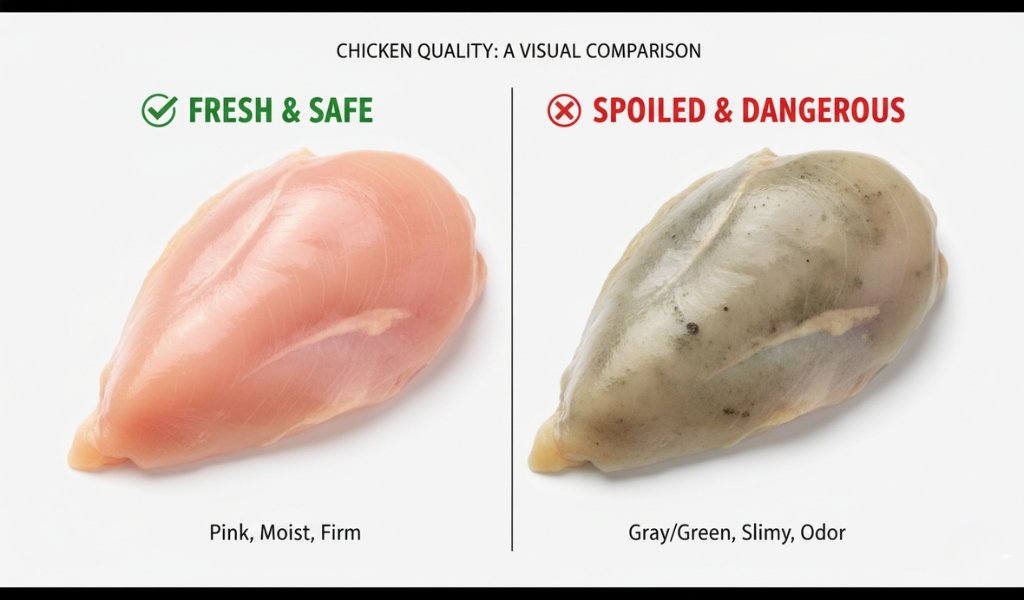
Before you season your raw chicken, perform these three checks.
Fresh raw chicken should have a very faint, neutral aroma. If you have to lean in and sniff hard to smell anything, it’s likely fine. However, spoiled chicken emits a “funky” odor that is hard to miss.
Pro Tip: if you aren’t sure, rinse a small corner of the meat under cold water (carefully, to avoid splashing) and smell it again. If the odor persists, throw it out.
Color is the most immediate indicator of freshness of raw chicken.
All raw meat has a bit of surface moisture. However, there is a big difference between “wet” and “slimy.”
Understanding the labels on your chicken food packaging can save you a lot of guesswork.
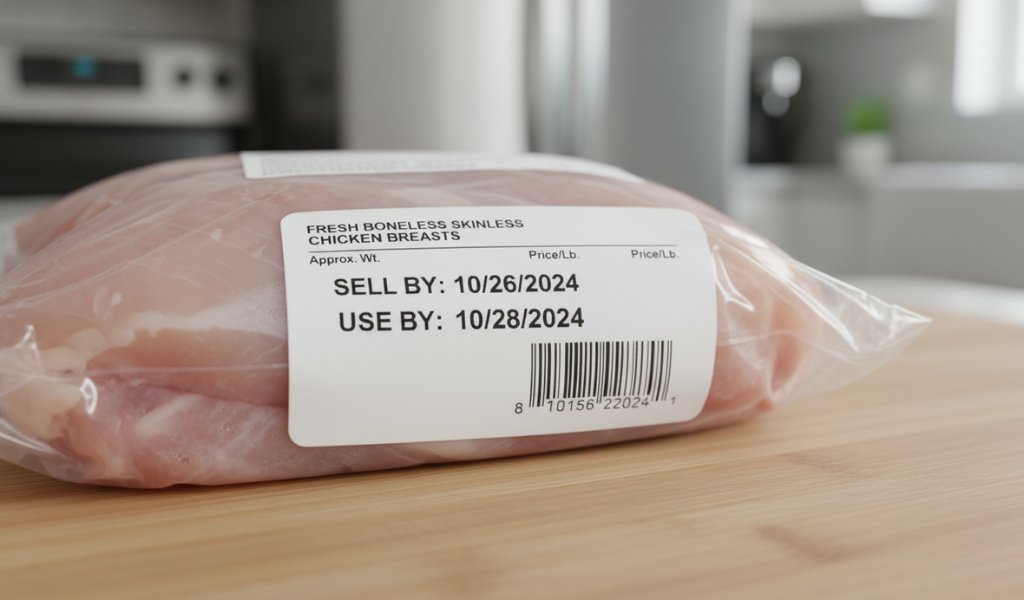
| Label Type | What it Means | Action Step |
| Sell-By Date | For the retailer. Tells the store how long to display the product. | You can usually cook it 1-2 days after this date if stored properly. |
| Use-By / Best-By | For the consumer. This is the date for peak quality. | Use by this date or freeze immediately. Safety declines rapidly after this. |
| Packed-On Date | The day the chicken was processed. | Use within 2 days of this date for maximum freshness. |
According to the USDA, raw chicken should be cooked or frozen within 1 to 2 days of purchase, regardless of the “sell-by” date.
Many consumers prefer organic chicken because it is raised without antibiotics and fed non-GMO grain. But does it stay fresh longer?
Actually, organic chicken can sometimes spoil faster than conventional chicken. Because organic poultry is processed without certain synthetic preservatives or antimicrobial washes, the natural bacterial load might be slightly different.
Furthermore, because organic birds are often leaner and have more access to outdoor “forage,” their meat color might be slightly darker or more “yellow” naturally. Always check the texture and smell rather than relying solely on a slight color variation.
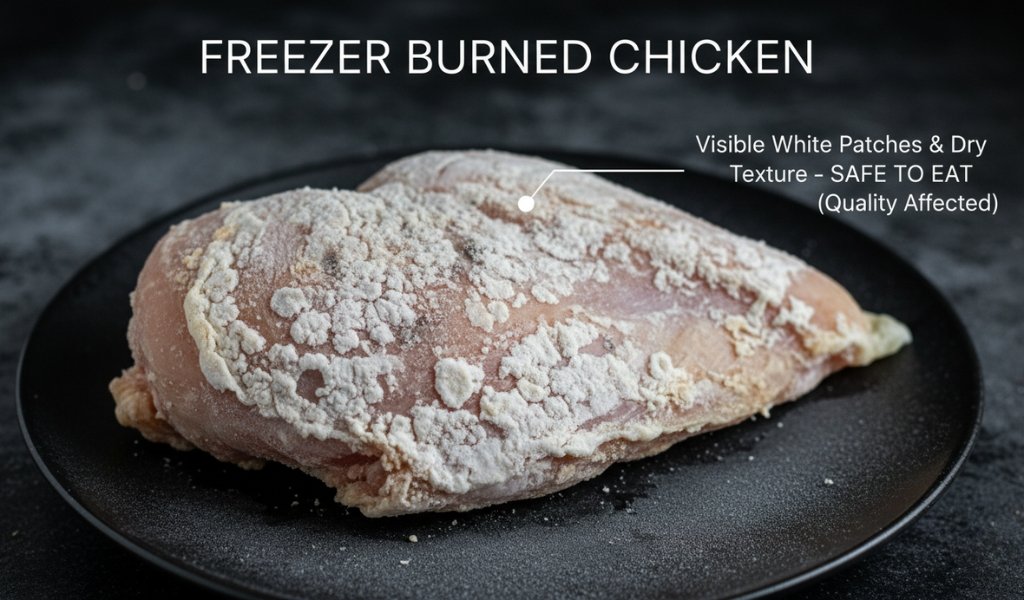
Is freezer-burnt chicken “bad”? Technically, no. Freezer burn is a result of air reaching the surface of the meat and dehydrating it. It shows up as white, leathery patches or ice crystals.
If you’ve determined your raw chicken is rotten, do not just toss it loosely into the kitchen bin.
To keep your chicken food fresh for as long as possible:
Q: Can I wash the slime off bad chicken to make it safe?
A: Absolutely not. Washing chicken does not remove bacteria; it only spreads it around your sink and counters. If the chicken is slimy due to spoilage, the bacteria are deep within the muscle fibers. Cooking will not make rotten meat safe to eat.
Q: Why does my chicken smell “faintly” like bleach or chlorine?
A: In the United States, many processing plants use a diluted chlorine wash to kill bacteria. A very faint “swimming pool” smell is usually normal for conventional chicken. However, if it’s accompanied by a sour or “off” smell, discard it.
Q: I cooked the chicken, but it still looks pink inside. Is it bad?
A: Not necessarily. The only way to know if chicken is safe is by temperature. It must reach an internal temperature of 165°F (74°C). Some young chickens have thin bones that leak marrow, which can stain the meat purple or pink even when fully cooked.
Q: What are the black spots sometimes found on chicken bones?
A: These are usually just bone marrow seepages or bruised tissue from the processing stage. They are generally safe, but if the spots are on the skin and feel furry or slimy, that is mold, and the meat should be thrown away.
Q: Can I freeze chicken that is one day past its sell-by date?
A: Yes, as long as it passes the “sniff test” and isn’t slimy. Freezing acts as a “pause button” on bacterial growth, but it doesn’t kill existing bacteria—it just stops them from multiplying.