A Step-by-Step Guide: How to Store Cheese and Milk Products Effectively
Cheese is a culinary phenomenon—a sophisticated convergence of ancient tradition, modern microbiology, and artisanal craftsmanship. From the sharp, crystalline depths of a twenty-four-month-aged Parmigiano-Reggiano to the luxurious, buttery ooze of a triple-cream Delice de Bourgogne, cheese is a living, breathing organism. However, the very characteristics that make it a delicacy—its active cultures, delicate fats, and varying moisture levels—also make it incredibly temperamental.
If you have ever experienced the disappointment of a rubbery slice of store cheese or discovered that your prized Camembert has succumbed to an aggressive, “wild” mold, you understand that refrigeration alone is not a preservation strategy. This expansive guide is designed to transform your kitchen into a professional-grade larder. We will explore the intricate nuances of how to store cheese, the best practices for managing diverse milk products, and the secrets to extending the life of your dairy investments through proper environmental control.

The Biological Blueprint: Why Cheese is Alive
To master how to store cheese, one must view it through the lens of biology rather than just grocery management. Unlike a block of butter or a carton of milk, cheese is an evolving ecosystem. It contains billions of beneficial bacteria and enzymes that continue to break down proteins (proteolysis) and fats (lipolysis) long after the cheese has left the aging cave.
Proper storage is essentially the act of managing this evolution. If you store cheese in conditions that are too dry, the life cycle stops and the cheese becomes a flavorless “mummy.” If the environment is too humid or lacks oxygen, the “good” bacteria die off, and “bad” bacteria—which produce ammonia and putrid smells—take over. Every wedge of store cheese is essentially a snapshot of a fermentation process that you are tasked with slowing down, but not stopping entirely.
The Enemies of Freshness: Oxidation vs. Suffocation
Most consumers treat store cheese like any other grocery item, keeping it tightly bound in the original plastic cling wrap. This is a critical error that leads to what experts call “refrigerator flavor.”
- Suffocation: Cheese naturally “perspires” and emits gasses like ammonia as a byproduct of protein breakdown. Plastic wrap acts as a gas-tight seal, forcing those gasses back into the paste of the cheese. This results in that “plastic” or “chemical” taste often associated with mass-market dairy.
- Oxidation: While cheese needs to breathe, too much air exposure leads to oxidation. This turns the fats rancid, causes the color to darken unnaturally, and creates a hard, yellowed, and bitter exterior.
- Absorption: Cheese is highly porous and lipid-heavy. If left uncovered near an onion, a bowl of leftover curry, or even a half-cut melon, it will act like a sponge, absorbing those odors and permanently ruining its delicate flavor profile.
The Storage Toolkit: Essential Materials for Success
Before you can properly store cheese, you must equip your kitchen with the right “breathable” barriers. Professional cheesemongers avoid plastic wrap for a reason; they use materials that mimic the humidity and air exchange of a limestone cave.
- Professional Cheese Paper: This is the gold standard. It features a wax-coated inner layer to retain moisture and a porous outer layer to allow gas exchange. It is essentially a “smart” skin for your cheese.
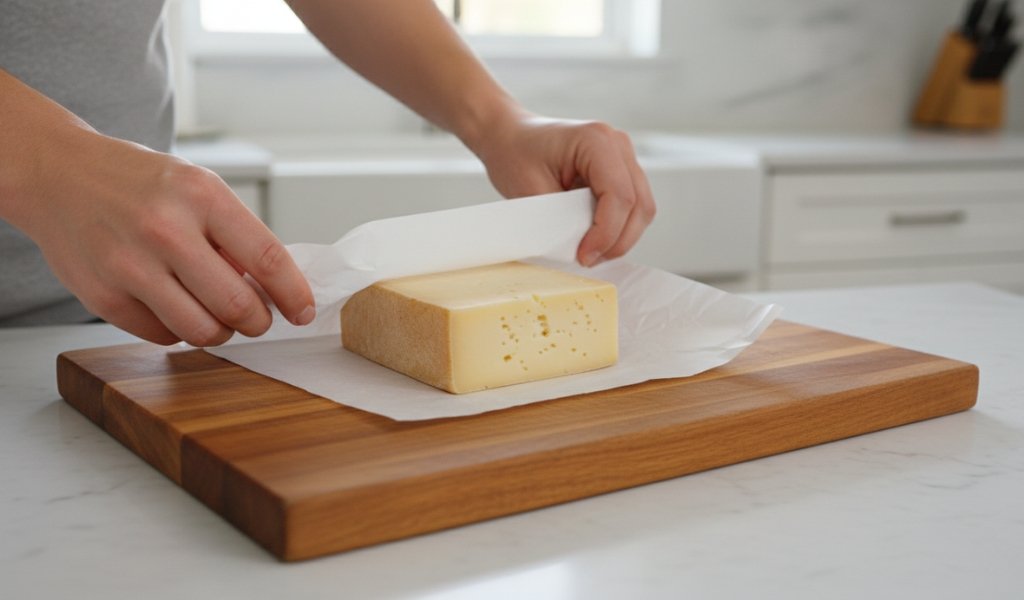
- Parchment or Waxed Paper: A perfect DIY substitute. It protects the cheese from the drying fans of the refrigerator while preventing the buildup of ammonia.
- Beeswax Wraps: A sustainable, breathable option that is particularly effective for hard cheeses. The natural antimicrobial properties of beeswax add an extra layer of protection.
- Aluminum Foil: Use this primarily as a secondary layer. Foil provides a “dark” environment and prevents extreme dehydration, but it should rarely touch the cheese directly (except in the case of Blue cheese).
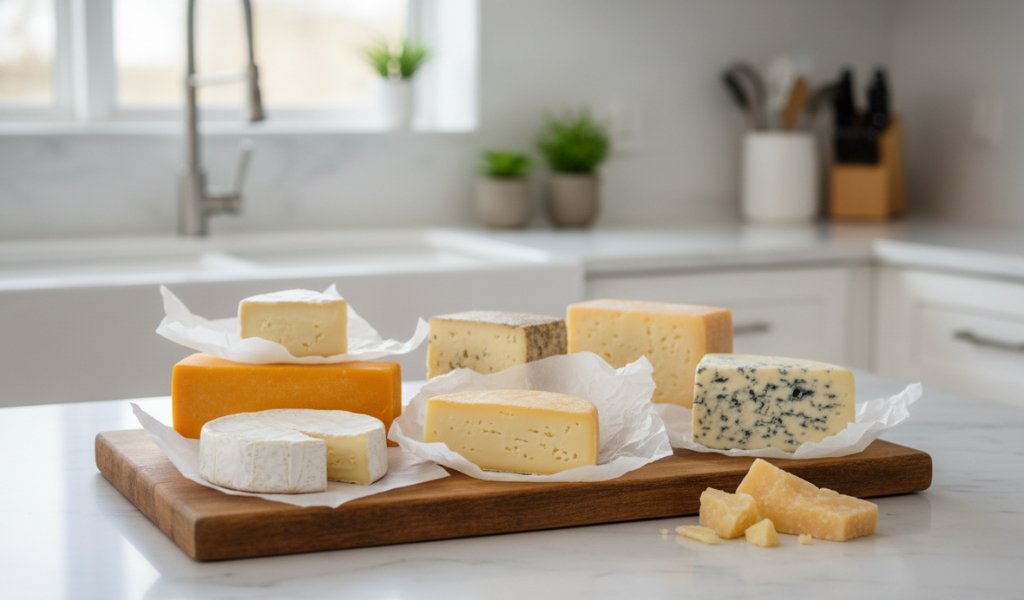
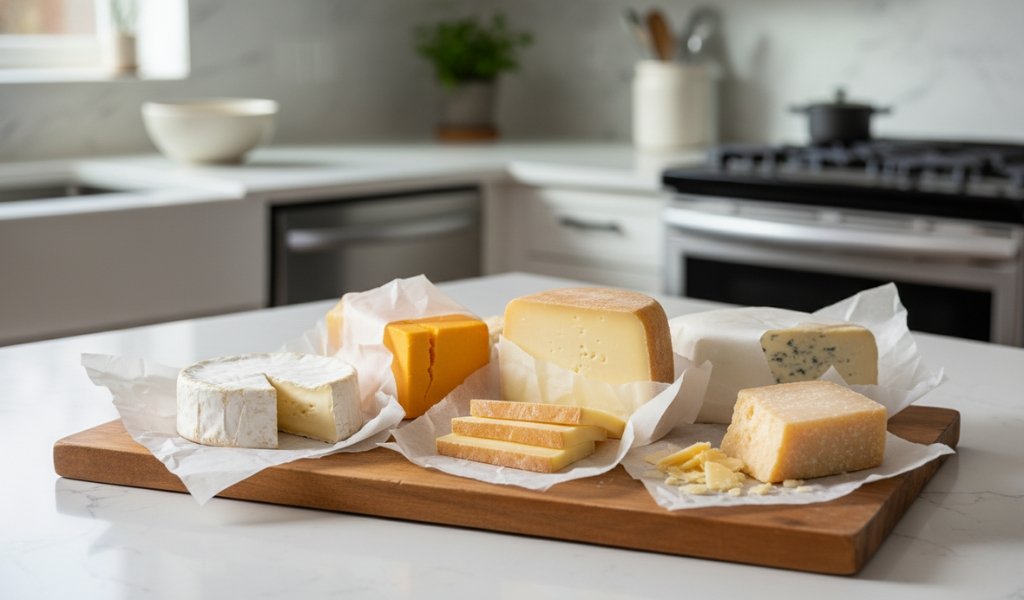
How to Store Cheese by Variety: A Masterclass
Soft-Ripened and Bloomy Rind Cheeses
Examples: Brie, Camembert, Robiola, Saint-André.
These cheeses are protected by a living “skin” of Penicillium candidum. This rind is aerobic, meaning it requires oxygen to survive. If you suffocate a Brie, the rind will die, turn grey, and begin to smell like floor cleaner.
- The Method: Wrap loosely in parchment paper, then place inside a small wooden box or a plastic container with the lid slightly cracked.
- Pro Tip: If the cheese feels “tight” or bouncy, it is still ripening. If it feels soft and yields to the touch, it is at peak maturity.
Semi-Hard and Pressed Cheeses
Examples: Havarti, Fontina, Gouda, Monterey Jack, Young Cheddar.
These have a higher moisture content than aged cheeses but a firmer structure than Brie. They are the workhorses of the store cheese world and are most prone to surface mold.
- The Method: Wrap in parchment paper followed by a loose layer of plastic wrap over the paper. This “buffer” layer prevents the plastic from touching the cheese directly while maintaining the necessary moisture for melting.
Hard, Aged, and Extra-Hard Varieties
Examples: Parmigiano-Reggiano, Pecorino, Manchego, Aged Cheddar.
Because these have been aged for long periods (sometimes years), they are remarkably stable. However, they are prone to “white spotting” (calcium lactate crystals) and extreme dehydration.
- The Method: Wrap tightly in parchment, then wrap again in aluminum foil. The foil is essential here as it acts as a more robust moisture barrier than paper alone, preventing the cheese from becoming a brick.
Fresh, Brined, and Pasta Filata Cheeses
Examples: Feta, Fresh Mozzarella, Ricotta, Burrata, Paneer.
These milk products are essentially unaged. They are defined by their high water content and mild, milky flavors. They do not have a rind to protect them.
- The Method: Keep them submerged in their original liquid (brine or whey). If the liquid becomes cloudy, discard it and replace it with a fresh brine ($1$ tsp sea salt per $250$ ml of water).
- Storage Note: Fresh mozzarella in a vacuum pack should be eaten within $48$ hours of opening.
The Blue Cheese Protocol
Examples: Gorgonzola, Roquefort, Stilton, Cashel Blue.
Blue cheese is the rebel of the dairy world. The mould (Penicillium roqueforti) is intentionally introduced and requires oxygen to bloom.
- The Method: Blue cheese is the only variety that benefits from being wrapped directly in aluminum foil. Foil maintains the high moisture levels these cheeses require and prevents the blue spores from migrating.
- Isolation: Always store Blue cheese in a separate container. Those spores are travelers and will quickly turn your mild Swiss into a Blue Swiss.
Managing Secondary Milk Products: Milk, Cream, and Butter
Beyond cheese, your other milk products require specific handling to prevent premature spoilage and maintain flavor integrity.
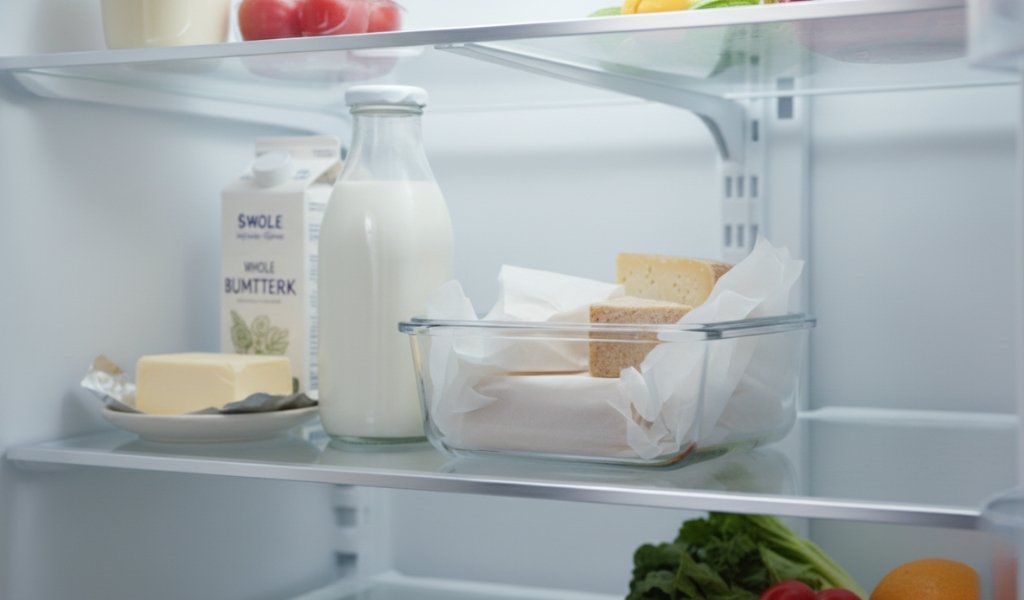
- Milk & Cream: Never store these in the refrigerator door. The door is the warmest part of the appliance and experiences constant temperature swings. Keep them on the middle or bottom shelf toward the back where the temperature is most stable
(ideally $1$°C to $3$°C). - Butter: Butter is a lipid sponge. To keep it tasting fresh, keep it in its original foil wrap inside a dedicated butter compartment. If using a butter bell on the counter, change the water every $2$ days to maintain a seal.
- Yogurt & Kefir: Always use a sanitized spoon. Introducing even a small amount of saliva or external bacteria will cause a tub of yogurt to mold or thin out within days due to enzyme contamination.
The Freezer Files: A Strategic Approach to Sub-Zero Storage
Can you freeze cheese? Yes, but with a “culinary asterisk.” Freezing causes the water in cheese to expand into ice crystals, which shreds the protein structure and separates the fat.
- Recommended for Freezing: Hard store cheese (Cheddar, Swiss, Provolone) that you intend to melt later. Grating the cheese before freezing is the most efficient way to preserve it for future use in sauces, tacos, or casseroles.
- Never Freeze: High-moisture cheeses (Ricotta, Brie, Fresh Mozzarella). Upon thawing, these become watery, grainy, and lose their creamy mouthfeel.
- Duration: Limit freezer storage to $3$ months. Beyond this, “freezer burn” will begin to alter the chemical taste of the fats.
The Mould Manifesto: Identification and Triage
Mould isn’t always a sign of failure. In the cheese world, some mould is invited, while others are intruders. Here is how to distinguish “good” from “bad”:
- White/Blue/Green on Hard Cheese: Usually safe. This is often just the “good” cultures migrating to the surface. Cut away $2$ cm ($1$ inch) around the spot.
- Black, Pink, or Slimy Mould: Danger. These are signs of spoilage and potentially harmful bacteria (like Listeria or Salmonella). Discard the cheese immediately.
- Mould on Soft Cheese: Discard. Soft cheese is porous; if you see mould on the surface of a Ricotta or a soft goat cheese, the “roots” (hyphae) have already reached the center.
Zero-Waste Kitchen: Repurposing Cheese Scraps and Rinds
The reference content correctly notes that platter leftovers shouldn’t go back into long-term storage. Instead, use these professional strategies:
- The Parmesan Rind Trick: Save your rinds! Dropping a Parmesan or Gruyère rind into a simmering broth or tomato sauce adds a massive “umami” punch. Remove the rind before serving.
- Fromage Fort: This is the classic French solution for leftover bits. Blend all your random nubs with a clove of garlic, a splash of dry white wine, and some herbs for a delicious spread.
- Gourmet Mac & Cheese: Use the “bits and bobs” drawer to create a multi-dimensional cheese sauce. A mix of Gouda, Cheddar, and a bit of Blue makes a far superior sauce than a single variety.
Expert Tips for Longevity, Aroma, and Flavor
- The Sugar Cube Method: Place a sugar cube in a sealed container with your cheese. It acts as a natural desiccant, pulling away excess moisture that leads to surface mold. Replace the cube when it starts to dissolve.
- The Vinegar Wipe: Before placing cheese in a plastic container, wipe the inside with a cloth dipped in white vinegar. This sanitizes the environment and kills lingering mould spores.
- The “Hour of Power”: Always allow cheese to sit at room temperature for $30$–$60$ minutes before serving. Cold inhibits the volatile aromatic compounds.
Final Words
Learning how to store cheese is a journey from being a casual consumer to becoming a true connoisseur. By moving away from suffocating plastic and respecting the unique biological needs of different milk products, you ensure that every bite is as the cheesemaker intended. Treat your cheese with the respect it deserves, and it will reward you with a symphony of flavors. Proper storage isn’t just about saving money—it’s about honoring the craft of the creamery.
Frequently Asked Questions (F.A.Q)
Q: Why does my store cheese have crunchy white crystals on it?
A: Those are likely calcium lactate crystals. They are common in aged cheeses like Cheddar or Gouda and are a sign of a well-aged, high-quality cheese. They are perfectly safe and highly prized for their texture.
Q: Can I use beeswax wraps for all cheeses?
A: They are excellent for hard and semi-hard cheeses. However, avoid using them for very stinky, washed-rind cheeses (like Limburger), as the pungent aroma can permanently permeate the beeswax.
Q: How long does milk last after the “sell-by” date?
A: If stored at the back of the fridge at $4$°C or below, milk is usually good for $5$–$7$ days past the printed date. Use your senses—if it smells sweet and looks uniform, it is generally safe.
Q: My Brie is browning at the edges. Is it bad?
A: This is called “redoing.” It means the cheese is over-ripening. It is still safe to eat, but the flavor will be very strong (ammoniated) and the texture may be slightly runny.
Q: Is pre-shredded cheese better for storage?
A: No. Pre-shredded store cheese is coated in potato starch or cellulose to prevent clumping. This increases the surface area for mould to grow and significantly affects how the cheese melts. Always buy blocks and grate as needed for the best flavor and shelf life.