Physical Address
304 North Cardinal St.
Dorchester Center, MA 02124
Physical Address
304 North Cardinal St.
Dorchester Center, MA 02124

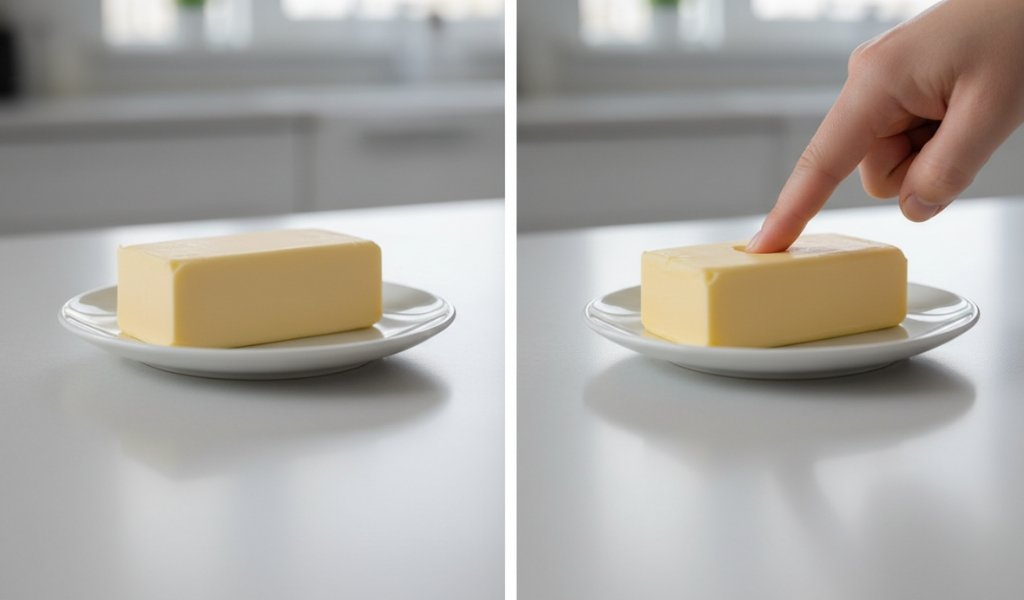
Whether you are a seasoned pastry chef or a spontaneous home baker, there is one phrase that can bring a recipe to a screeching halt: one stick of butter, softened“—and you suddenly wonder how to soften butter quickly. It sounds like a simple instruction,If you’ve ever searched for how to soften butter quickly in the middle of baking, you’re not alone. Yet it is the foundation upon which successful baking is built.
If you’re into baking, you may also want to explore more baking tips and essential kitchen tools to improve your results.
We’ve all been there. The oven is preheating, the sugar is measured, and the craving for chocolate chip cookies is peaking—only to realize the butter in the fridge is as hard as a brick. In the world of baking, temperature is a clinical ingredient, not just a suggestion. Using butter that is too cold or too melted can ruin the structural integrity of your cakes, the spread of your cookies, and the silky emulsion of your buttercream.
In this comprehensive guide, we will explore the science of softened butter,debunk common myths, and rank the fastest methods—from the classic counter-top wait to the controversial (but effective) microwave “vertical” trick.
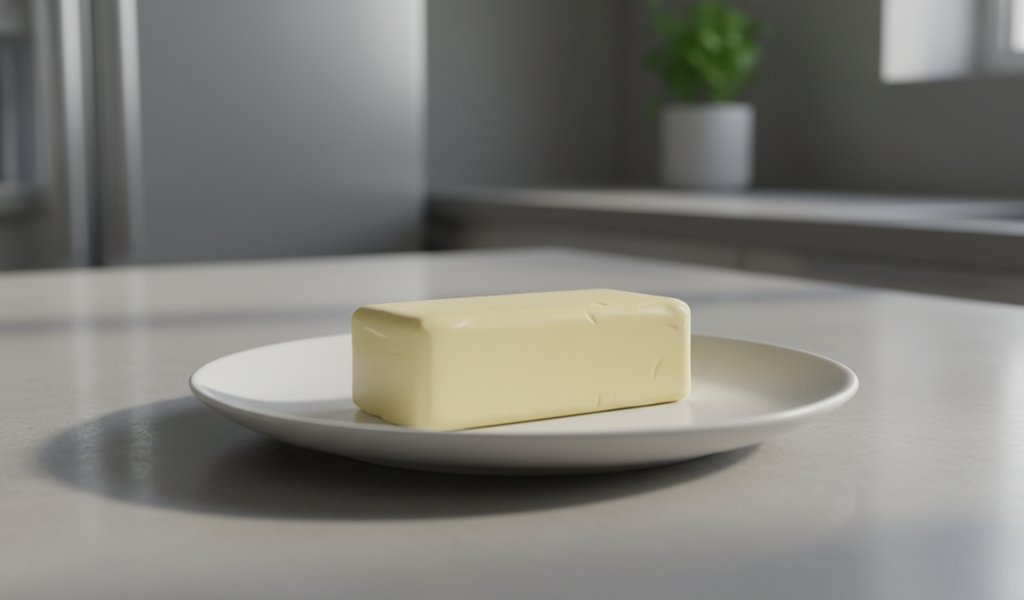
Before diving into the “how,” we must define the “what.” Softened butter is butter that has reached a specific state where it is pliable and easy to mash, yet still solid enough to hold its shape under pressure. It is a delicate balance of fat and water that hasn’t yet surrendered to its liquid form.
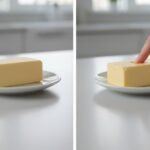
In technical terms, softened butter is usually between 18°C and 20°C. At this precise temperature range, the butter is in a semi-solid state. It isn’t cold enough to be brittle or snap, nor is it warm enough for the fat crystals to collapse into a greasy puddle. When you look at a stick of truly softened butter, it should appear matte and opaque. If it looks shiny, oily, or translucent, the emulsion has begun to break, and it is moving toward a melted state that will negatively impact the aeration of your dough.
Most baking recipes call for softened butter specifically for the creaming stage. When you beat butter and sugar together, you aren’t just mixing ingredients; you are performing mechanical aeration. The jagged edges of the sugar crystals act like tiny shovels, carving millions of microscopic air pockets into the fat. These air pockets are what make a cake rise and give it a light, tender “crumb.”
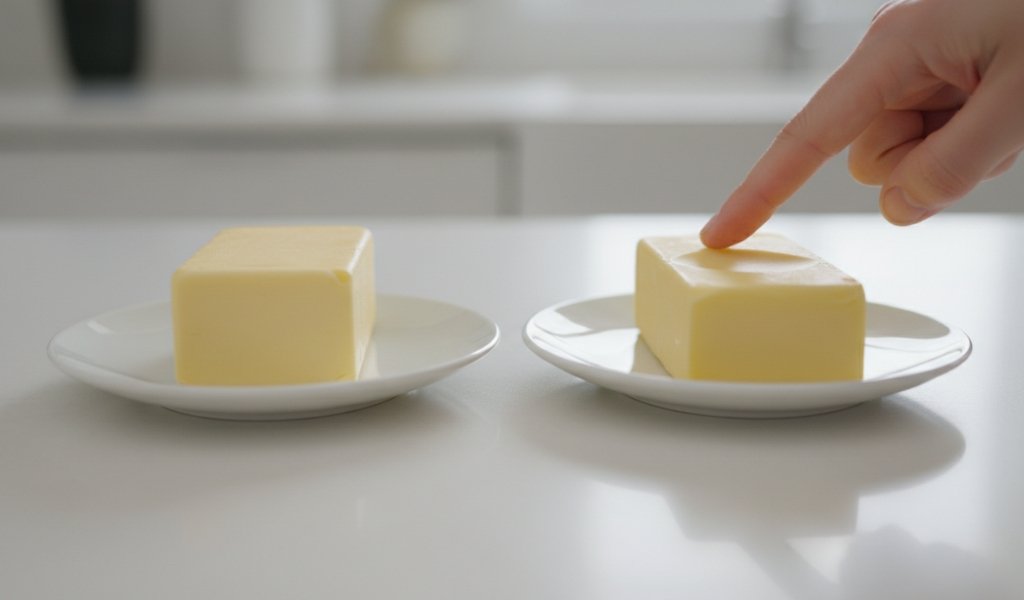
“Room temperature” is a dangerously vague term. A kitchen in a drafty cabin during winter is vastly different from a professional bakery in the height of summer. Instead of relying on a clock or a thermometer, use the sensory finger test to ensure accuracy:
Time: 2 to 5 hours
This is the most reliable way to soften butter because the heat transfer happens gradually and naturally. By letting the butter sit out at room temperature, the thermal energy stabilizes evenly from the outer wrapper to the very core of the stick.
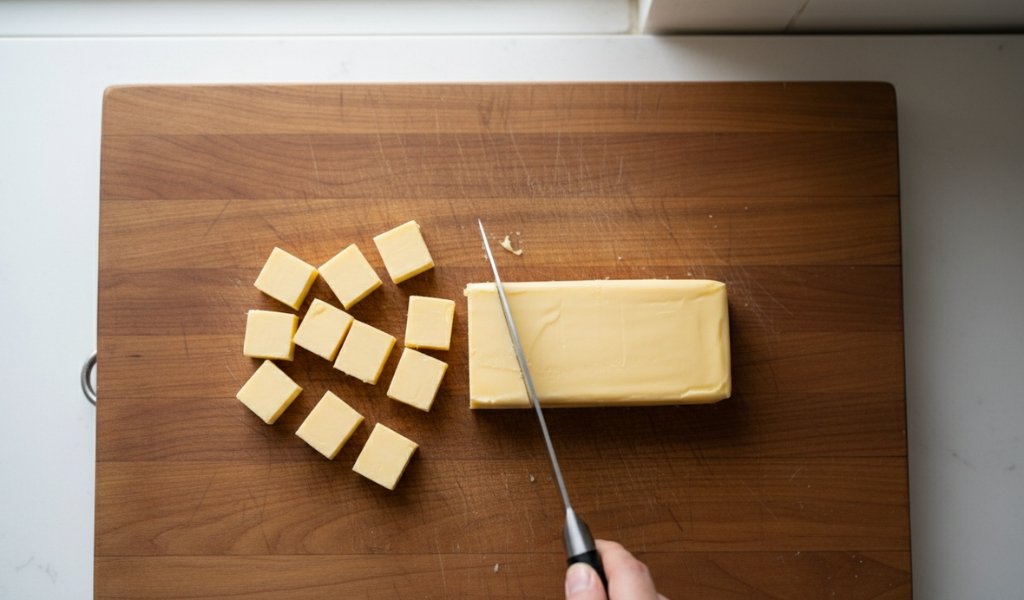
Time: 20–30 minutes
If you have a small window of time,this is one of the best ways to soften butter quickly without using heat. The best way to soften butter quickly without using a heat source is to manipulate the surface-area-to-volume ratio. Cold butter stays cold because the center is insulated by the outer layers.
By exposing more of the butter’s surface to the air, the chill dissipates much faster. This method is a favorite among professional bakers who want to speed up the process without the risks associated with a microwave.
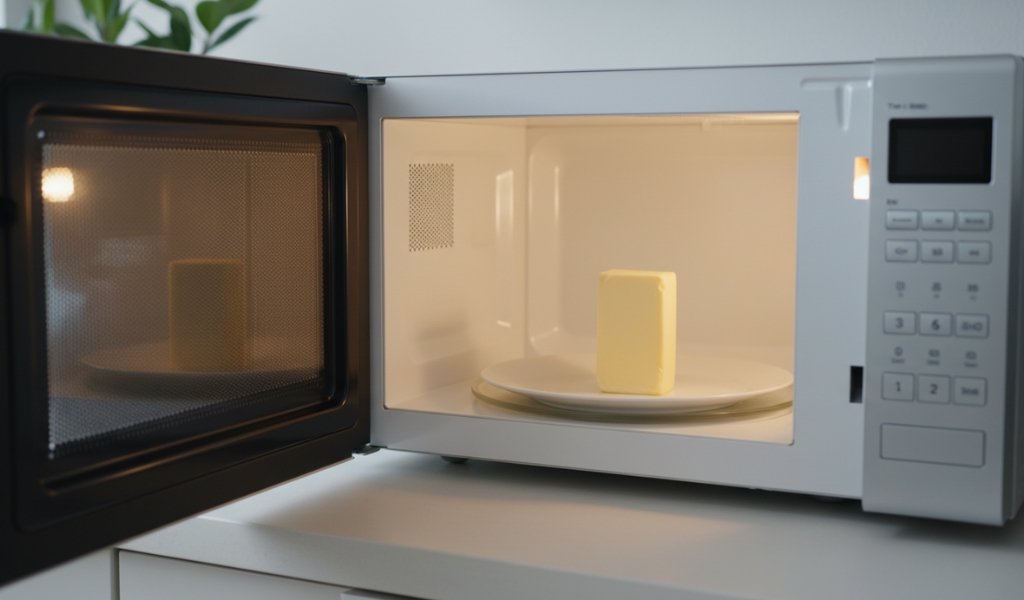
Time: 16 seconds
Can you soften butter in the microwave? This is one of the fastest methods to soften butter in the microwave safely. Yes, but it requires a very specific geometric approach to avoid the “liquid center” phenomenon where the middle melts while the ends remain frozen.
Why it works: Microwaves heat from the outside in, and standing the butter vertically ensures that the energy distribution hits the most surface area possible without pooling heat in the center. It results in a stick that is pliable all the way through. Pro-tip: All microwaves vary in power, so start with 6 seconds per side if you have a high-wattage unit.
Time: 10–12 minutes
This method is perfect for those who want a faster result than the countertop but are afraid of the microwave. It essentially creates a small, controlled “incubation chamber” for your butter.
The trapped radiant heat inside the glass will gently warm the butter. It mimics a warm room environment, softening the stick in about 10 to 12 minutes.
Time: 5 minutes
If you are in an absolute rush and don’t mind a little physical labor, this is the fastest non-electric method. This method is perfect when you need to soften butter fast without any appliances.It uses mechanical energy and extreme surface area expansion to kill the chill.
Because the butter is now incredibly thin, it loses its refrigerator temperature almost instantly. You can then peel it off the paper and toss it directly into your mixing bowl.
| Method | Total Time | Evenness | Best For… |
| Countertop | 2–5 Hours | Excellent | Professional-grade consistency |
| Slicing/Cubing | 30 Mins | Great | Safe, medium-speed softening |
| Vertical Microwave | 16 Secs | Good | Emergency baking/Maximum speed |
| Hot Water Glass | 12 Mins | Fair | Low-tech kitchens/Small batches |
| Rolling Pin | 5 Mins | Good | Releasing stress/Immediate use |
Mastering the art of the perfect bake starts with respecting your ingredients, and butter is the heart of that process. Whether you choose the patient countertop method or the high-speed vertical microwave trick, always prioritize the final texture over the clock. A few extra seconds of checking your butter with the “Finger Test” can be the difference between a flat, greasy cookie and a bakery-quality masterpiece.
Softening butter quickly is a skill that saves time.Once you understand how to soften butter the right way, you can choose the best method based on your time and recipe needs.But understanding why it needs to be soft ensures your baking evolves from a hobby into a craft.
Yes. If you soften too much butter, you can return it to the fridge. However, be aware that the molecular structure of the fat changes slightly once it has been warmed and cooled again. It is perfectly fine for cooking or spreading on toast, but for delicate recipes like puff pastry or high-end sponges, it is best to use “freshly” softened butter.
In the culinary world, “room temperature” butter is specifically defined as 18°C to 20°C. Most modern homes are actually kept warmer than this, so “room temperature” in your house might actually be “too soft” for baking. Always go by the feel of the butter rather than the temperature of the room.
Microwave power is measured in watts, and every model is different. A 1200-watt microwave is a powerhouse that can melt butter in seconds, while a 700-watt dorm microwave takes much longer. Always use the “Vertical Method” and check the butter every 5 seconds if you are using a new or powerful machine.
Absolutely. The presence of salt does not change the melting point or the softening behavior of the butter in any meaningful way for home baking.
Using cold butter in a recipe that asks for softened butter will result in a lack of aeration. Your cookies will likely be thicker, won’t spread to the correct diameter, and will have a “flaky” or “bready” texture rather than being soft and chewy. This is because the butter stayed in chunks rather than emulsifying with the sugar.