Physical Address
304 North Cardinal St.
Dorchester Center, MA 02124
Physical Address
304 North Cardinal St.
Dorchester Center, MA 02124

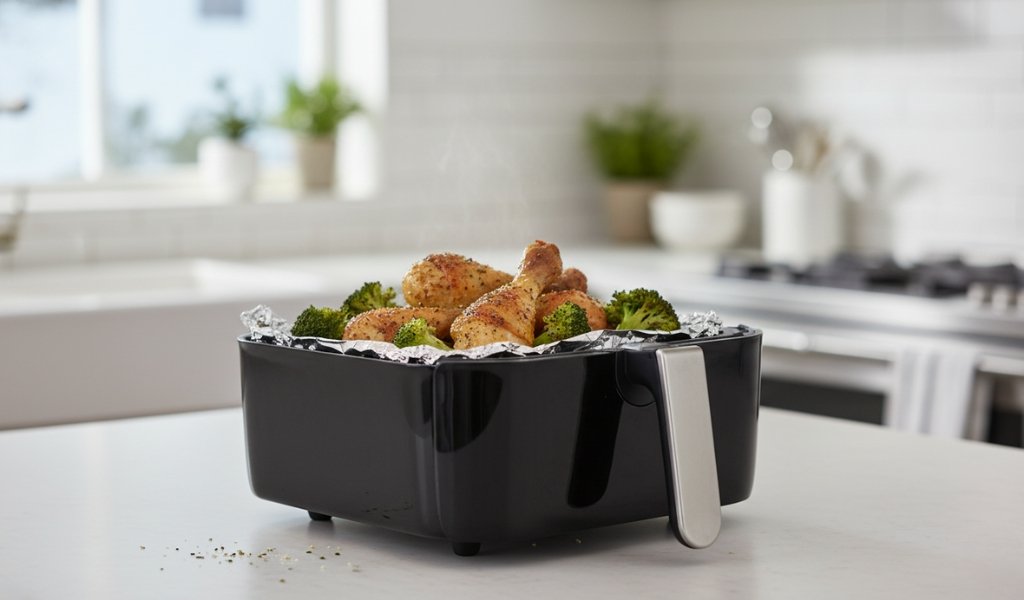
The air fryer has arguably become the most essential kitchen gadget of the decade. By using rapid air technology to mimic deep frying with a fraction of the oil, it has revolutionized how we prepare everything from frozen snacks to gourmet salmon. However, as with any high-powered appliance, questions about accessory compatibility frequently arise.
One of the most debated topics in home cooking is: Can you put aluminum foil in an air fryer?
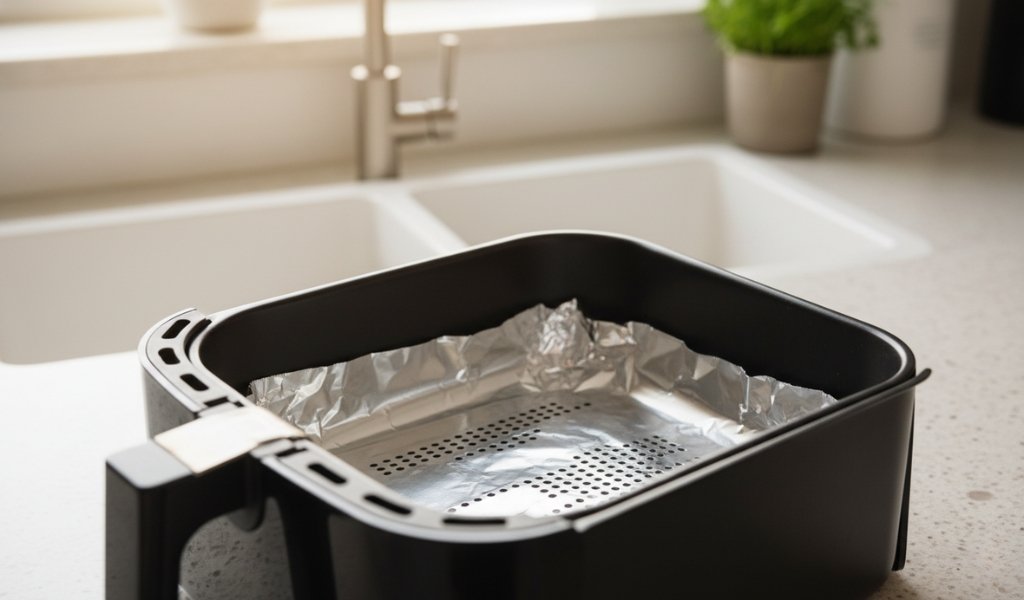
While the short answer is yes, doing so successfully requires a firm understanding of thermodynamics, safety protocols, and the chemical properties of metal foil.
In this guide, we will explore the nuances of using aluminum foil in your air fryer, comparing it to other options like foil paper and parchment, and providing expert tips to ensure your meals remain delicious and your appliance stays safe.
To understand the role of aluminum foil, we must first understand the air fryer itself. Unlike a traditional oven, which relies on ambient heat, an air fryer is essentially a compact, high-powered convection oven. It features a heating element (usually at the top) and a powerful fan that circulates hot air at high velocities.
This circulation is what creates the “crunch.”

The air must be able to pass through the perforated basket and move around all sides of the food. When you introduce metal foil into this environment, you are essentially placing a “windbreak” inside a hurricane. If the foil covers too much surface area, the air cannot reach the bottom of your food, resulting in uneven cooking and a lack of crispiness.
Generally speaking, using aluminum foil in an air fryer is safe, provided you follow two golden rules:
The heating coil in an air fryer gets incredibly hot. Because foil paper is a metal, it is highly conductive. If a piece of loose foil blows upward and makes contact with the heating element, it can cause a spark, melt the foil onto the coil, or even start a fire.
Because the fan in this kitchen gadget is so powerful, lightweight materials like metal foil can easily become airborne. Always ensure that the food you are cooking is heavy enough to pin the foil to the bottom of the basket. Never “pre-heat” your air fryer with a loose piece of foil inside; wait until the food is ready to be loaded.
Why bother with aluminum foil at all? For many, it boils down to efficiency and the preservation of the air fryer basket’s non-stick coating.
While aluminum foil is versatile, it isn’t always the right tool for the job.
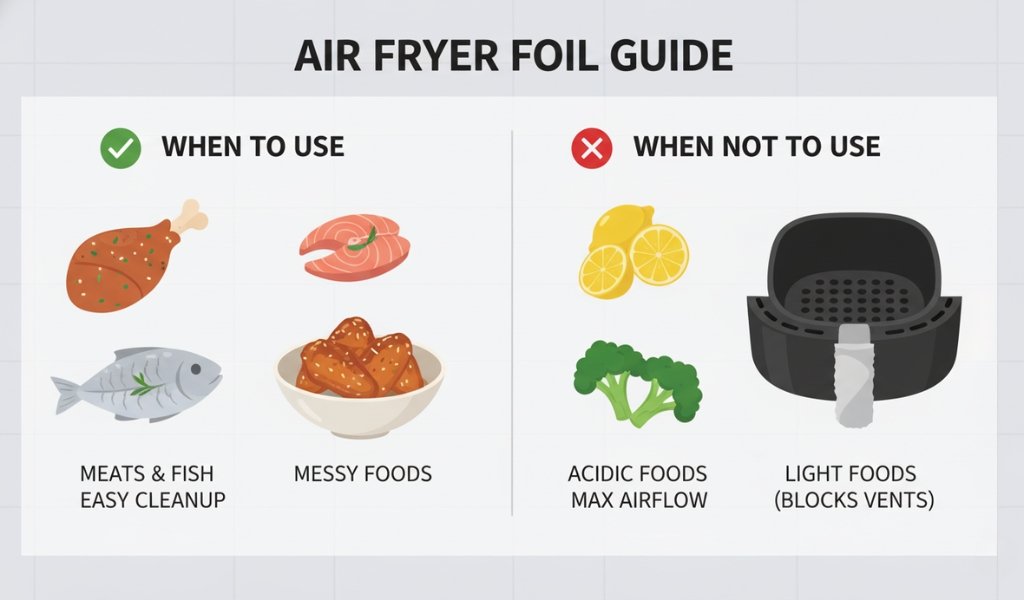
If your goal is maximum “crunch”—for example, when making fries or breaded mozzarella sticks—foil is often a hindrance. Since the foil blocks the holes in the bottom of the basket, the underside of your food will remain soft. To get that 360-degree crisp, the food needs direct exposure to the circulating air.
Furthermore, if you are using an oven-style air fryer with multiple racks, placing aluminum foil on the top rack will completely block the heat from reaching the bottom racks. In these instances, it is better to place a baking sheet or foil on the very bottom “crumb tray” (if the manufacturer allows) rather than on the cooking racks themselves.
This is perhaps the most overlooked aspect of using metal foil. Aluminum is a reactive metal. When it comes into contact with highly acidic ingredients, a chemical reaction occurs that can cause the foil to break down or “pitting” to occur.
+1
Foods to avoid with foil include:
When these acids hit the aluminum foil, you may notice small black specks on your food or a metallic taste. While not immediately toxic in small amounts, it is certainly not ideal for flavour or long-term health. In these cases, parchment paper is the safer, non-reactive choice.
In the world of the air fryer, the battle between foil paper and parchment paper is ongoing.
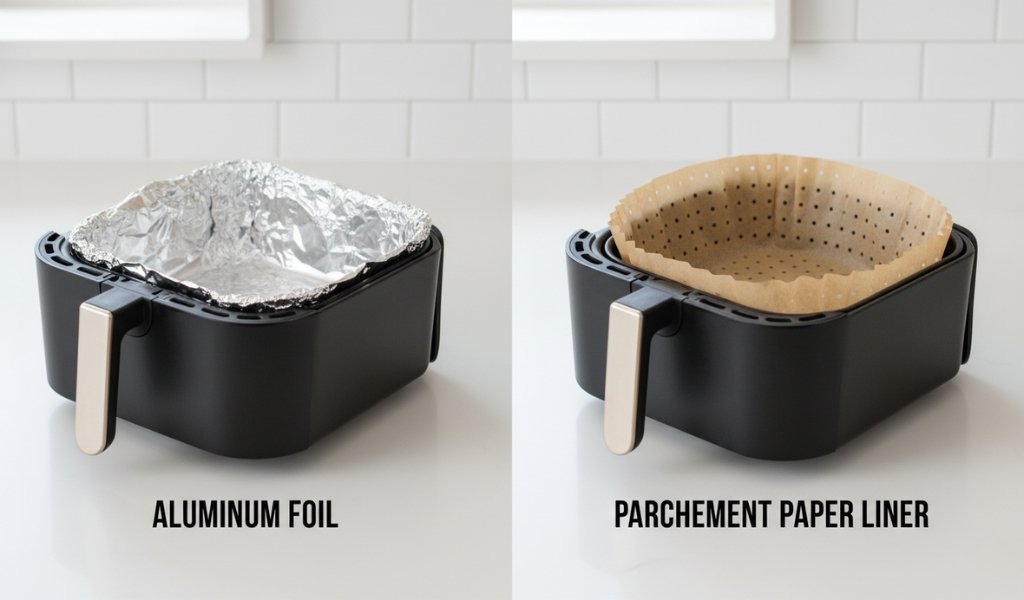
Both are valuable, but they serve different masters.
| Feature | Aluminum Foil | Parchment Paper |
| Heat Resistance | Very High | High (up to 425°F-450°F) |
| Reactivity | Reacts with Acidic Foods | Non-reactive |
| Malleability | Can be molded into shapes | Folds, but doesn’t “hold” shape |
| Non-stick | Moderate | Excellent |
| Airflow | Blocks completely unless pierced | Often comes perforated |
Aluminum foil wins when you need to create a “pouch” to seal in moisture or when you need to shape a custom tray to fit a specific food item. Parchment paper wins for baking and for any recipe involving citrus or tomatoes.
As the air fryer has matured as a kitchen gadget, dedicated accessories have hit the market. Silicone liners are now a popular alternative to disposable foil paper.
If you decide to use aluminum foil, follow these steps to protect your appliance:
Even experienced cooks make mistakes with metal foil. To keep your air fryer in top shape, avoid these pitfalls:
The air fryer is a powerful tool that offers a healthier way to enjoy our favourite foods. While aluminum foil (or foil paper) is a compatible accessory, it must be used with intention. By prioritizing airflow and avoiding chemical reactions with acidic foods, you can use this metal foil to minimize cleanup and maximize your cooking range. Whether you are a meal-prepping pro or a weekend snacker, treating your kitchen gadget with respect ensures it will serve you well for years to come.
Would you like me to help you find a specific recipe or create a chart of cooking times for your favourite air-fried meals?
It depends on your model. In basket-style air fryers, you should never put foil in the drawer underneath the basket, as this is where the air returns to the fan. In oven-style air fryers, you can often put foil on the removable crumb tray at the very bottom, but check your manual first to ensure it doesn’t block the air intake.
Heavy-duty aluminum foil is generally better for the air fryer. It is less likely to tear when you are lifting heavy food out of the basket and is less prone to blowing around due to its increased weight.
Yes! Wrapping a potato in metal foil in an air fryer will result in a soft, steamed skin, similar to a traditional oven. If you prefer a crispy skin, however, you should skip the foil and rub the potato with a little oil and salt instead.
Most manufacturers do not void the warranty for the use of aluminum foil, but they do include warnings against improper use (such as blocking airflow). If the foil causes a fire or mechanical failure due to airflow blockage, that specific damage might not be covered.
Yes, this is an excellent use for foil paper. Wrapping the burrito in foil prevents the tortilla from becoming too hard or “crackly” while the inside heats through. For the last 60 seconds, you can unwrap the foil to give the outside a slight crisp.
If metal foil touches the heating element and melts, you should immediately unplug the unit and let it cool completely. Once cool, you can try to gently scrape the foil off with a wooden or plastic spatula. If it cannot be removed, contact the manufacturer, as using the device with a compromised heating element is a fire risk.
For the purposes of an air fryer, it does not matter which side faces up. The difference in appearance is simply a result of the manufacturing process and has no significant effect on heat reflection in this type of kitchen gadget.