Physical Address
304 North Cardinal St.
Dorchester Center, MA 02124
Physical Address
304 North Cardinal St.
Dorchester Center, MA 02124

Have you ever returned from a grocery run with a beautiful, crisp fresh greens haul haul, only to realise you bought far more than you can eat in a week? It’s a common kitchen dilemma. You look at that vibrant head of lettuce and wonder: Can you freeze lettuce?
The short answer is yes, but with a significant caveat. If you are dreaming of a crunchy lettuce salad made from thawed leaves, you need to pump the brakes. Freezing changes the cellular structure of leafy greens. However, that doesn’t mean Frozen Lettuce is useless. In fact, it can be a secret weapon for your smoothies, soups, and stir-fries.
In this comprehensive guide, we will explore the science of freezing greens, the best types of lettuce for the freezer, and a step-by-step method to ensure your vegetables remain a nutritious part of your culinary repertoire.
To understand why Frozen Lettuce acts differently than fresh, we have to look at its biology. Lettuce is essentially a “water balloon” of the plant world, consisting of approximately 94% to 95% water.
When you place fresh lettuce with high water content into a freezer, the liquid inside the plant’s cells turns into ice. Basic physics tells us that water expands when it freezes. In starchy vegetables like peas or corn, the cell walls are sturdy enough to handle this expansion. However, lettuce cells are delicate. As the ice crystals grow, they puncture the cell walls.
Once you thaw the lettuce, those ruptured cells can no longer hold their shape,
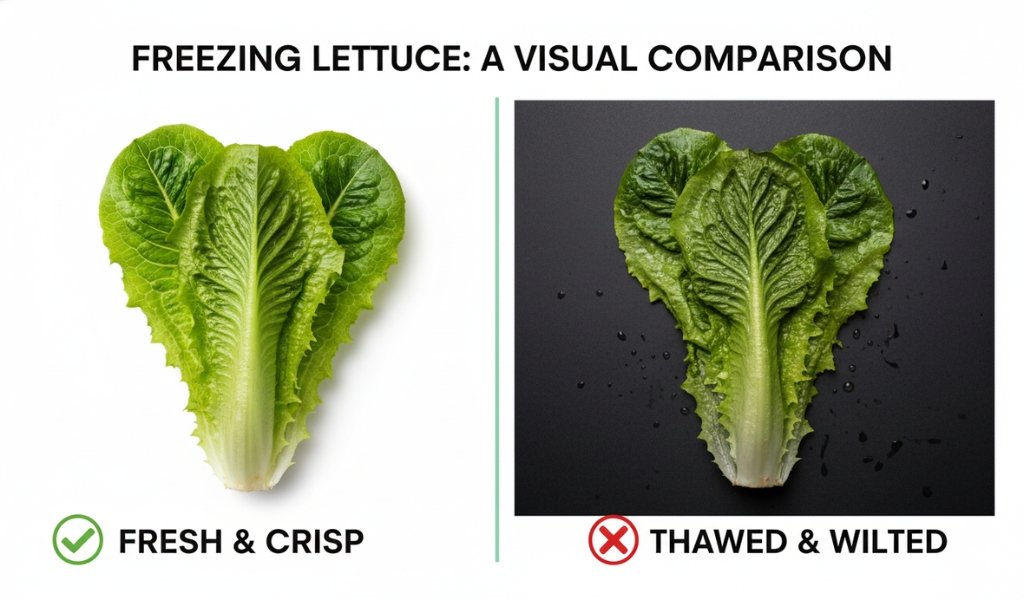
resulting in a leaf that is limp, dark, and “mushy.” This is why a thawed lettuce salad is physically impossible—the “crunch” is literally gone at a microscopic level.
When you enjoy a lettuce salad, you are enjoying turgor pressure—the water pressure inside the cells that keeps the leaves stiff.
Because the texture changes so drastically, you must pivot your culinary expectations. Frozen Lettuce should be treated more like spinach or bok choy—it becomes a “green filler” that adds vitamins and minerals to hot dishes without needing to provide a structural crunch.
Not all types of lettuce react the same way to sub-zero temperatures.
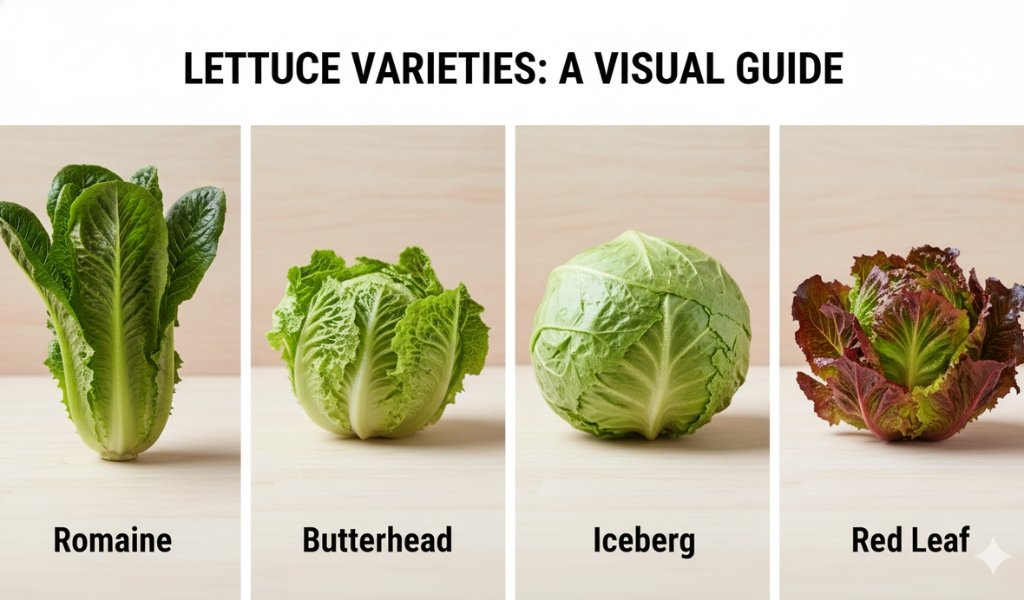
If you want the best results, you need to choose varieties with thicker leaves and heartier “ribs.”
Romaine is the “Varsity Player” of the freezing world. Its thick central rib and sturdy leaves mean it retains a bit more integrity than thinner varieties. It is excellent for stir-fries.
While more delicate than Romaine, Butter-head has a higher nutrient density in its leaves which holds up well when blended into green smoothies.
Iceberg is the most difficult to freeze because its water content is the highest. It effectively turns into a “puddle” when thawed, so it should only be used in recipes where it will be completely liquefied, like soups.
Technically chicories, these are often sold as lettuce. Their bitter compounds and thick leaves make them the most “freeze-stable” options available.
Before you begin the freezing process, ensure you have the following tools ready to prevent freezer burn and maintain quality:
If you want to preserve your extra lettuce stash correctly, follow these six steps meticulously.
Treat your lettuce like the delicate green it is. Rough handling causes bruising. Bruised cells die and decay faster, which will lead to a “slimy” texture even before the freezing process is complete.
Never freeze a whole head of lettuce intact. The centre will take too long to freeze, allowing large, destructive ice crystals to form. Pull the leaves apart so each one can be cleaned and dried individually.
For types of lettuce like Romaine, the thick bottom stalk is a reservoir of water. Trim the bottom inch or two off. This area is the most prone to becoming bitter and tough after freezing.
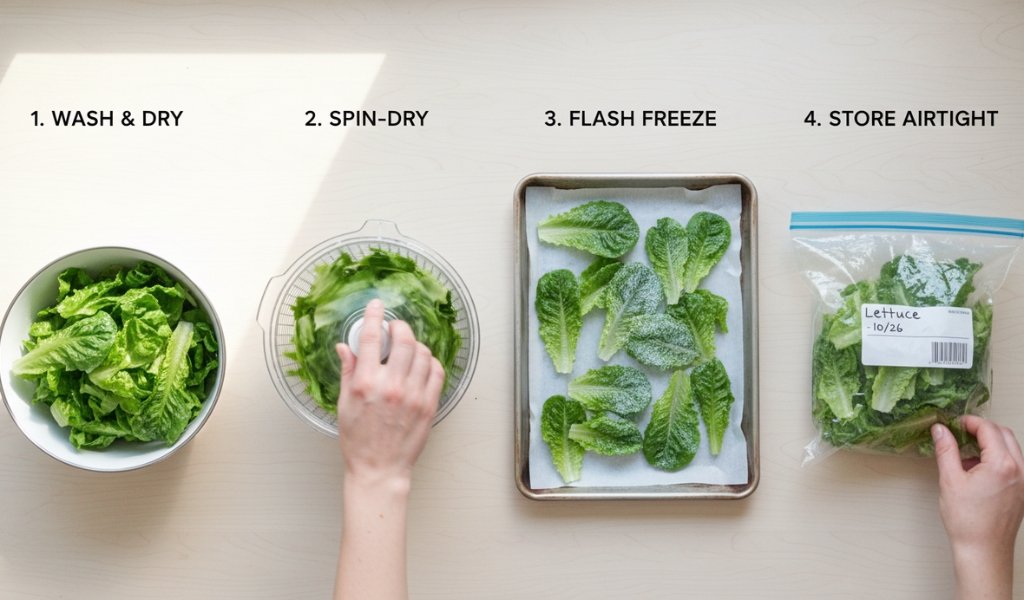
Wash your leaves in cold, filtered water. Once clean, use a salad spinner. Then, lay the leaves out on a towel and pat them dry. Moisture is the enemy. Any water on the surface of the leaf will turn into “frost,” causing freezer burn and ruining the taste.
Lay your dry leaves in a single layer on a baking sheet lined with parchment paper. Place this in the freezer for 2 hours. This “pre-freezes” them so they don’t stick together in one giant green brick inside the bag.
Transfer the flash-frozen leaves into a freezer bag. Insert a straw into the corner, zip the bag almost all the way, and suck out the air until the plastic collapses against the leaves. Seal it tight.
Is it worth the effort? Let’s weigh the options.
Since you aren’t eating it raw, how do you actually use Frozen Lettuce? Here are four chef-approved methods:
Generally, Frozen Lettuce is safe as long as it was fresh when it went into the freezer. Freezing is essentially a “pause button” for bacterial growth. However, remember that freezing does not kill bacteria like E. coli or Listeria; it only stops them from multiplying.
To ensure safety:
No. A lettuce salad requires the crisp, structural integrity of a fresh lettuce. Frozen lettuce will be limp and unappealing in a raw salad format.
Actually, freezing is one of the best ways to preserve nutrients. While a small amount of Vitamin C might degrade over months, the fiber, Vitamin A, and minerals remain almost entirely intact.
You can, but it is risky. You must be extremely diligent about hand-drying every leaf with paper towels. Any residual water will cause the leaves to turn into “mush” much faster.
This is usually a sign of freezer burn caused by air in the bag. If the leaves are black and shriveled, they won’t taste good. Use the “straw trick” or a vacuum sealer next time to prevent this.
For most recipes, you shouldn’t thaw it at all. Toss the frozen leaves directly into your blender or hot pan. Thawing them on the counter first just creates a pool of green water.
Consult your vet first. Some pets may experience digestive upset from the changed texture or the high concentration of crystals in thawed greens.
Yes. While lettuce is more delicate than cabbage, you can sauté it with onions and bacon for a delicious, warm side dish. This is a great way to use up Frozen Lettuce.
The journey from a fresh lettuce to Frozen Lettuce is one of transformation. While you lose the ability to create a crunchy lettuce salad, you gain a versatile, healthy, and cost-effective ingredient for your kitchen.
By understanding the different types of lettuce and mastering the drying and bagging process, you can ensure that not a single leaf of your grocery haul goes to waste.
Next time you see a sale on bulk greens, don’t hesitate. Buy the extra head, follow our step-by-step guide, and keep your freezer stocked with green goodness.